Bottom line up front: On the map of automating income, 2026 really changed two things—GitHub shuffled large bounties into an invite-only VIP tier (the public track’s critical cap dropped to $10K, with a qualification gate), and Huntr rebranded open-source bounties into AI attack-defense tournaments ($15K prize pool, which happens to be the direction my existing pipeline maps onto most cleanly). And every pretty “market size” number mostly gets wiped out after a three-panel adversarial check—that meta-lesson is worth more than any single takeaway.
Origin Story
I’ve been running a half-month-old 24-hour automated vulnerability bounty hunt cycle (lynxGHSL, systemd timer, one pass every 4 hours, 3 reports filed so far), plus a full set of self-built automation—content pipeline, monitoring system, control plane. The natural question: beyond security bounties, what else can the capability of “automate code changes / automate workflows” be monetized into? RMB, USD, whatever.
This article answers via one round of Grok deep research. Methodology first, so you know what you’re reading:
- Split into 5 search angles (Grok search primary, Tavily fallback—Grok timed out 3 times mid-session)
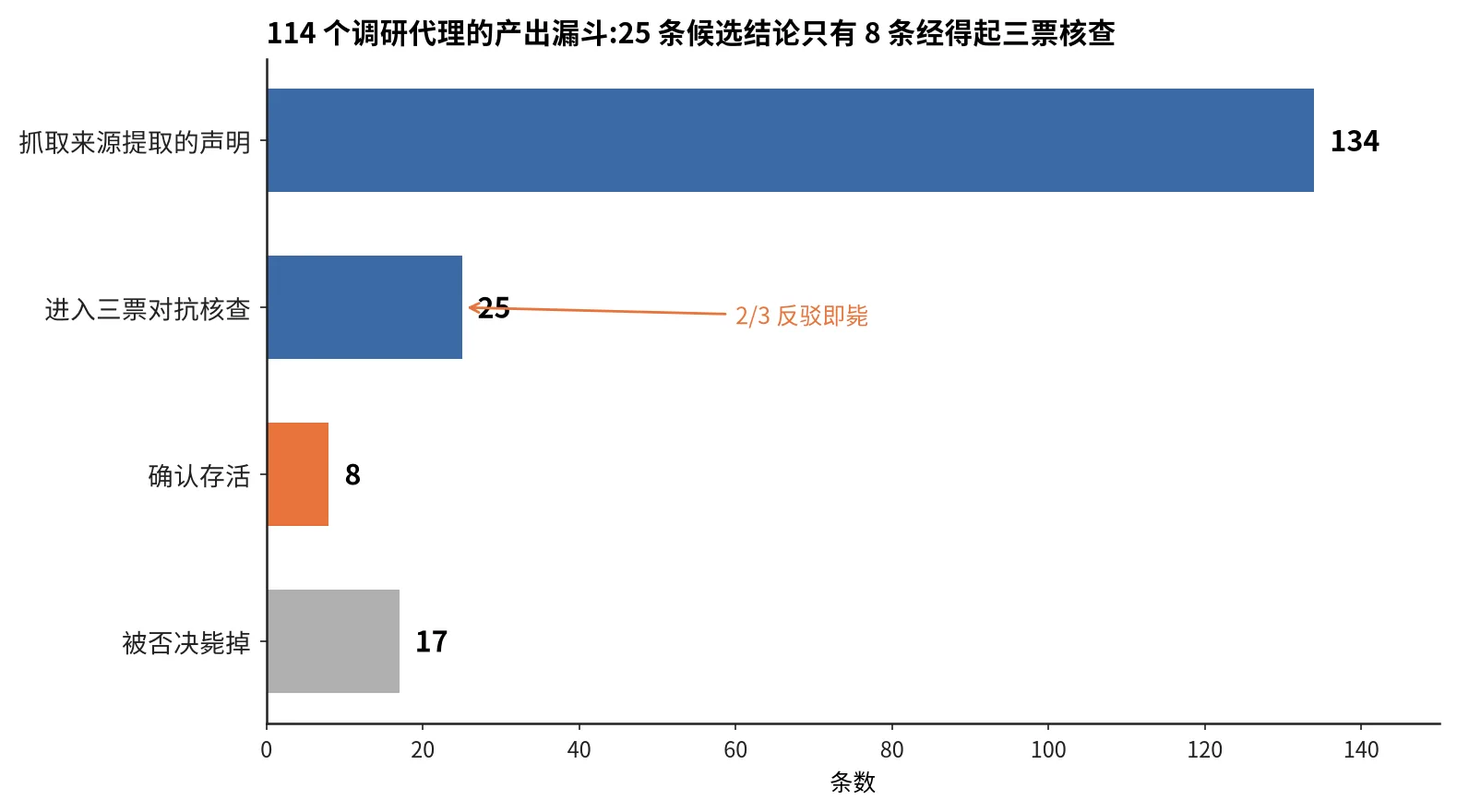
- Scraped 31 source documents, extracted 134 verifiable specific claims (platform name, amount, eligibility threshold)
- Picked the 25 most critical claims, each sent to 3 independent fact-checkers to attempt to refute — 2/3 rebuttal kills the claim
Result: 8 confirmed, 17 killed, kill rate 68%. The 17 killed ones are equally valuable—covered in Section 3.
I. Monetization Channels That Withstood the Check
1.1 GitHub Bug Bounty Restructured — Rules Need a Rewrite (High Confidence)
GitHub restructured its bounty program in late July 2026, with two key changes (official announcement, bounty.github.com):
- Public program critical cap dropped to a fixed $10,000. The previously circulated “critical $30K+” only applies to the invite-only VIP private programs.
- VIP entry threshold: cumulative minimum of 1 critical, or 2 high, or 4 medium, or 7 low findings. This one passed 3-0 unanimous.
Direct implication for me: my hunt cycle currently targets third-party open-source libraries (via the GHSL channel), which is a separate track from GitHub’s own program. But the “earn 1 critical to unlock VIP” is a clear阶梯 goal — VIP criticals start at $30K, three times the public track.
1.2 Huntr Has Pivoted to AI Security Challenge Platform (High Confidence)
huntr.dev is no longer the “submit open-source vulns for pocket change” platform of old. Its current focus is time-limited AI/ML security challenges; the live “Inside Job” challenge carries a $15,000 prize pool, with challenges around guardrail bypass, agent key extraction, privilege escalation in AI contexts — the distinctly AI-native vulnerability class. Top 30 on the leaderboard take $70–$1,600 by rank. It’s been acquired by Protect AI, with Palo Alto Networks and Hugging Face behind it.
Key takeaway: these “fight AI agents” competitions are structurally isomorphic to my existing audit pipeline — find sinks, construct PoCs, verify exploit chains. The only difference is the target shifted from traditional code to LLM applications. This is the new battlefield most likely to yield quick reuse of existing infrastructure.
1.3 Automated Agent Bounties Are Already Being Cash’d — Not Theoretical (Medium-High Confidence)
XBOW (an automated pentest agent) hit #1 on HackerOne’s US leaderboard. This one passed 2-1, with a footnote: it’s self-reported and the leaderboard is filtered (US-only / orgs-only). Even discounted, the signal is clear: the path of automated agents submitting bounty reports has been empirically validated. We’re past the “can AI do security” debate and into the “whose pipeline has better throughput” competition.
1.4 Freelance Markets: Automation & AI Agent Dev Have Real Price Bands (Medium Confidence)
Cross-reference from Upwork / Fiverr / Toptal: automation scripts / bot dev $100–$1,500/project; AI agent full build $30–$250/hour, $5K minimum, enterprise projects up to six figures. Note these are list prices, not transaction averages, and nobody’s audited actual close rates — but as a lower-bound reference they’re useful.
My version isn’t taking orders on platforms. It’s: package the existing pipeline capability (control plane, content production funnel, monitoring) into a service for Chinese SMEs — e.g., a WeChat Official Account / Xiaohongshu automated publishing pipeline, exactly the kind of thing I’m already self-hosting, with near-zero marginal cost.
1.5 Vertical Micro-SaaS: The Only AI Business Model Still Getting Funded (Medium Confidence)
Industry analysis core thesis: generic wrapper products are dead to investors; only “vertical scenario + proprietary workflow + proprietary data” AI micro-SaaS is still raising. Another hard constraint worth keeping in mind: AI cost runs 40–70% of revenue, making the margin structure much worse than traditional SaaS — meaning anyone without their own model pipeline is giving all profit to upstream API providers. For those holding free open-source model channel pools and key libraries, this constraint is the most relaxable.
1.6 Prompt / Skill Market: Selling “Automation Recipes” Themselves (Medium Confidence, amounts not strongly verified)
Two leads captured (not strong-verified via three-panel check, marked as reference):
- PromptBase: sell prompts, author takes 80%, top sellers doing $500–$5,000/month;
- Agensi: GitHub Copilot Skill marketplace, 4,000+ skills, 350+ creators selling globally.
The essence here is turning “I know how to build automation” into a replicable, sellable asset. The agent skill packs I write daily (bounty hunt main loop, video pipeline, one-click deployment) are, in theory, products on this market.
1.7 Outcome-Based Pricing Is the New AI Agent Billing Paradigm (Medium Confidence)
Industry cases: Intercom Fin charges $0.99 per resolved ticket (paying for outcomes, not software); Bland.ai bills per AI call minute. Takeaway for solo devs: instead of selling subscriptions, package the pipeline as a “per-successful-delivery” service — e.g., “X yuan per issue successfully fixed,” “Y yuan per qualified video generated.” The natural契合 point with automated pipelines: machines don’t sleep, so per-unit billing has no ceiling.
1.8 GitHub Sponsors: Mature but Slow (Medium Confidence)
Official data: 0% commission for personal accounts, 6% for orgs; 49,000+ developers benefiting; top tier reaching $12,000/month, cumulative payouts over $50M. Verdict: suitable as a supplement for open-source projects, not as a primary strategy — unless your project already has real user traction.
II. Laid Against My Own Hand
| Takeaway | What I Already Have | Gap |
|---|---|---|
| Third-party OSS vulnerability bounties | 24h auto cycle, 3 reports filed | Maintainer triage pass rate TBD |
| GitHub official bounty VIP | Nothing yet | Need qualifying findings first; viable long-term goal |
| Huntr AI challenges | Nothing yet | The newest landmass: isomorphic to current audit pipeline |
| Automation service freelancing | Full self-used pipeline | Missing commercial packaging and first paying customer |
| Vertical micro-SaaS | Model channel advantage | Missing chosen vertical |
| Prompt/Skill marketplace | Large library of existing skill packs | Missing listing action |
| Outcome-based billing API | API site infrastructure | Billing model not designed |
Three shortest paths, ranked by ROI:
- Huntr AI challenges (days to launch): extend the existing vulnerability fingerprint库 with an AI-specific category set (guardrail bypass / secret extraction), run the current challenge set through the existing cycle.
- Skill listing (weeks): pick 3–5 most mature skill packs, clean them up, list on Agensi-type marketplaces.
- Pipeline-as-service (months): pull one line from my self-used content pipeline, validate with a seed customer on a per-item-billing model.
III. The 17 Killed Claims: Market Research Reports Are Mostly Untrustworthy
This round’s most educational part. All of the following failed 0-3 or 1-2:
- A whole set of numbers from one market research site: “AI coding assistant market $6B, growing 22% YoY”, “Copilot 4.7M subscriptions, $900M–$1.1B ARR”, “Cursor $2B+ ARR” — an entire group from the same source completely wiped out. Three fact-checkers could not find a single primary source.
- Zapier vs Make pricing comparison: “$19.99/750 tasks is 6× Make” — 0-3. Pricing pages change constantly; republished articles are guaranteed to rot.
- “AI pentesting raised $665M VC” / “560+ automated agents filed HackerOne reports” — 1-2, the numbers trace to nowhere.
- An institute’s AI testing market size forecast ($1.01B → $4.64B) — 1-2.
- Even a seemingly trivial functional claim like “Nuclei supports AI-generated templates” died 0-3 (fact-checkers judged the description inconsistent with the actual repo).
The lesson is identical to my last ERP research cycle: whenever you see market research institute numbers, ask “who audited this” first. Resold pricing comparisons, size forecasts, growth CAGRs from secondary sources — survival rate approaches zero. Numbers that survive share a common feature: they come from official announcements, official pricing pages, or government / IPO filings.
Closing Thoughts
On automating income, the real 2026 landscape is: security bounties are structurally shifting (public track devaluing, new AI attack-defense arena opening), service monetization stays the same as ever (slow but steady, competing on marginal cost), and the “market size” information circulating on the internet is far lower quality than you’d expect.
For solo developers with automation infrastructure, my advice in one sentence: find the revenue tap closest to what you’re already running every day. My cycle sits closest to Huntr’s AI challenges; yours may differ, but the search method is the same.
Method note: Grok deep research workflow — 5 search angles / 31 sources / 134 claim extractions / 25 claims with three-panel adversarial checking, 8 survived, 17 killed. Three Grok search timeouts were covered by Tavily fallback; no impact on conclusion integrity.