
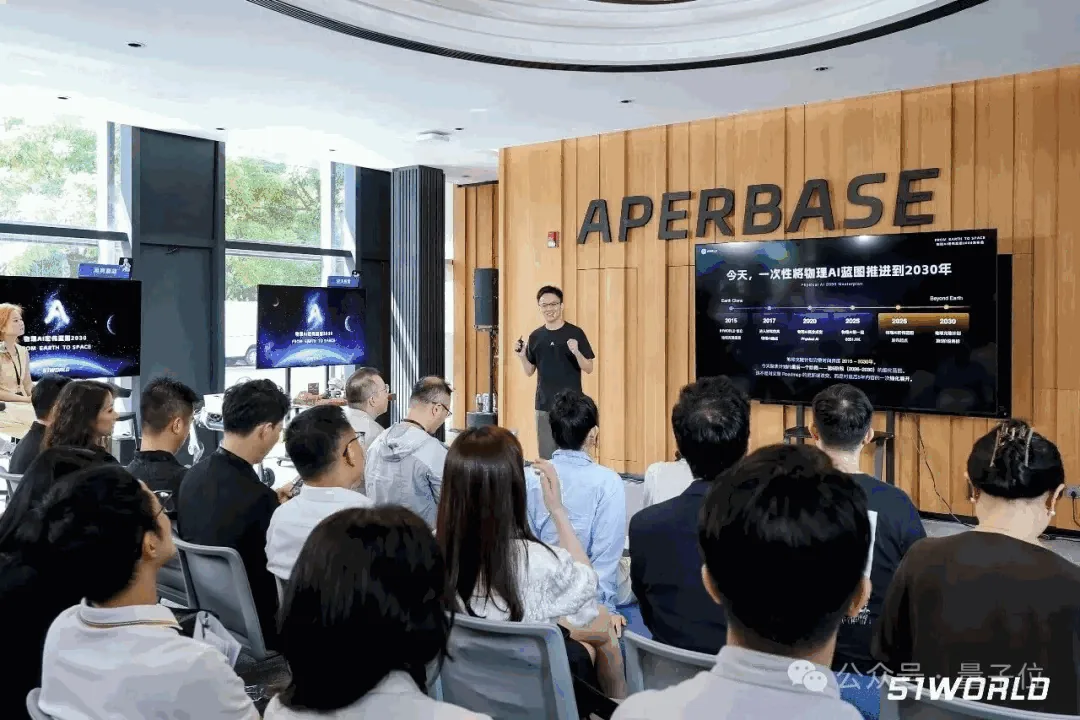
On August 18, 51WORLD used its “Physical AI Grand Blueprint 2030” event to introduce two embodied intelligence products: AperData, an embodied data infrastructure product, and AperOne, an embodied application platform. The first generation of AperData is now on sale at 5,100 yuan per set.
Why robot data is becoming the bottleneck
Recent AI progress has been built on large-scale digital data, but robots need a different kind of training material. Opening a door, sorting items or using tools requires an AI system to understand space, motion, objects and interaction outcomes in the physical world. Embodied AI refers to AI systems that act through physical bodies, such as robots, and learn from interaction with real environments.
According to the release, current data production often depends on real-robot teleoperation or fragmented collection systems. The first approach occupies expensive robot bodies and trained operators; the second may involve separate cameras, sensors, software and backend pipelines from different vendors. In both cases, collected footage may still be unusable because of blur, exposure problems, dropped frames, unsynchronized channels or incomplete tasks.
What AperData changes
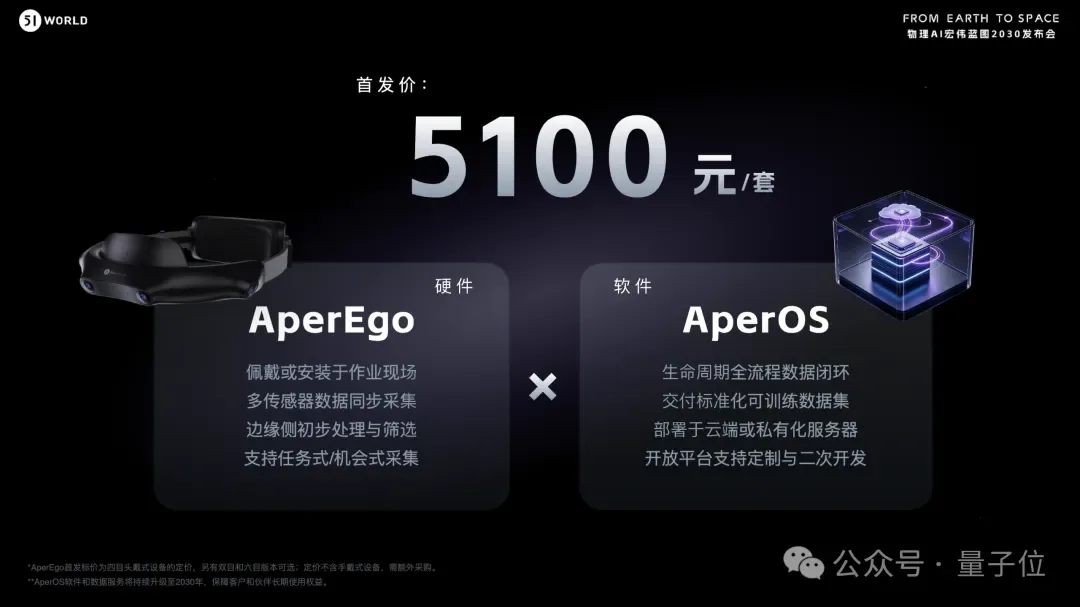
AperData is positioned as a software-hardware data infrastructure rather than a standalone camera device. It combines AperEgo collection hardware with the AperOS data platform, covering collection, quality inspection, processing, solving, evaluation and dataset delivery.
Key figures disclosed at the event include:
- Launch price: 5,100 yuan per set;
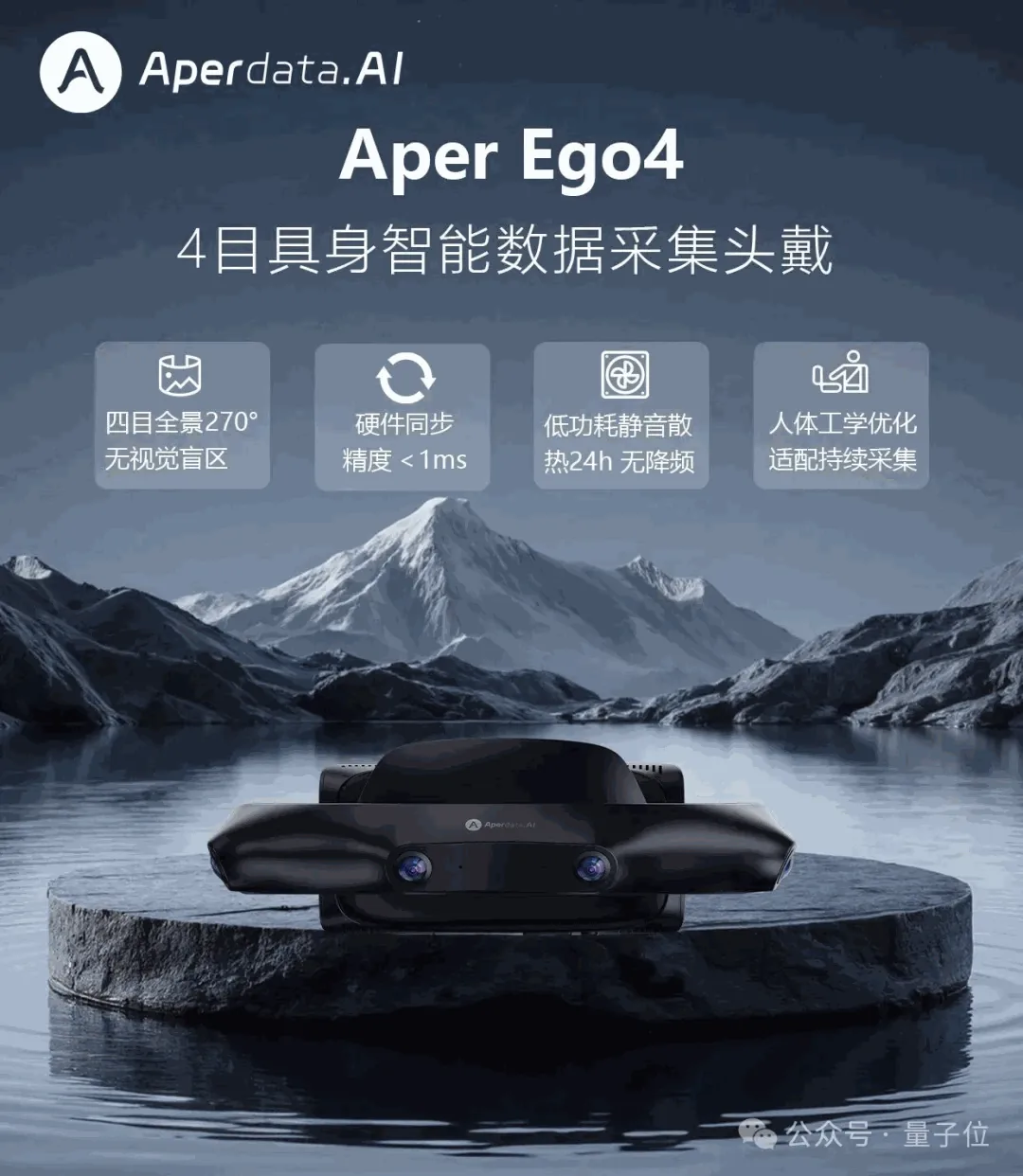
- A four-camera version with over 270° horizontal field of view, over 155° vertical field of view and over 100° downward field of view;
- A 65 mm baseline for the front stereo cameras;
- Hardware-level synchronization across vision, IMU and audio;
- Up to 99% physical trajectory consistency for delivered data after processing;
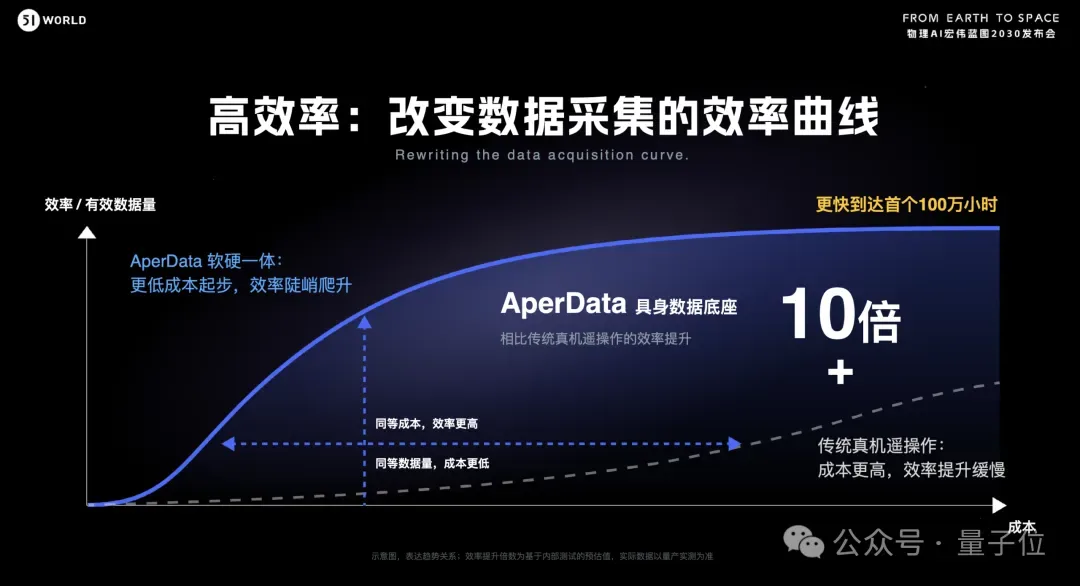
- More than 10x higher data production efficiency than traditional real-robot teleoperation at the same cost.
An IMU, or inertial measurement unit, records motion information such as acceleration and rotation. Hardware synchronization means multiple sensors follow the same timing reference, reducing mismatches between what is seen and what is measured.
A major shift is that data collection can be performed directly by people in real scenes, instead of always using a robot body. A person wearing AperEgo can carry out tasks such as opening doors, grasping objects, sorting and organizing. Future devices named AperWristCAM and AperFinger are expected to add hand-level and close-range interaction information.
Quality control moves to the edge
AperOS moves part of the data cleaning process closer to the collection site. Instead of uploading all raw material first and checking it later in the cloud, the system can inspect clarity, exposure, dropped-frame rate and multi-channel synchronization during collection. If only 10 seconds of a 30-second clip are valid, the invalid parts can be removed before upload.
This matters because invalid data is not free. It consumes bandwidth, storage and cloud computing resources, and it may force teams to redo work late in the training pipeline. For embodied AI companies, the valuable asset is not simply more raw footage, but verified data that can be used for training and evaluation.
AperOne and the broader physical AI stack
The second product, AperOne, targets deployment. 51WORLD describes it as a closed-loop OS platform for embodied applications, connecting reconstruction, training, evaluation, deployment and operations. Digital twins are digital replicas of physical spaces or objects, while simulation allows teams to test robot behavior before putting systems into real-world environments.
The company said AperOne has been validated in parks, venues, shopping malls, power stations, mines and factories. Use cases include autonomous inspection, reception and guidance, multi-agent collaborative transport, hazard patrols, confined-space reconnaissance and pipeline gallery inspection.
51WORLD also disclosed an aerospace strategy covering low altitude, space and deep space. It is working with Insta360 on a digital simulation and flight-test support platform for low-altitude aircraft; with Huantian Wisdom on high-precision satellite remote sensing data and a customized commercial remote sensing satellite called ECS-1; and with the Deep Space Exploration Laboratory on simulated mission rehearsal for Mars and lunar exploration.
The broader signal is that physical AI competition is moving from individual models to infrastructure. If AI is to operate in the real world, companies need low-cost ways to capture real-world experience and convert it into trainable, verifiable data. AperData’s 5,100-yuan launch price does not by itself settle the market, but it shows that robot training data is being productized as a standardized layer of the emerging physical AI stack.