
As AI rapidly渗透 daily life, a fundamental question resurfaces: do we truly understand how our own minds work? A recent The Verge article argues that the prevailing “brain-as-computer” metaphor dominating AI development is fundamentally flawed, and this cognitive bias is distorting how we understand and deploy artificial intelligence. Drawing on neuroscience and evolutionary biology, the piece proposes a biologically grounded “feedback-control” model of cognition.
The computational paradigm behind AI development

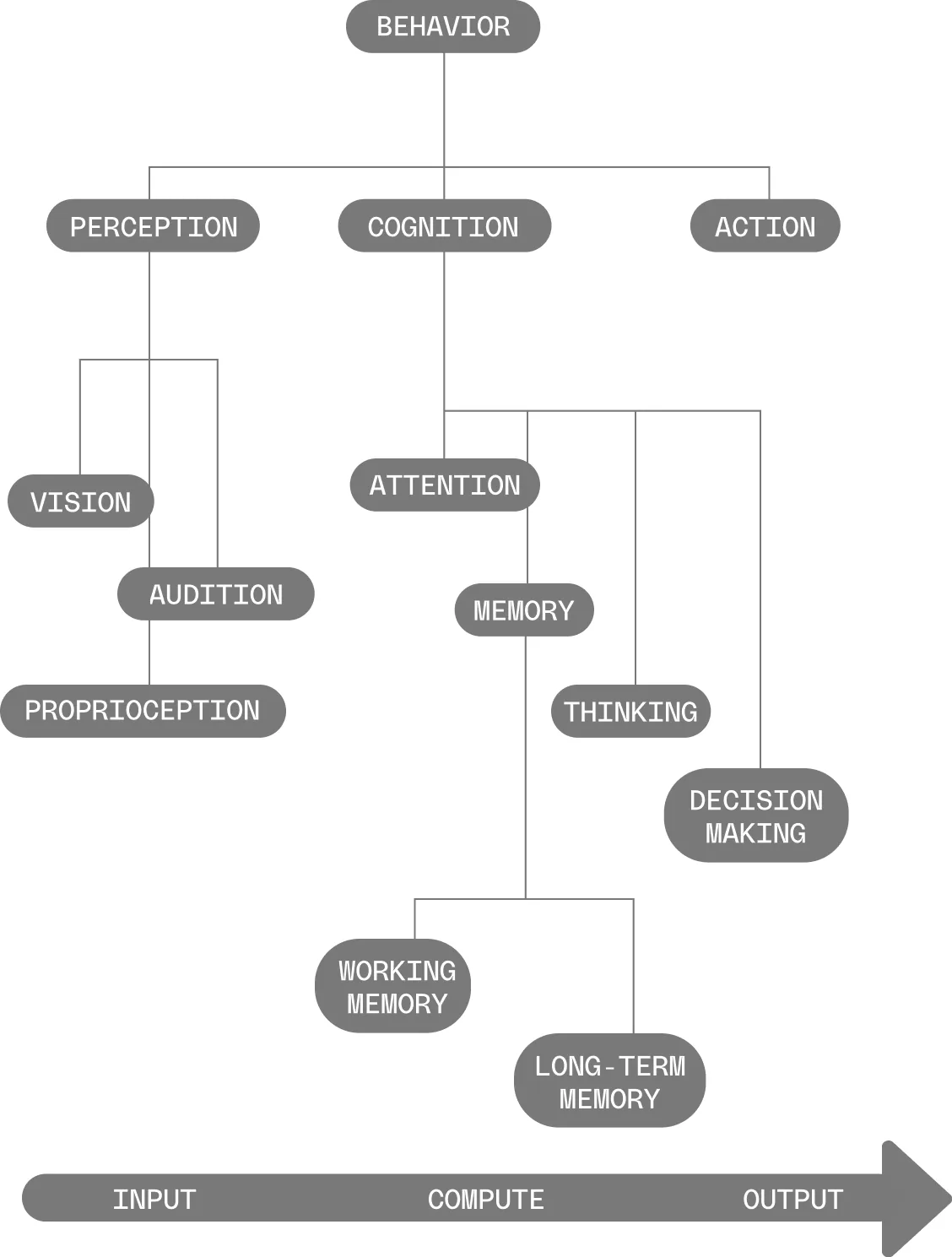
AI advancement has been guided by the core metaphor of “the brain as a biological computer.” Tracing back to Turing’s “Turing machine,” this model simplifies thought into a three-step algorithm: input-computation-output. Google’s chief brain scientist Demis Hassabis calls the brain “a biological approximation to a Turing machine,” while Elon Musk bluntly states that “people should just think of the brain as a biological computer.” This framework has indeed driven technological leaps—from early adding machines to neural networks and generative AI—creating a highly engineered technical trajectory.
But this model has fundamental flaws. John von Neumann, a pivotal figure in early computer science, questioned whether computational models could possibly capture the “exceptional complexity of the human nervous system.” The issue lies in how the model severs cognition from bodily action, overlooking the dynamic adaptivity hardwired into brains through millions of years of evolution.
Feedback-control: the brain as an action-oriented system

Neuroscientist Paul Cisek of the University of Montreal offers an alternative framework: the brain is not a passive information processor but an active feedback-control system—we act to modulate our sensory inputs rather than waiting for input and computing a response.
A classic illustration comes from baseball: under the computational model, outfielders catching fly balls must perform complex subconscious calculations estimating velocity and gravitational effects. But Cisek’s alternative aligns better with real-world experience: “Keep the ball in the same position within your visual field, then move to maintain that.” This heuristic avoids invoking complex calculations and integrates perception with action, avoiding the computational model’s oversimplification of human cognition.
Evolutionary perspective reveals hierarchical brain structure
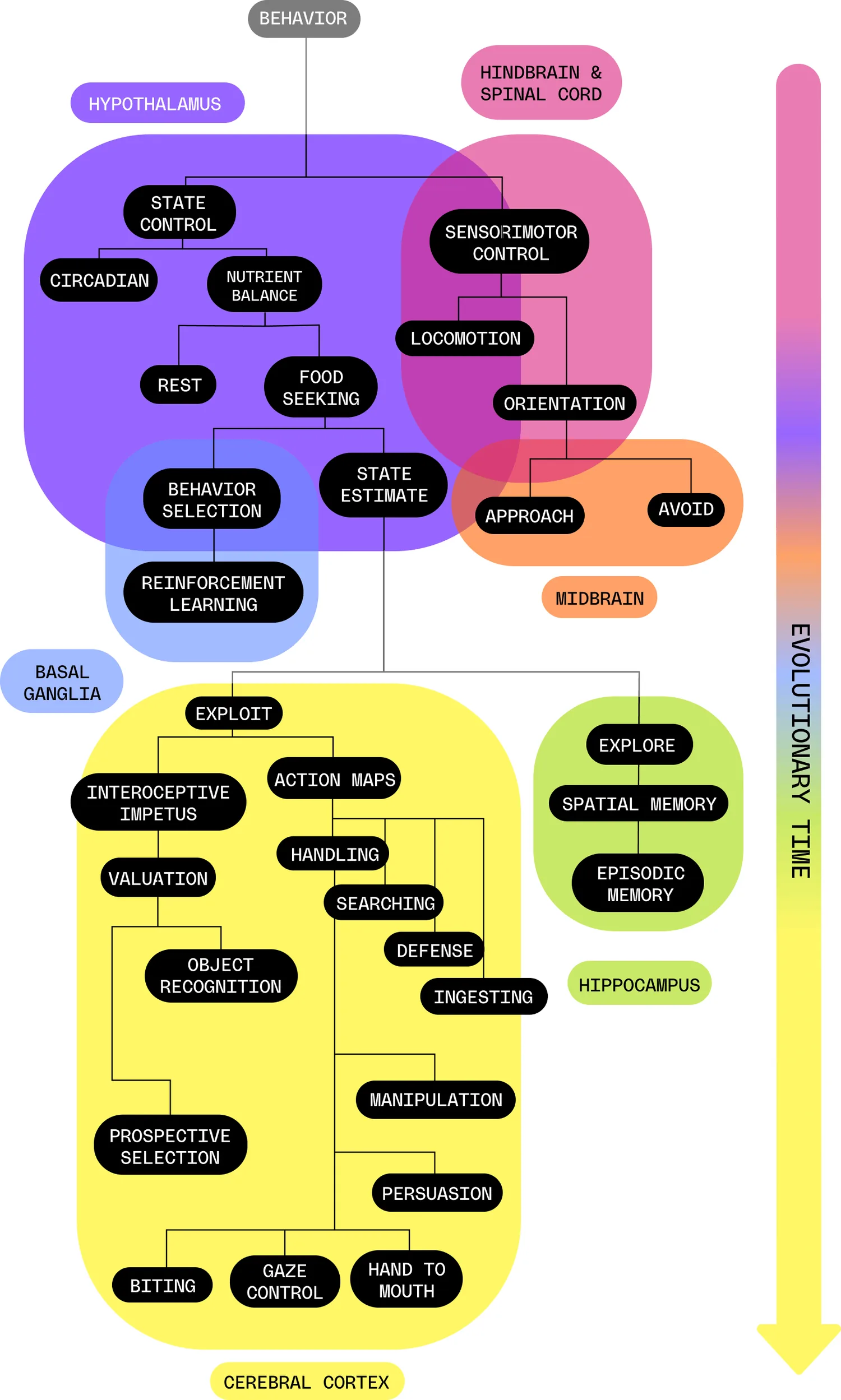
Cisek’s model harmonizes with paleoneurological evidence. From ancient fishes to modern humans, brain evolution centers on “continuous extension of control further and further into the world.” When dinosaurs went extinct, nocturnal mammals gained daytime mobility, spawning new navigation capacities; as mammals developed enhanced mobility, the hippocampus emerged specifically for landmark and nocturnal navigation; repeated exploration故 led to episodic memory—the capacity to recall past events.
A striking discrepancy emerges: computational models fail to align with observable neural structures, whereas the feedback-control model clearly maps evolutionary brain development, correlating specific brain regions with their evolved functions. Unlike the Left-to-right input-output flow, this model unfolds top-to-bottom over evolutionary time—new behaviors emerge in response to environmental opportunities, layered atop older control systems.
The missing social feedback loop
Crucially, the computational model cannot explain uniquely human social cognition. Humans built culture on imitation: hundreds of thousands of years ago, ancestors learned to mimic gestures and postures, transmitting tool-making knowledge; sound imitation yielded oral language; settled agricultural communities increased communication complexity, eventually producing writing systems. These form a “social feedback loop” for knowledge transmission.
A critical gap remains: AI industry products, designed within a decade, systematically dismantle millennia-evolved cognitive infrastructure. They retain computational逻辑 while ignoring evolved human cognition and social mechanisms’ fragility.
Practical recommendations
- For AI developers: avoid equating human cognition with data processing; design products respecting the perception-action feedback loop
- For educators: integrate neuroscience perspectives alongside technical training to build balanced human-AI interaction frameworks
In closing
As AI continuously extends humanity’s reach into the world, our understanding of “how we think” lags behind “how we build thinking machines.” This paradigm mismatch—what the author calls “cognitive junk food”—temporarily fascinates but ultimately degrades mental vitality. Reclaiming cognitive harmony requires moving beyond Turing’s century-old framework.