
Google DeepMind Launches Secure Server-Side Memory for Private AI

On September 23, 2026, Google DeepMind unveiled a major upgrade to its Private AI Compute platform: secure server-side memory, resolving a longstanding industry challenge—how to enable AI assistants to maintain continuity across devices while preserving strict on-device privacy standards.
Key facts at a glance:
- Release date: September 23, 2026
- New feature: Persistent, cross-device AI memory
- Privacy guarantee: Device-side encryption keys; Google cannot access user data
- Core technology: Hardware-enforced secure enclaves and end-to-end encrypted channels
- Transparency: Publicly verifiable records of server software, including audit results
- Status: Technical documentation updated; integration into future Private AI Compute releases expected
Technical Architecture: Building a Cloud-Based Digital Vault
The core innovation repurposes on-device privacy mechanisms for cloud-scale processing. When an AI model requires user information, the device establishes an encrypted channel to a secure enclave—a hardware-isolated environment—within the cloud. Data is temporarily decrypted only within this enclave to process the request, then immediately re-encrypted before storage.
This relies on three layers: hardware-enforced secure enclaves (CPU-level isolation preventing OS-level attacks); end-to-end encrypted channels (rendering data unreadable in transit); and per-user encrypted databases (each user’s key is derived on their device and never leaves it). Critically, even Google lacks access to decrypted user data—the stored information remains encrypted, and decryption keys are exclusively held by user devices.
A key inversion is that prior Private AI Compute architectures (including industry peers) were strictly “stateless,” wiping all context upon task completion. This upgrade delivers the first server-side persistent memory capability, avoiding the need to store sensitive context in conventional cloud databases—something previously deemed incompatible with strong privacy guarantees.
Expanded Use Cases Enabled by the Architecture
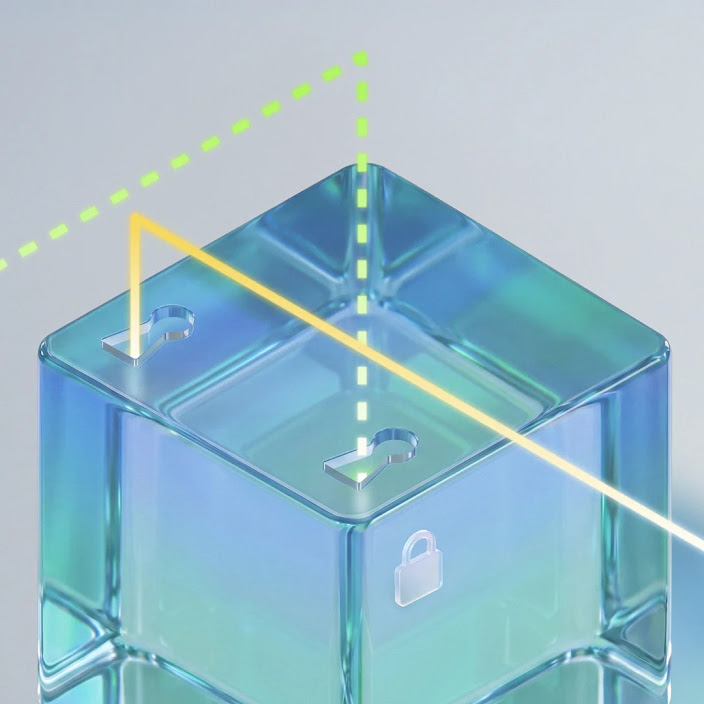
The new design enables genuinely seamless cross-device AI assistance:
- View laptop assembly instructions previously accessed via smart glasses
- Resume complex conversations across mobile and web devices
- Execute multi-stage tasks in sequence with automatic context handoff
Prior solutions relied on simplistic workarounds like saving user preferences as discrete facts, far short of natural, continuous interaction. The updated architecture stores所需 memory as encrypted vault items, decrypting only via secure channel when needed.
Recommendations for Users
This technology targets privacy-conscious power users and those in multi-device ecosystems. If you prioritize data security and frequently switch between phones, tablets, laptops, and AR glasses, you’ll benefit from significantly improved continuity. Casual users with basic needs or low cloud-processing sensitivity may prefer waiting for product integration to assess real-world gains; privacy-sensitive users should scrutinize upcoming key verification tools and third-party audit reports.
Final Thoughts
This upgrade shifts the industry from a false binary—on-device versus cloud—toward cloud processing that mimics device-grade privacy. Its success, however, hinges on whether users can conclusively verify the system delivers on its technical promises.