ECC: An Automated Engineering System for AI Agents
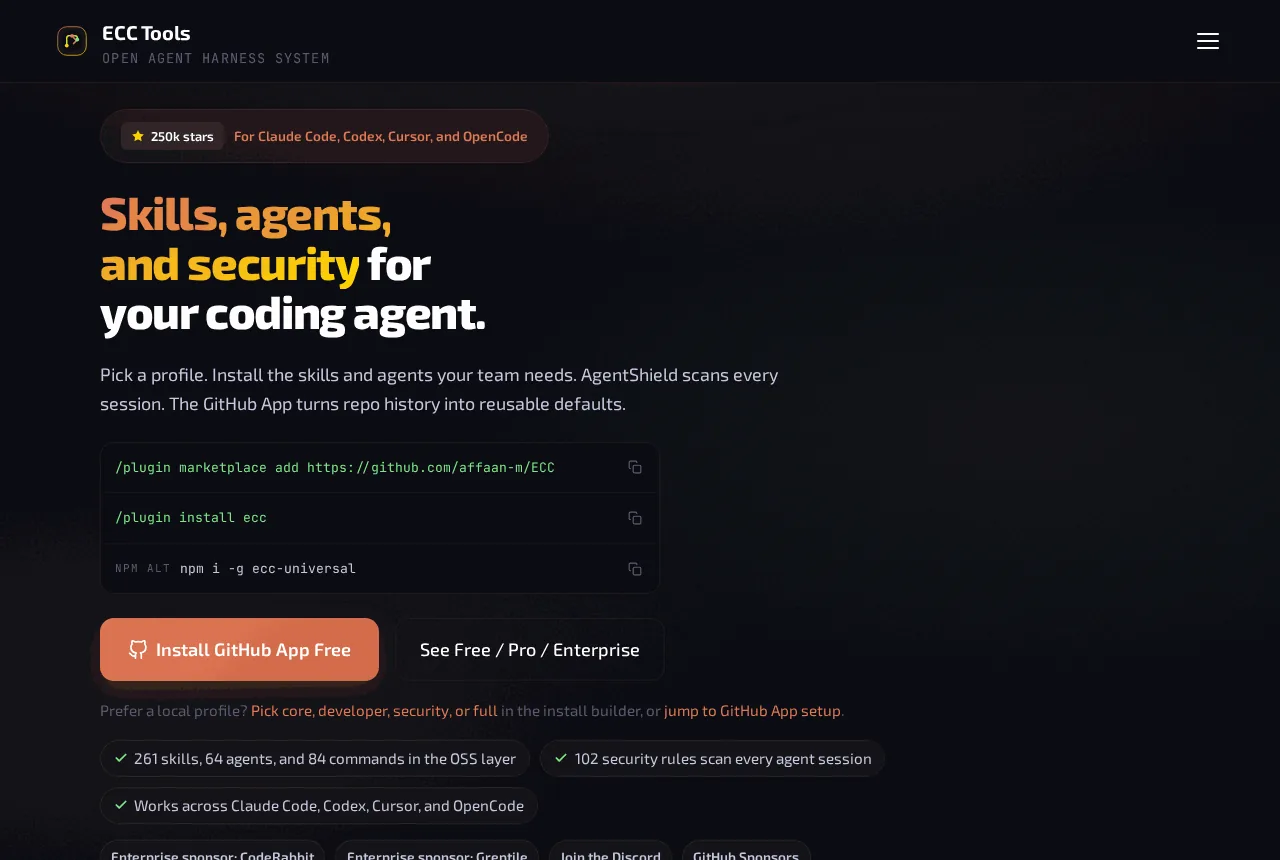
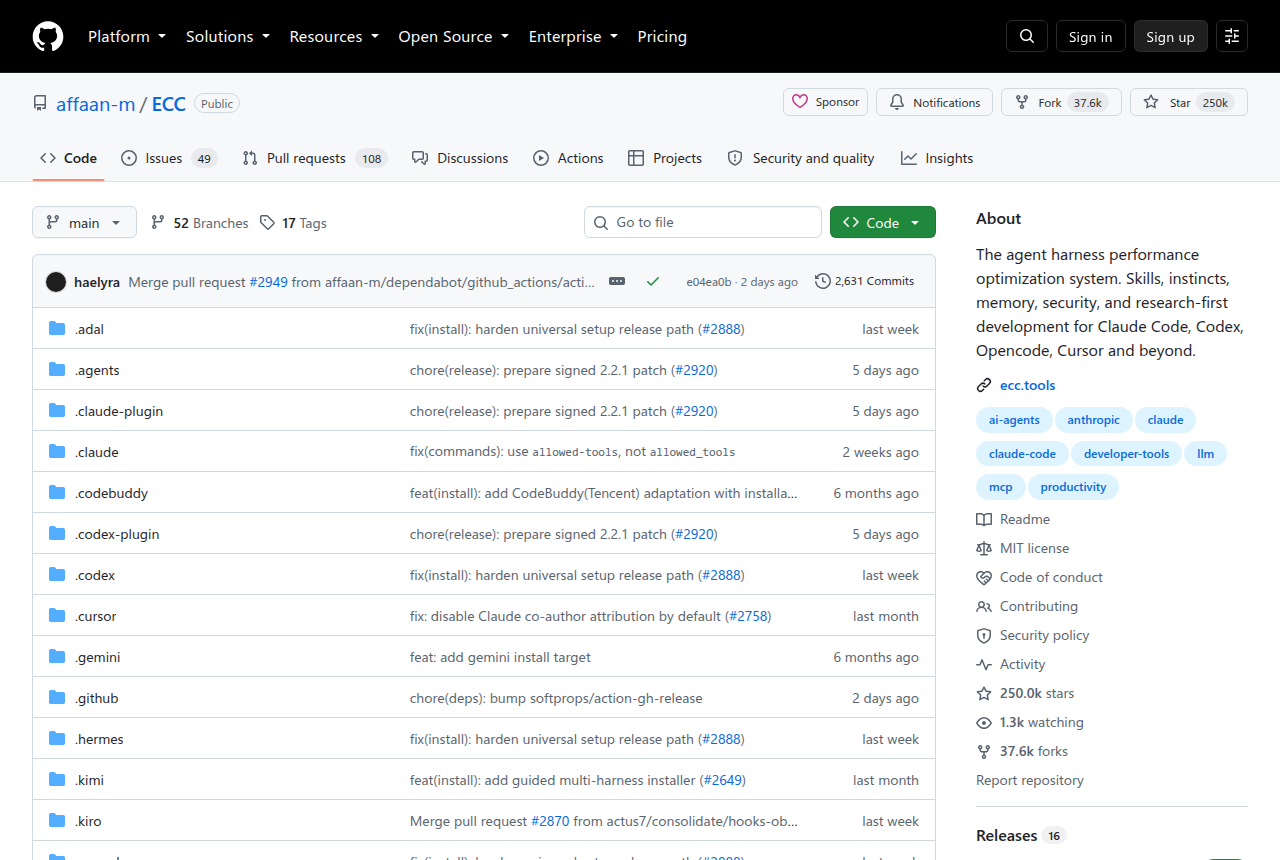
On today’s GitHub Trending chart, a project called ECC hit the top spot with 1,314 new stars — a number that happens to echo the Chinese homophone for “forever and ever.” ECC stands for Engineered Coding Capture, and the team describes it as an “automated engineering operating system for agents.” Put simply, it’s not another AI coding tool — it’s a complete engineering collaboration framework for agents like Claude Code, Cursor, and Opencode, so AI can do more than just write code: it can think, plan, test, and reuse like a senior engineer.
Core Features: Giving AI a Complete Engineering Mindset
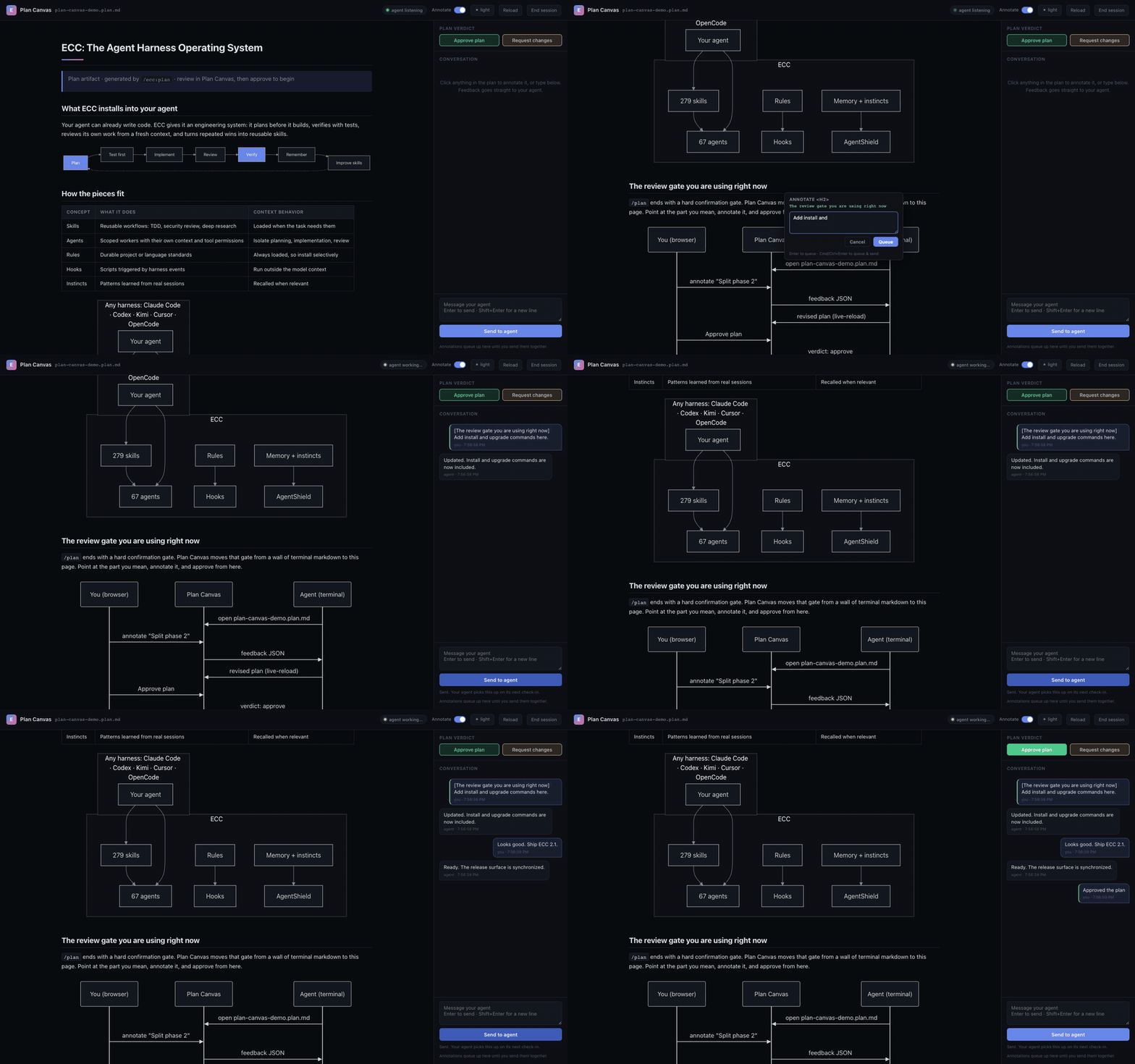
Traditional AI coding tools often stop at responding to a single request. ECC’s design philosophy is to build “continuously evolving agents.” It includes five engineering capabilities:
- Planning: Draft an execution plan before touching code, weighing the pros and cons of different paths
- Testing instinct: Automatically write test cases for code and verify the correctness of changes
- Self-review: Examine its own code from a fresh perspective to spot potential design flaws
- Memory accumulation: Distill recurring effective patterns into reusable “skill packs”
- Safety guardrails: Built-in security mechanisms to prevent the AI from generating malicious or dangerous code
Getting Started: Three Steps to an Agent Workflow
ECC supports several installation methods; the simplest is adding it through the Claude Code plugin marketplace:
- Run
npx ecc-universal setupin your terminal and follow the prompts to choose hook configurations - Or, inside Claude Code, run
/plugin marketplace add https://github.com/affaan-m/ECC - Then enter
/plugin install ecc@eccto complete the installation
Once installed, the agent automatically gains ECC’s engineering capabilities. The team also provides a CLI toolkit called ecc-agentshield, supporting Node.js, Python, Go, Java, Perl, and other language environments.
| |
Technical Highlights: The Thinking Behind the Modular Architecture
Several of ECC’s design trade-offs are worth pondering:
Multi-language hooks ecosystem: It isn’t tied to a single language. Instead, it uses shell scripts as a unified entry point, with TypeScript powering the core logic. This means any tool that can run scripts can plug into ECC’s capabilities.
Skill reuse mechanism: It abstracts the effective patterns the AI discovers during development into “skill packs,” which can be reused by subsequent tasks, forming a feedback loop of continuous improvement.
Non-invasive integration: ECC works through plugin hooks and requires no modification to the agent’s own code. This means it stays compatible with Claude Code, Codex, Cursor, and other platforms — you can even customize it for your own LLM framework.
Who Is It For? Versus Comparable Tools
- Team collaboration scenarios: Need unified AI behavior standards and consistent code quality
- Continuous development workflows: Medium-to-large projects that frequently require planning, testing, and review
- Knowledge accumulation needs: Want to turn one-off conversation experience into a team asset
- Security-sensitive environments: Scenarios that need built-in code review and protection mechanisms
Unlike single-point tools like Cursor and Codeium, ECC doesn’t chase “faster single responses” — it chases “more reliable long-term engineering capability.” It’s more like fitting an agent with the gear system of engineering discipline: slightly slower to spin up, but able to keep producing high-quality results over time.
Final Thoughts
What’s special about ECC is that it doesn’t mythologize AI’s capabilities — it acknowledges the limits of today’s large models: they need bolt-on planners, testing frameworks, and memory systems. ECC chose a more pragmatic path: building a pluggable engineering infrastructure layer. For developers hoping to see AI move from “toy” to “productivity tool,” this path may be the one worth watching.