
Core Development: Gemini’s Voice Update Exposes Bundled-Feature Overcomplication

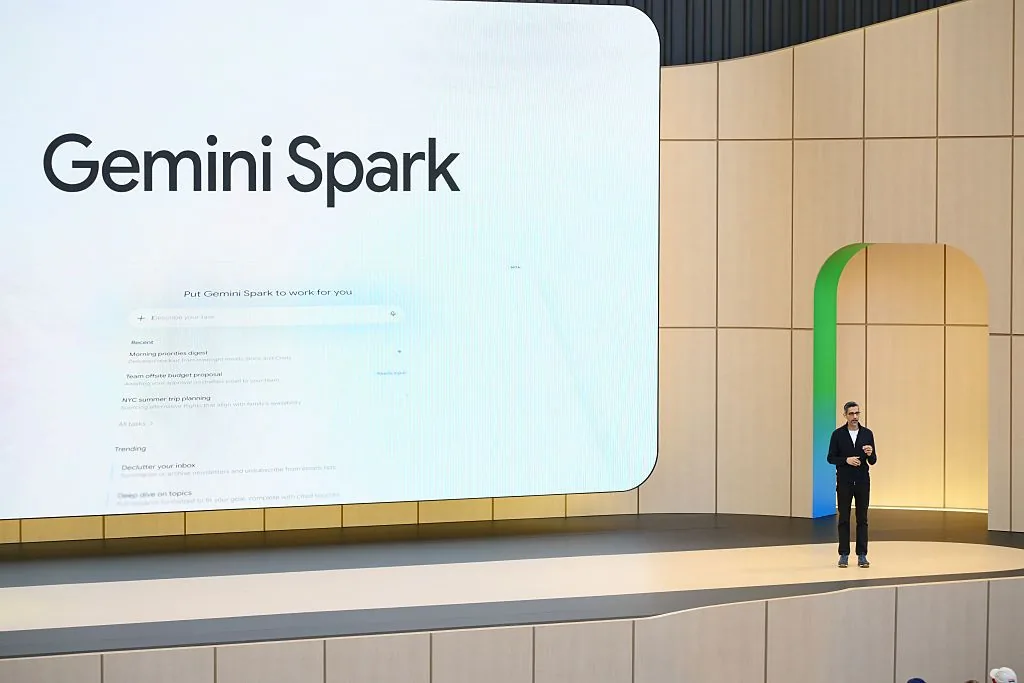
On August 26, 2026, Google unveiled an updated Gemini app featuring new Gemini Live voice capabilities, promising users they “should not have to guess whether a task requires Spark, a Daily Brief, or a quick inbox search.” Yet the very promise underscores a design contradiction: multiple core features each bear distinct branding, icons, and navigation spots, fragmenting the user experience.
Key facts:
- Gemini Live voice feature added, supporting multi-step tasks via natural speech
- Three distinct interactive surfaces coexist in-app: chat, Spark (AI agent), Daily Brief (agenda-like summary)
- Daily Brief aggregates data from Gmail and Calendar to deliver “proactive, personalized updates”
- Spark enables AI agents to take actions on behalf of users but remains visible as a separate mode
The Brand-Fracture Problem: Users Becoming Internal Architects
Within Gemini, Daily Brief attempts proactive prompting but misjudges urgency and relevance—resurfacing past searches unrelated to current tasks. Such behavior feels invasive rather than helpful, particularly when past queries involved sensitive topics like scholarships or medical research.
Spark, despite being one of Gemini’s more functionally valuable components, suffers the same fate: it wears an independent brand identity. While useful internally for team organization, this separation forces mainstream users to choose between modes instead of simply stating a request and letting the system route intelligently.
Gemini is not alone. Anthropic’s Claude required users to toggle between “Chat” and “Cowork” (until recently these modes did not even share conversation history), and OpenAI’s ChatGPT similarly divides its interface between “Chat” and “Work.” All three demand users memorize branding labels for what are essentially interaction modes—a classic case of exposing internal architecture to consumers.
The Contrasting Path: Apple’s Embedded智美 and Text-Only Experiments
A clean alternative appears in Apple’s Siri integration: instead of demanding behavior change, it deepens existing workflows—Spotlight Search, Photos, Camera, and voice commands—making intelligence ambient rather than interruptive.
Another emerging pattern embraces pure simplicity: text-first AI chatbots. Services such as Poke, Ollie, Lindy, Orchid, Lucas, Folk, Tomo, and Instinct rely entirely on one-on-one messaging. Users send a text and receive assistance without navigating a UI maze.
Advantages of this approach:
- Leverages pre-existing mental models: SMS/chat are universally understood behaviors
- Reduces cognitive overhead: No mode-switching required, no feature taxonomy to learn
- Aligns with a16z partner Justine Moore’s recent observation: “People don’t want to open an app every time they need help – they want a contact they can text like a friend. And the gold standard is iMessage.”
Who Should Use What—And When to Wait
- Ready today: Power users comfortable toggling between Chat/Cowork or Spark interfaces; heavy Google ecosystem adopters who can tolerate occasional noise from Daily Brief
- Wait for maturity: Privacy-conscious users whose search histories include sensitive categories; those who expect one natural request to solve heterogeneous tasks; non-technical consumers unwilling to operate like engineers
In closing
AI user experience is entering a maturity phase where computational parity is the baseline. The true differentiator will no longer be model size or modal capabilities, but how respectfully a product honors the user’s existing cognitive architecture—instead of asking them to reverse-engineer the engineer’s one.