
Global AI Health Governance Advances as Chinese Practice Gains International Recognition
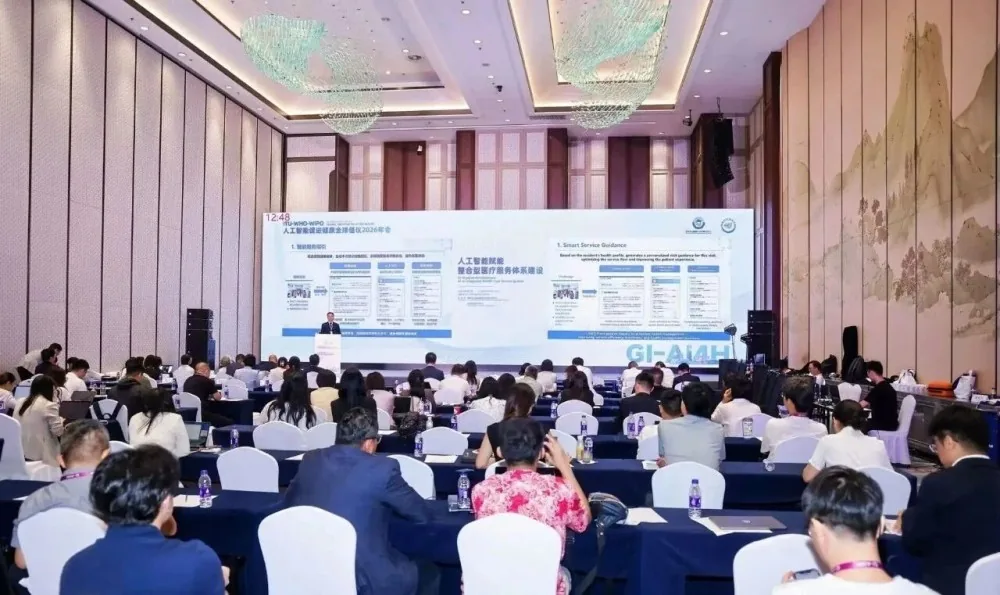
The AI for Health Global Initiative Conference 2026 concluded in Hangzhou, Zhejiang Province, from September 16 to 18. Hosted by the United NationsWorld Health Organization (WHO), International Telecommunication Union (ITU), and World Intellectual Property Organization (WIPO), with co-organization by the National Health Commission’s Health Development Research Center, China Academy of Information and Communications Technology, and China Health Economics Society, the summit marked the first time the annual conference has been held in China since its inception in 2023. This underscores China’s growing influence in global medical AI governance.
Bridging Models and Real-World Implementation in Primary Care
Participants emphasized that AI for health must be consumer-driven toward global health goals, with coordinated efforts across governance regulation, intellectual property protection, and technical standardization. iFLYTEK Medical, a domestic pioneer in medical AI, actively contributed to global governance discussions. At a forum organized by the National Health Commission’s Health Development Research Center, its Vice President Liu Yang delivered a keynote on “AI Empowering PHC: From Large Models to Real-World Applications,” detailing their primary healthcare digitalization journey.
Powered by the Spark Medical Large Model, their service ecosystem spans pre-diagnosis, during-diagnosis, and post-diagnosis phases. Through integrated health management centers, intelligent general practice clinics, and digital home doctors—backed by a primary care integrated intelligent information platform—the system targets four key areas: enhancing pre-service experience, improving diagnostic capability, strengthening post-service health management, and boosting institutional operations. The implementation addresses chronic issues like insufficient primary care capacity, low service efficiency, and suboptimal patient experiences.
Chinese Solutions Shine at WHO Stage with Expanding Impact
The company’s initiatives have received sustained international recognition. At the 78th WHO Assembly in 2025, iFLYTEK’s Smart Medical Assistant was featured as a best practice at China’s side event and received dedicated coverage on the National Health Commission’s English website. At the 79th WHO Assembly in 2026, the AI-Powered Resident Health Profile System, validated through mature deployments in Shanghai’s Jing’an District, reappeared on a major side event—both becoming benchmark samples of China’s grassroots health implementation for global dissemination. At this year’s innovation showcase, the Smart Medical Assistant attracted intensive engagement from health officials and experts across multiple countries.
Notably, He Zhiyang, Director of iFLYTEK Medical Research Institute, underscored at the Medical AI Benchmarking and Talent Governance Forum that unified benchmark evaluation systems are essential for scaling AI deployment. Such standardization, he emphasized, is foundational to solving authentic clinical problems, safeguarding medical safety, and ensuring orderly industry development. The company has long contributed to domestic and international AI standardization, covering large model capabilities and multi-scenario evaluation frameworks for clinician assistants and personal health assistants.
A Dual-Track Global Governance Approach
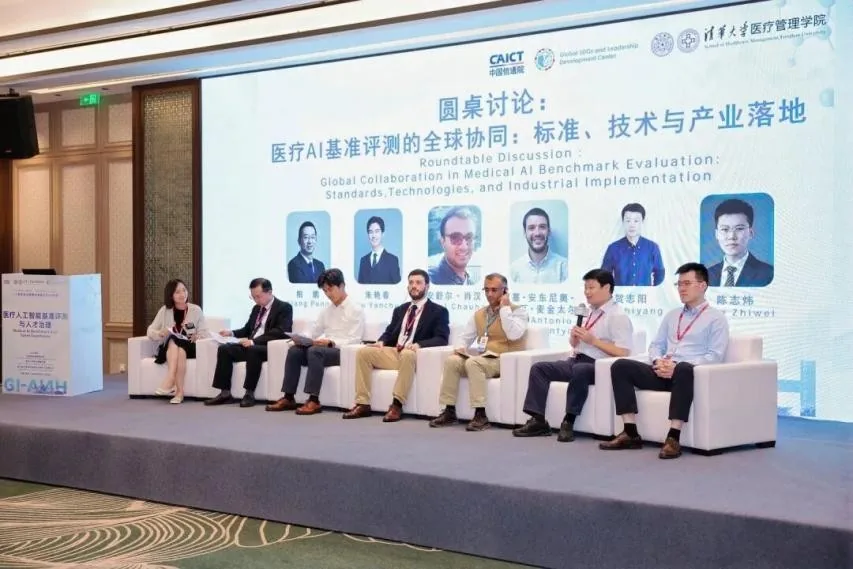
iFLYTEK Medical’s strategy combines deep localization with open collaboration: refining technology through real-world Chinese healthcare applications while actively shaping international rules. This “local innovation plus global integration” model addresses resource disparities in primary care while offering alternative pathways for global AI governance.
Practical Takeaways for Industry Stakeholders
- Who should act now: County-level hospital administrators and regional health commission信息化 officers can evaluate integration of their integrated intelligent information platforms;
- Wait and watch: Regions without AI capacity planning should wait for internationally harmonized benchmark standards before finalizing technology choices;
- Cross-sector alignment: R&D leaders should monitor benchmark updates and conduct internal compatibility validation.
Final Commentary
Transitioning medical AI from technical validation to scale implementation requires parallel progress in governance frameworks and practical pilots. China’s grassroots experience provides valuable reference, yet cross-system standard mutual recognition and成果 sharing remain critical next-step challenges.
(Word count: 1478)