
A Shift From Agent Demos to Agent Infrastructure
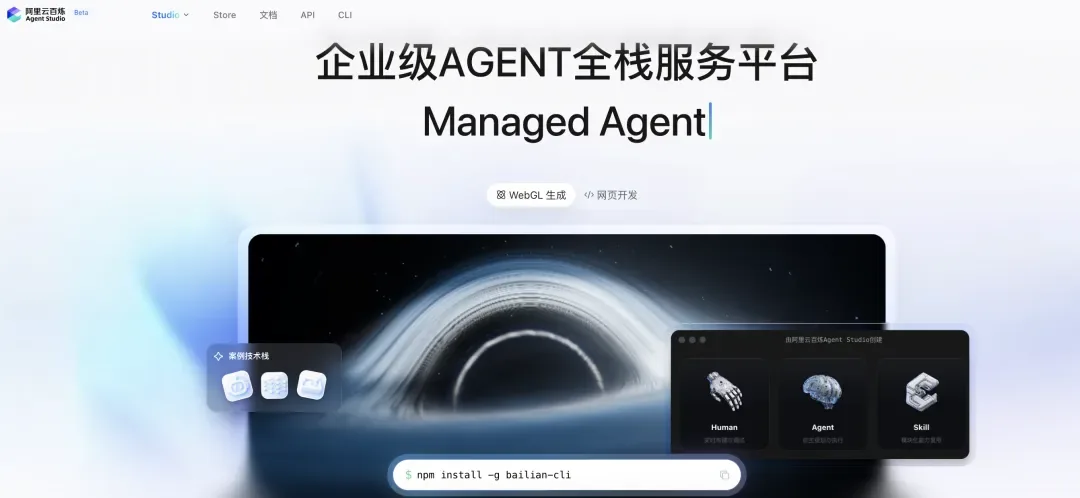
Alibaba Cloud’s Agent Studio, launched on Alibaba Cloud Bailian in August, is less about another visual agent builder and more about consolidating the infrastructure enterprises need to run agents in production.
The same direction is visible across major cloud vendors. Microsoft Foundry has added production-oriented capabilities such as Hosted Agents, Toolboxes and Memory. Google Cloud introduced Gemini Enterprise Agent Platform with build, scale, govern and optimize functions in one place. AWS Bedrock AgentCore separates runtime, memory and gateway capabilities into composable services.
The reason is straightforward: as agents multiply, run longer tasks and call more tools, the old application infrastructure model becomes insufficient. An agent here refers to AI software that can break down goals, call tools and continue execution with state, rather than simply answer chat messages.
Costs Are Moving Beyond Tokens
Enterprise agent deployments create costs beyond model inference. A McKinsey Enterprise AI FinOps survey in July found that as companies moved from isolated AI use cases to broader deployments, total AI spending nearly quadrupled, while 93% of surveyed organizations said AI spending had exceeded budget. BCG also separated Agentic AI costs into one-time setup costs and recurring operating costs, the latter affected by orchestration, tool-call frequency, monitoring and system integration.
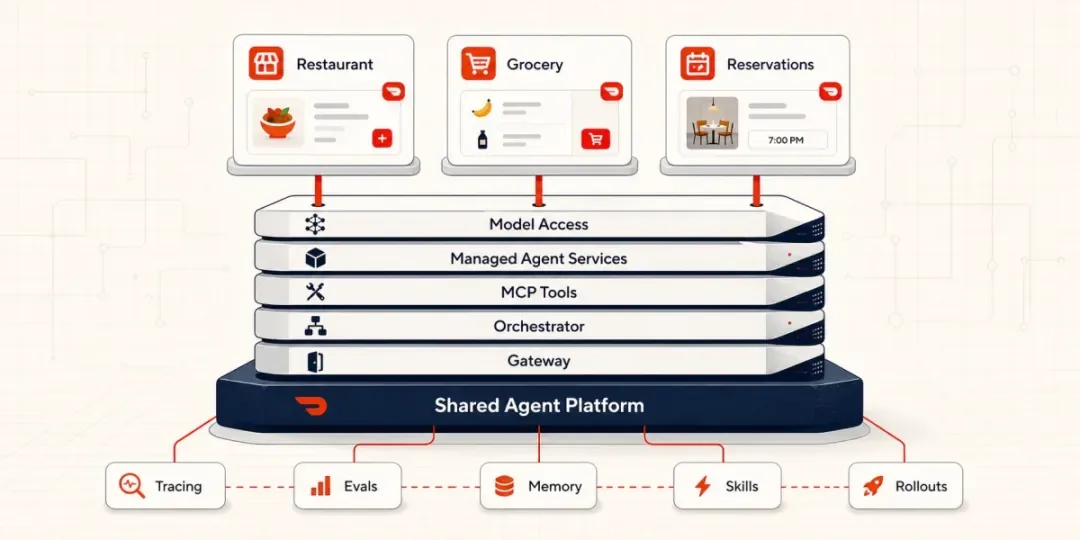
This explains why companies are exploring three routes. Some build their own platforms, as DoorDash did by centralizing memory, model access, tracing, evaluation and rollout controls, plus an Agent Gateway for identity, permission, credentials, rate limits and audit. Others use frameworks such as LangGraph, LangChain, AutoGen or CrewAI; Lyft used LangGraph to compress a customer service agent project from roughly six months to a few weeks. The third route is the enterprise agent platform, where cloud providers absorb more runtime, governance and integration work.
What Agent Studio Tries to Manage
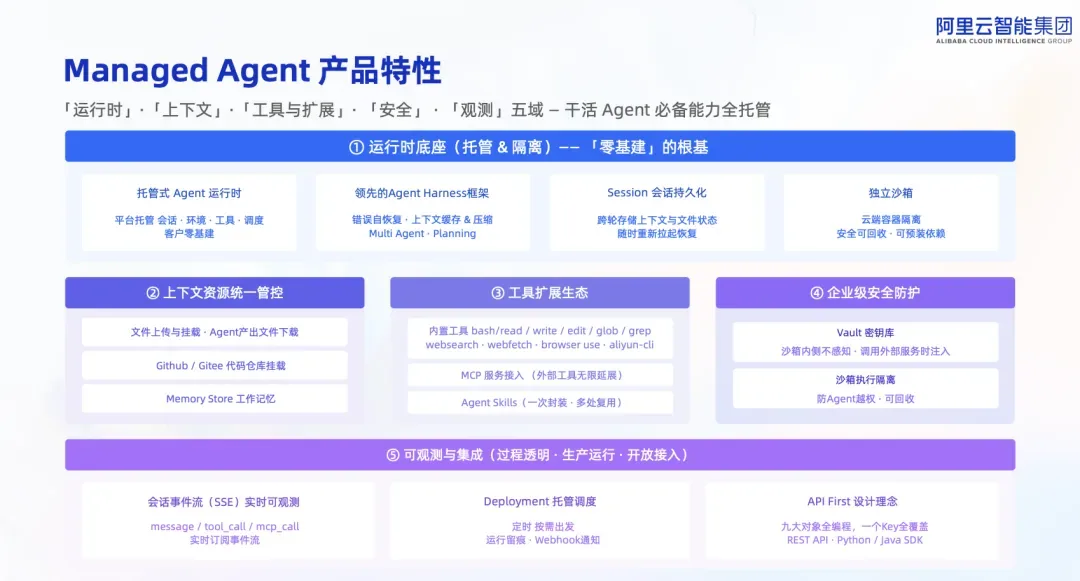
Agent Studio’s Managed Agent can be seen as a managed agent runtime. Developers define what the agent should do, while the platform handles execution, isolation, state and credentials. This targets a known engineering challenge: Anthropic said in April that it had to separate Session, Agent Harness and Sandbox after initially placing them in one container, because fault isolation, state persistence and networking became problematic.
Alibaba Cloud says a policy review workflow illustrates the impact. A complex insurance policy review that previously took underwriters three to four hours can be shortened to about 15 minutes after being packaged as a Managed Agent, with more than tenfold efficiency improvement and a per-policy cost of 0.12 yuan.
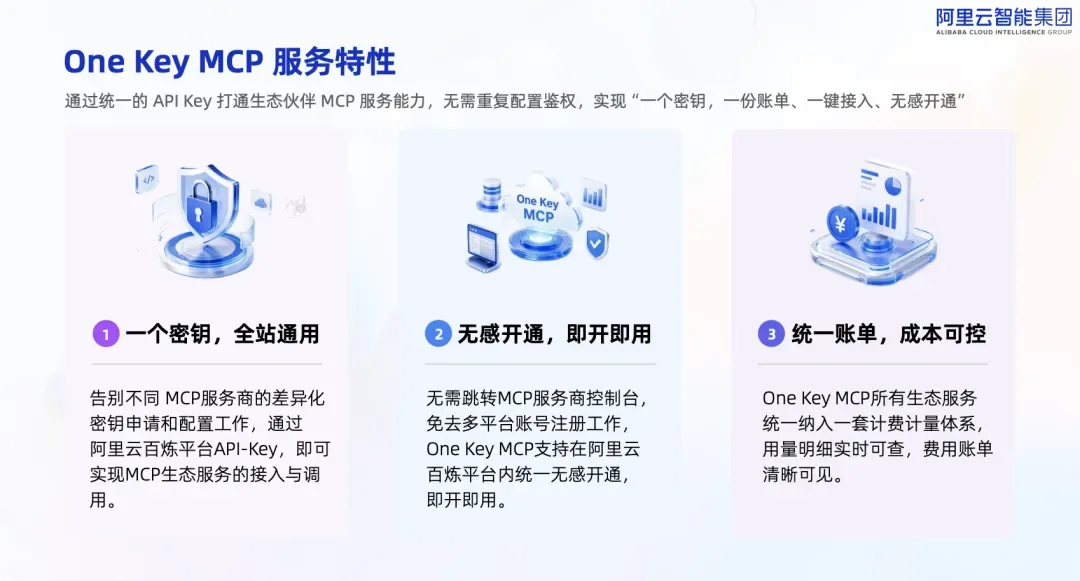
The platform also addresses tool access. MCP, or Model Context Protocol, standardizes part of the way agents connect to tools and data sources, but developers still need to manage accounts, API keys, authentication and billing. Agent Studio’s One Key Service attempts to collapse multiple authentication chains into one API key. Alibaba Cloud says the first batch of One Key MCP integrations includes 14 cloud marketplace partners across ecommerce, geographic information, finance, law, industrial research and logistics, with nearly 50 MCP ecosystem providers expected to join later.
Search, Memory and the Next Cloud Interface
For complex work, agents also need to know what information is missing and what has already been learned. Agent Studio adds Agentic Search, which interprets intent, splits sub-questions, searches relevant knowledge bases and adjusts queries or retrieval strategies when results are insufficient. Alibaba Cloud had earlier launched Knowledge Studio, supporting multimodal search answers, Agentic Search and hybrid retrieval across up to 15 knowledge bases. Memory Studio organizes memory into observation memory, user memory and skill memory.
Agent Studio Playground puts Flow Agent, Managed Agent, RAG, Memory, MCP and Skill into a unified experience center with preset templates. Developers can run a scenario first, inspect the underlying capabilities and generate workflows or agents through Vibe Builder using natural language.
The broader implication is that agents may become a new way to consume cloud services. The competition will not only be about model calls, but also about whose platform an agent runs on, which services it invokes, and where its state and data accumulate. Still, reliability, trust, permission control, auditability and cross-platform standards remain unresolved. In the near term, the strongest value of enterprise agent platforms is reducing repetitive engineering work; in the longer term, the winner will be the platform enterprises trust enough to hand over more of the agent execution chain.