
AI Payment Enters the Era of ‘Trusted Payment’

On September 11, 2026, Alipay unveiled at the 2026 Inclusion·Bund Conference that its AI payment system has advanced further—from ‘payable’ to ’trusted payment’. This upgrade includes three ‘AI Collection’ capabilities, the launch of the AI Wallet Agent, and new application scenarios:
- Launch date: September 11, 2026 (announced at the Bund Conference)
- Core products: AI Wallet Agent, Vibe Pay, Skill Pay, Machine Pay
- New scenarios: AI Auto-Subscription, AI Auto-Bid, AI Auto-Order
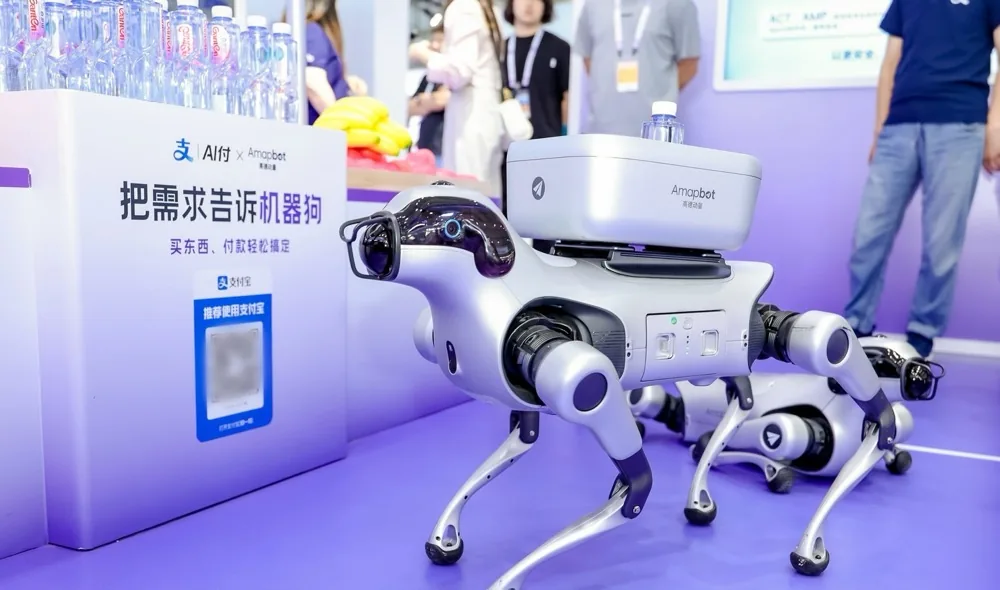
- Applied devices: Qwen AI Glasses, VIAIM AI Earphones, Godot Momentum robot dog ‘Tutu’
- Underlying infrastructure: APASS (built on KYA—Know Your Agent—principles)
- Open status: Available to broader Agent commercial ecosystem; KYA interoperability being explored with Visa and Mastercard
The Three ‘AI Collection’ Capabilities and AI Wallet Agent

Alipay’s Vibe Pay, Skill Pay, and Machine Pay form the core of the ‘AI Collection’ product suite:
- Vibe Pay: For developers—AI-generated webpages or mini-programs charge per use, akin to a physical store’s payment QR code
- Skill Pay: One-time integration enables Skill protection, pricing, and payment collection—supports both one-time and monthly subscription models
- Machine Pay: Agent usage triggers automatic charging; pay-as-you-go model, similar to utility meters
The newly launched AI Wallet Agent focuses on transaction security and trustworthiness. When users say ‘order a coffee’, Qwen AI handles ‘which coffee, where’, while the AI Wallet Agent verifies intent alignment, budget adherence, and authorization scope, executing final payment only after result confirmation. It maintains full transaction context to close the loop on risk identification and authorization validation.
A notable data contrast: AI agent-assisted purchase tasks grew 7× in five months, yet user average monthly payments rose only 3×—indicating either higher payment frequency per task or greater task complexity involving multiple items, highlighting AI’s enhanced capability to automate multi-step decision-making.
Real-World Commercial Deployment
AI payment is extending from the digital to the physical world:
- Qwen AI Glasses: Payment completed via iris recognition with a single ’look’
- VIAIM AI Earphones: Voice commands enable phone top-ups, parking fees, and coffee orders
- Godot Momentum robot dog ‘Tutu’: Under user authorization, autonomously completes inquiry, ordering, payment, and pickup, then returns with goods
APASS, built by Ant Group, implements a dual ‘identity + behavior’ trust chain to resolve the core question—who is paying for whom? When an agent initiates payment, the system continuously evaluates its identity, transaction intent, and authorization boundaries; payments are blocked outright for clear overreach (saving auditable records) or forwarded for user confirmation when ambiguity arises.
Global Expansion and Ecosystem reach
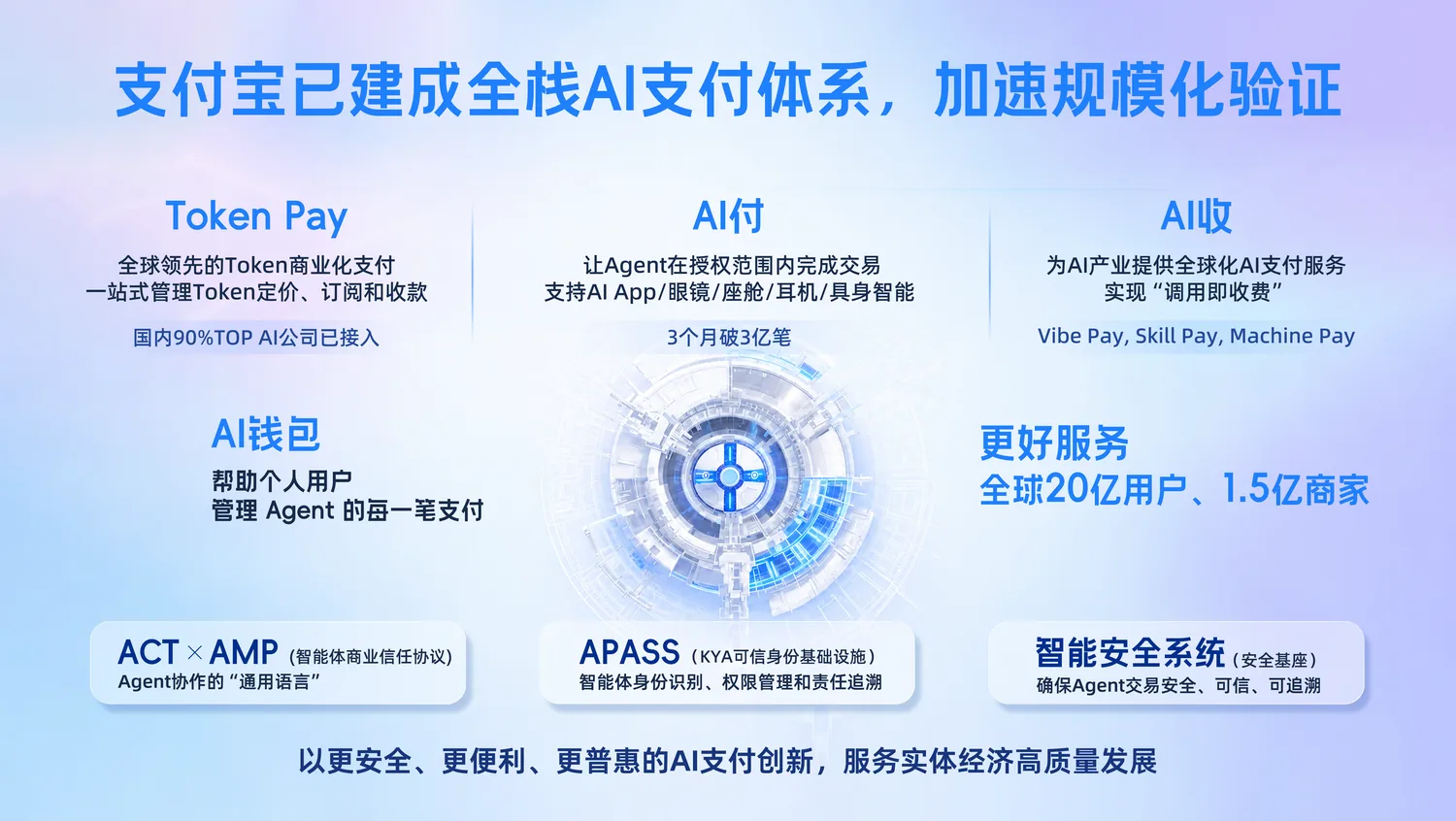
Alipay and Ant International already offer global payment servicing across 200+ countries and regions to AI developers, with full coverage of 2 billion users and 150 million merchants through ACT, AMP protocols, and identity interoperability.
More significantly, Visa and Mastercard are jointly exploring KYA framework interoperability with Alipay+. This implies intelligent agent identity and trust standards may evolve into a universal layer for cross-platform commercial collaboration.
User Recommendations
- Early adopters: AI app developers (Vibe Pay/Skill Pay for monetization), frequent buyers (AI Auto-Subscription/Bid to reduce decision fatigue), and embodied AI hardware makers (Machine Pay for service-based revenue).
- Recommended to wait: Enterprise customers—despite APASS’ launch, KYA interoperability with international card networks remains exploratory; cross-border compliance validation requires further observation.
In Closing
AI payment competition has shifted from payment channels to ’trusted infrastructure’. By applying KYA to extend trust from ‘humans’ to ‘AI agents’, APASS redefines transaction boundaries for the AI economy—and the entity that shapes these rules first stands to dominate the next AI commercial inflection point.