
Moving Beyond Model APIs: Alibaba Launches Full-Stack Agent Solution for Smartphones
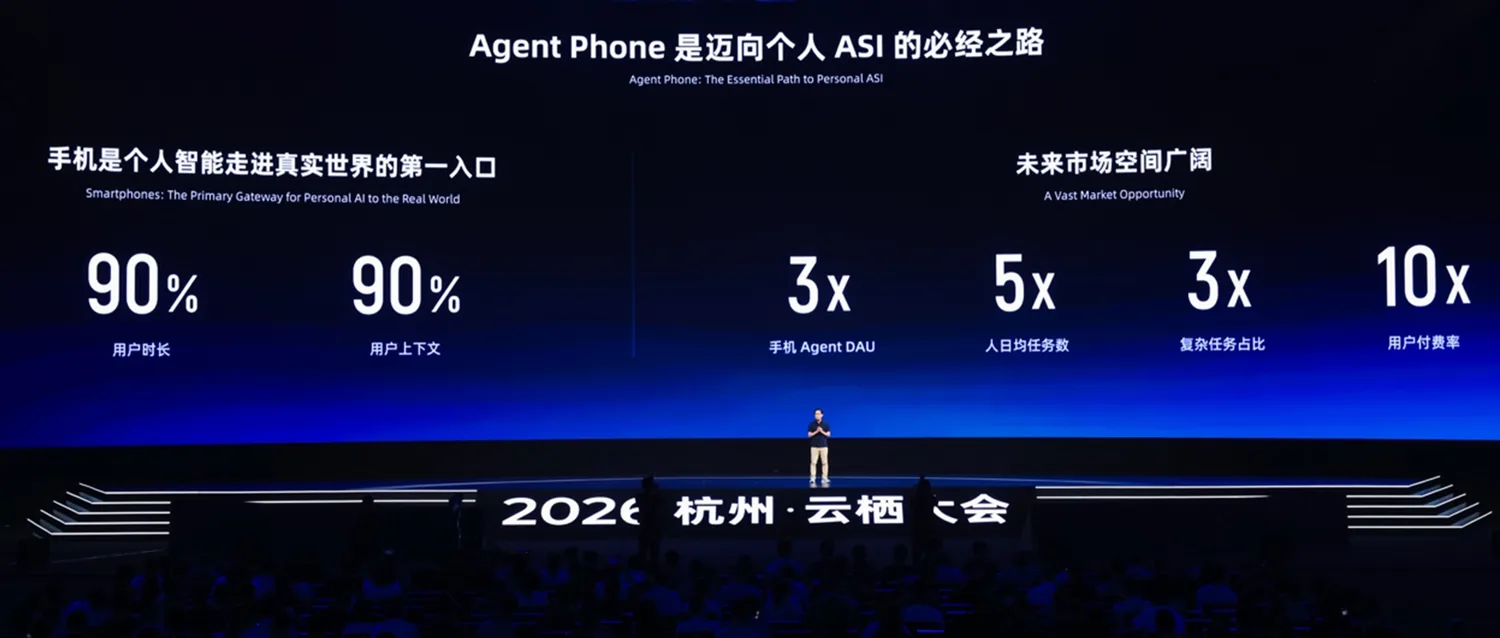
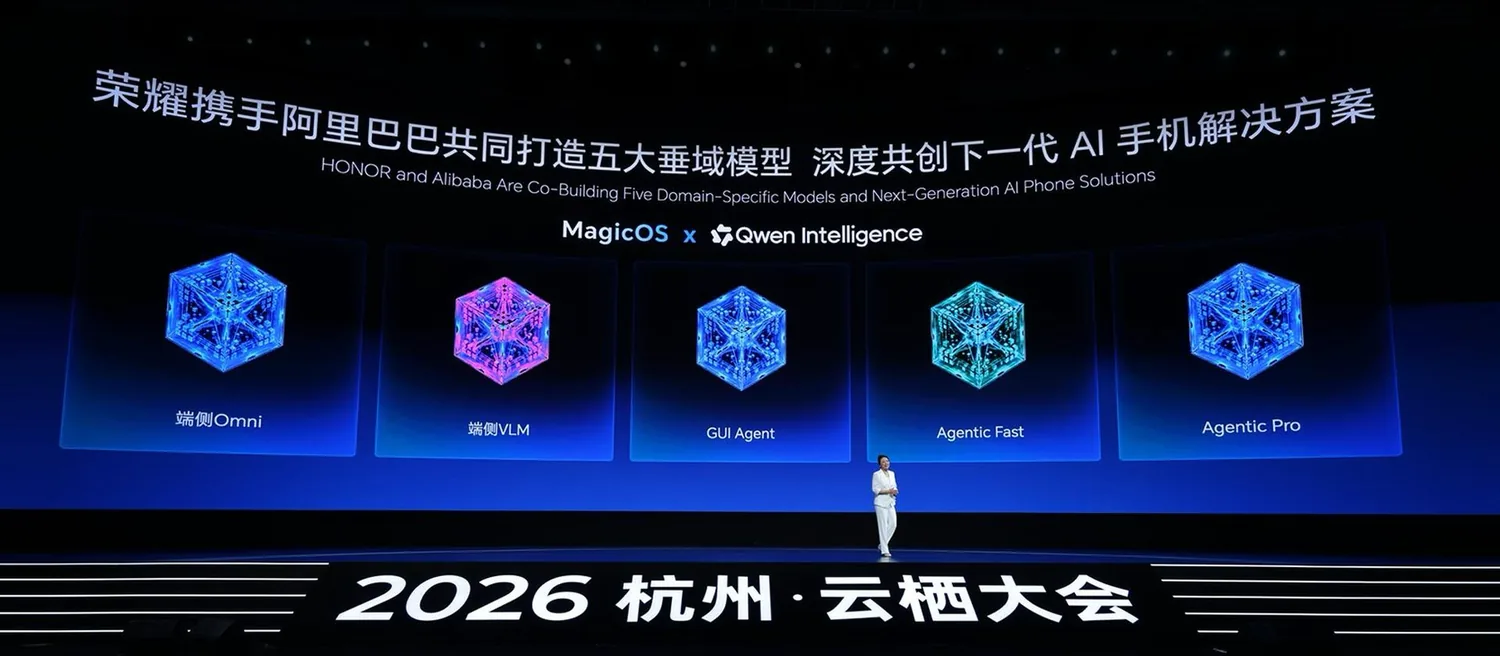
On September 23, 2026, Alibaba officially launched Qwen Intelligence (QI)—a full-stack solution tailored for smartphone intelligence—at the Cloud Computing Conference (Cloud栖). Simultaneously, Honor announced that its upcoming Magic9 series will be the first commercial devices to deploy QI, with Robot Phone also supporting it.
Key launch facts:
- Launch date: September 23, 2026
- First device: Honor Magic9 series (to launch on September 28)
- Platform coverage: Honor MagicOS + Robot Phone
- Business model: B2B licensing; no hardware manufacturing
- ** openness**: Modular, compositional, and customizable for multi-vendor integration
This release marks the transition of smartphone AI from “answering questions” to “executing tasks” as an Agent. QI is not merely an API for Large Language Models (LLMs), but an integrated stack comprising models, execution frameworks (Harness), cloud-edge collaboration, security capabilities, and application tools.
The Three-Layer Agent Architecture: Coordinating Brain to Hand
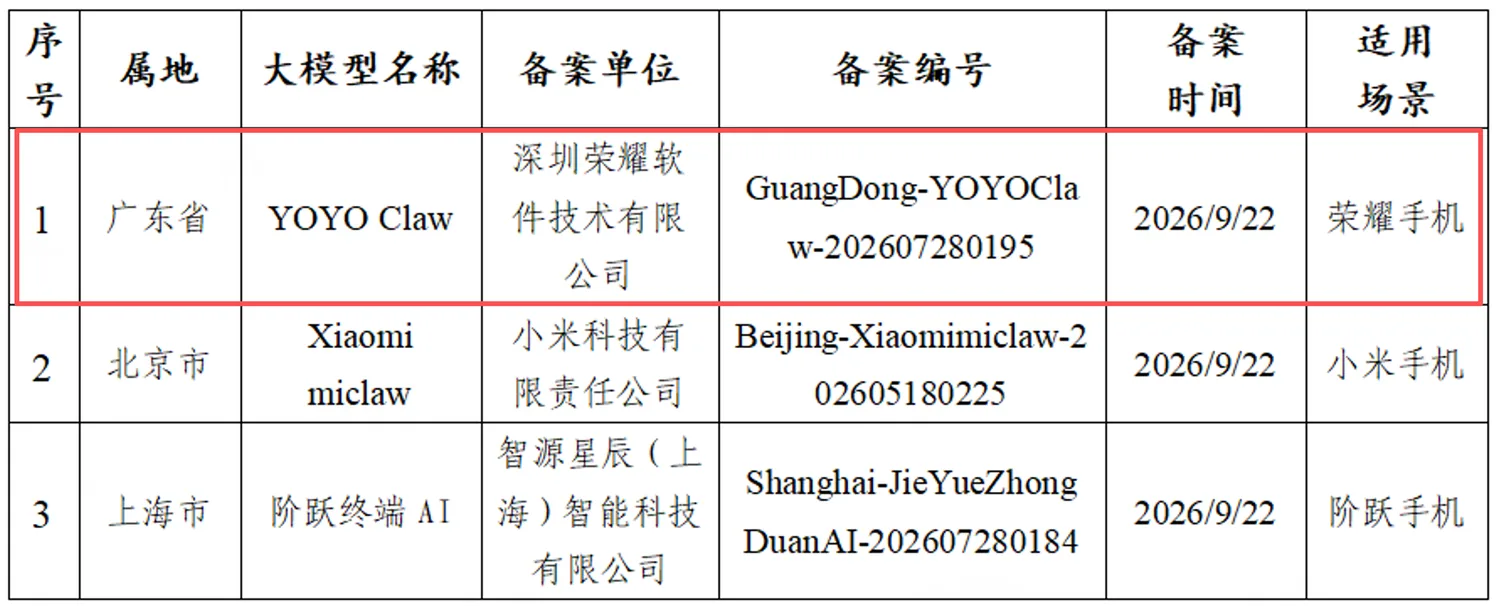
QI adopts a three-tier architecture:
- Tier 1: Advanced Model. Built on the Qwen LLM, optimized for smartphone scenarios to continuously understand intent, invoke tools, execute actions, receive feedback, and iterate decisions.
- Tier 2: Full-Stack Platform. Modular design allows phone makers to mix-and-match model backbones, Harness, cloud-edge collaboration, security, and custom tools/Skills.
- Tier 3: Production Solutions. Three agent suites debut: Mobile Planner Agent, Mobile-Use Agent, and Mobile Creative Agent.
The surprise lies in the协同 evolution principle: Alibaba’s Xu Zhuhong emphasized that Agent performance hinges on synchronized progress across models, Harness, runtime, and OS—explaining why many previous smartphone Agents remained Demo-stage: enterprises lack models, but lack closed-loop task execution capabilities.
Take Mobile Planner Agent: its “dual-layer memory” (work memory evolving per task + long-term memory building user profiles) enables complex planning. Jointly with Honor, Alibaba reports 91.8% task accuracy, 3.6-second GUI operation speed, 100+ steps per long task, and 90% end-to-end closure rate.
Mobile-Use Agent uses an “API-first + GUI fallback” hybrid: APIs for efficiency where available, visual understanding for coverage of legacy apps. vivo’s AI VP Zhang Fei noted most ecosystems aren’t Agent-native, making this dual approach pragmatic.
Rewiring the Supply Chain:Chip, Device, Model Teamwork
In a panel, Qualcomm’s VP Xu Hao outlined clear boundaries:
- Chips makers provide edge compute and foundation;
- Phone makers own hardware, OS, and user channels;
- Model providers deliver deep understanding and extend into Agent/tool integration.
Alibaba positions itself as a middle-layer infrastructure supplier—offering QI openly without building hardware—Contrasting Apple’s vertical integration and Google’s Gemin i embedding in Android.
Alibaba also released four benchmark suites for real-world evaluation, covering complex planning, cross-app execution, actual phone tasks, and safety responses, assessing 200+ tools and 1,000+ scenarios—a first-of-its-kind industry尺.
Who Should Buy Now—and Who Should Wait?
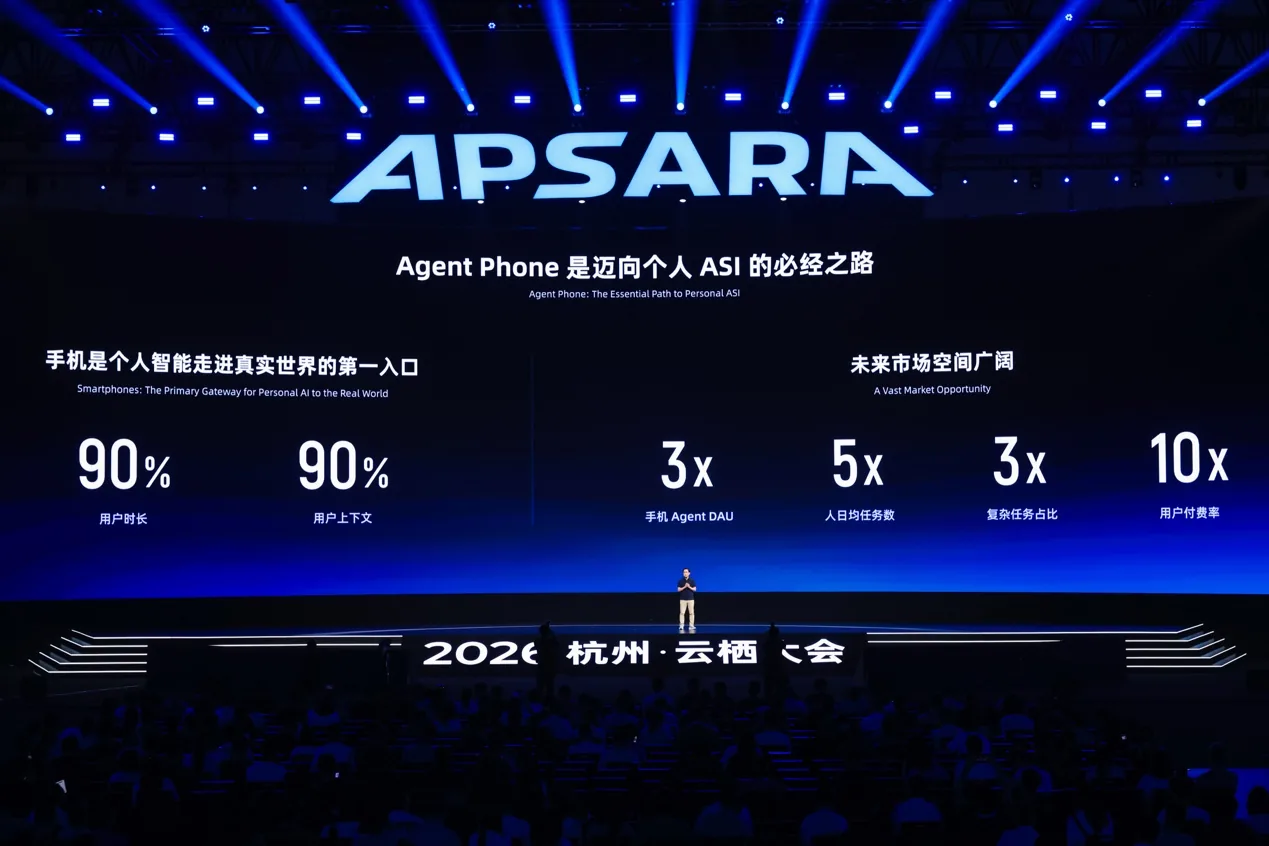
- Early adopters: Power users prioritizing task automation and proactive assistance; developers and enterprises seeking open Agent ecosystems beyond Apple’s walled garden.
- Wait-and-see: Casual consumers whose needs are basic Q&A—current Agents target advanced workflows (e.g., cross-app travel planning, creative editing); broader devices and better ROI expected in 2027.
Final Word
As smartphones enter the Agent era, competition shifts from parameter battles to real-world task fidelity, execution stability, and industry collaboration. Alibaba’s infrastructure-betting, if widely adopted, may accelerate a homegrown Chinese AI-phone paradigm—beyond mere specs.