
Core Announcement: AI Lip-Sync Technology Live

Amazon Prime Video has officially launched an AI-powered lip-sync technology that aligns human-dubbed audio with on-screen mouth movements, significantly enhancing the viewing experience for international audiences. The feature is currently in a limited rollout and will expand to additional titles over time.
- Launch date: September 2026
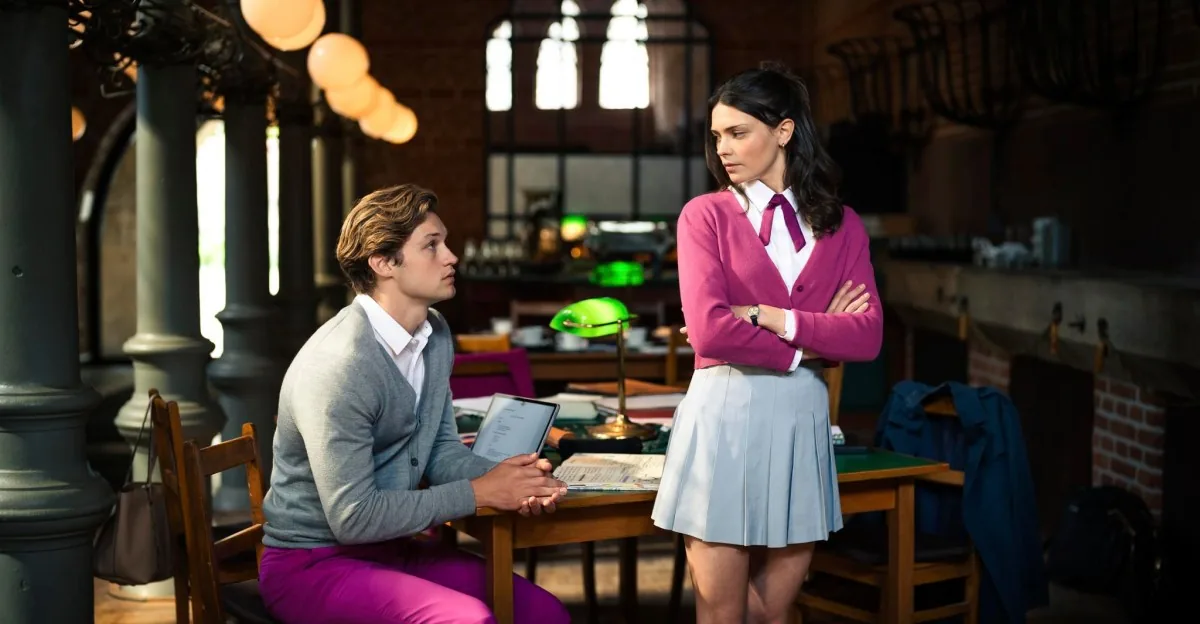
- Available content: Season 1 and 2 of the German series Maxton Hall with English dub (globally)
- Season 3 integration: Scheduled for December 9, 2026
- Language support: English only at launch; prior experiments included Spanish
- Technology type: Hybrid of AI processing and visual effects (not pure AI voice cloning)
Technical Implementation and Context
Historically, human-dubbed content has suffered from lip-sync mismatch—translator-composed dialogue rarely matches original actor timing, forcing viewers to choose between linguistic comprehension and visual coherence. Prime Video’s solution combines AI algorithms with facial animation tools to adjust pixel-level mouth geometry so lip shapes align with translated speech cadence.
An important nuance: while Meta and YouTube recently introduced auto-dubbing for creators with optional lip-sync toggles, those systems rely on synthetic voice generation. Prime Video’s approach is distinct—it augments professionally recorded human配音 performances rather than replacing them. This preserves actors’ original vocal performances while solving the visual synchronization problem.
The rollout reflects a two-phase strategy:
- Experiment phase (2025): AI-aided dubbing trialed across 12 movies and TV shows—including El Cid: La Leyenda, Mi Mamá Lora, and Long Lost—with English and Spanish variants
- Commercial launch (2026): AI lip-sync rolled out as a standard feature for English-dubbed Maxton Hall
Comparative Landscape: Where Prime Video Fits
Limited public data exists on pricing or technical specs, yet positioning within the broader AI localization ecosystem is clear:
| Aspect | Prime Video | Meta/YouTube |
|---|---|---|
| Target users | Streaming platforms / studios | Individual creators |
| Audio source | Professional voice actors | AI-generated speech |
| Primary benefit | Authenticity preservation | Speed and scalability |
| Current rollout | Maxton Hall English dub only | Creator-facing studio tools |
This matrix underscores diverging priorities: content platforms prioritize artistic fidelity, whereas creator tools prioritize operational efficiency.
User Guidance: Who Should Engage Now?
- Ideal early adopters: Non-native English speakers who prefer dubbing over subtitles; Maxton Hall fans; viewers who judge quality by audiovisual consistency
- Recommended to wait: Spanish-language viewers (no timeline announced for Spanish launch with lip-sync); users uncomfortable with AI-modified facial imagery; non-Prime Video subscribers (feature requires active subscription)
Final Thoughts
This advancement shifts localization beyond mere intelligibility toward perceptual immersiveness. Lip-sync precision doesn’t alter the fact of dubbing—but it eliminates the most jarring disconnect between sound and image, lowering the cognitive load required for cross-cultural storytelling.