
Anonymous Model Space Bunny Surges, Key Facts at a Glance
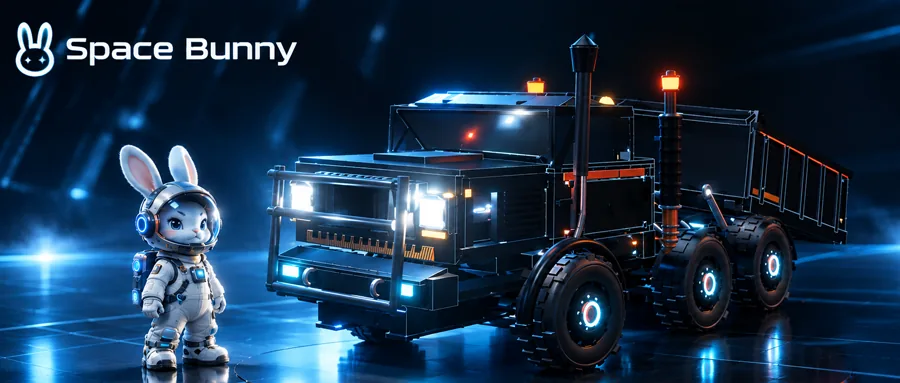
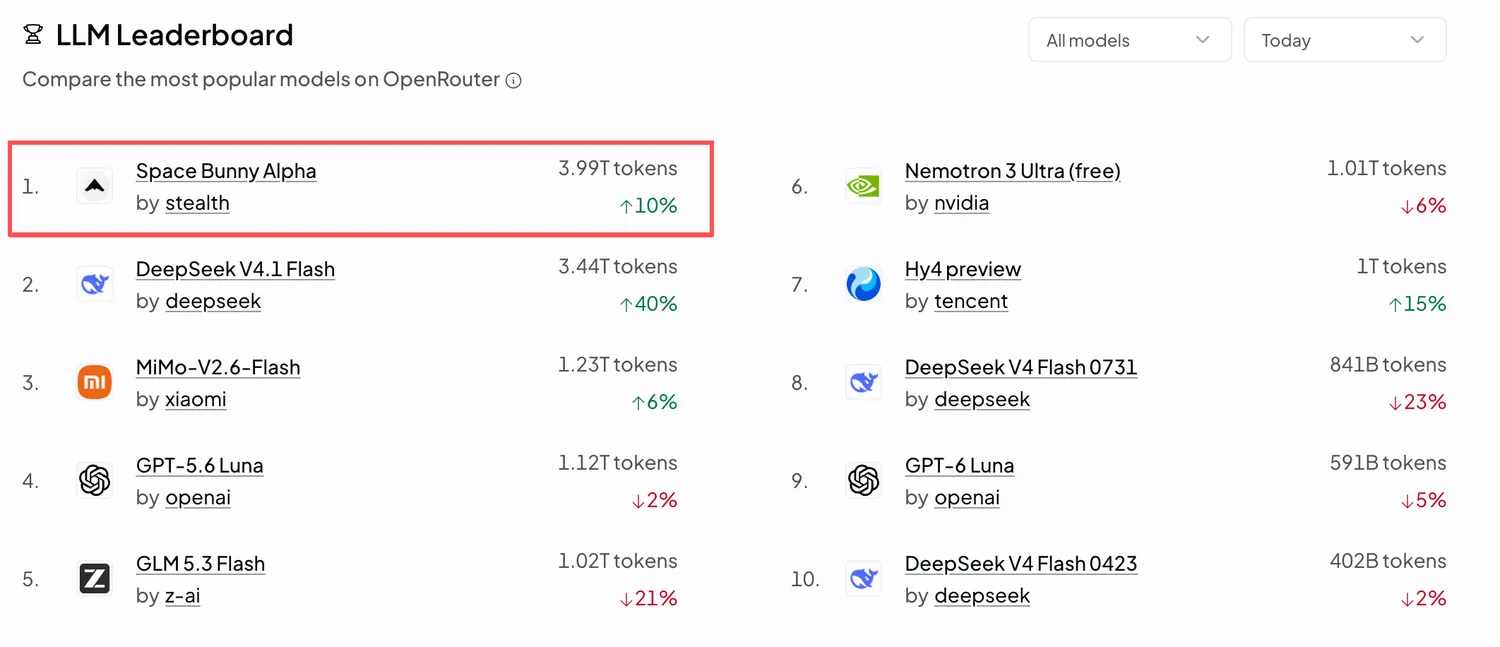
The mysterious Space Bunny model launched on September 23 and rapidly gained traction, climbing to #1 on OpenRouter’s daily API call leaderboard while holding steady at #2 on OpenCode’s usage ranking. By September 28, views on OpenCode’s announcement post have exceeded 1 million, with one test post attracting 100,000 readers.
Confirmed technical attributes include:
- 1 million token context window, significantly wider than mainstream models
- Multimodal input capability, supporting mixed text/image prompts
- Fully anonymous operation, with developers pledging zero user data retention during the anonymous phase
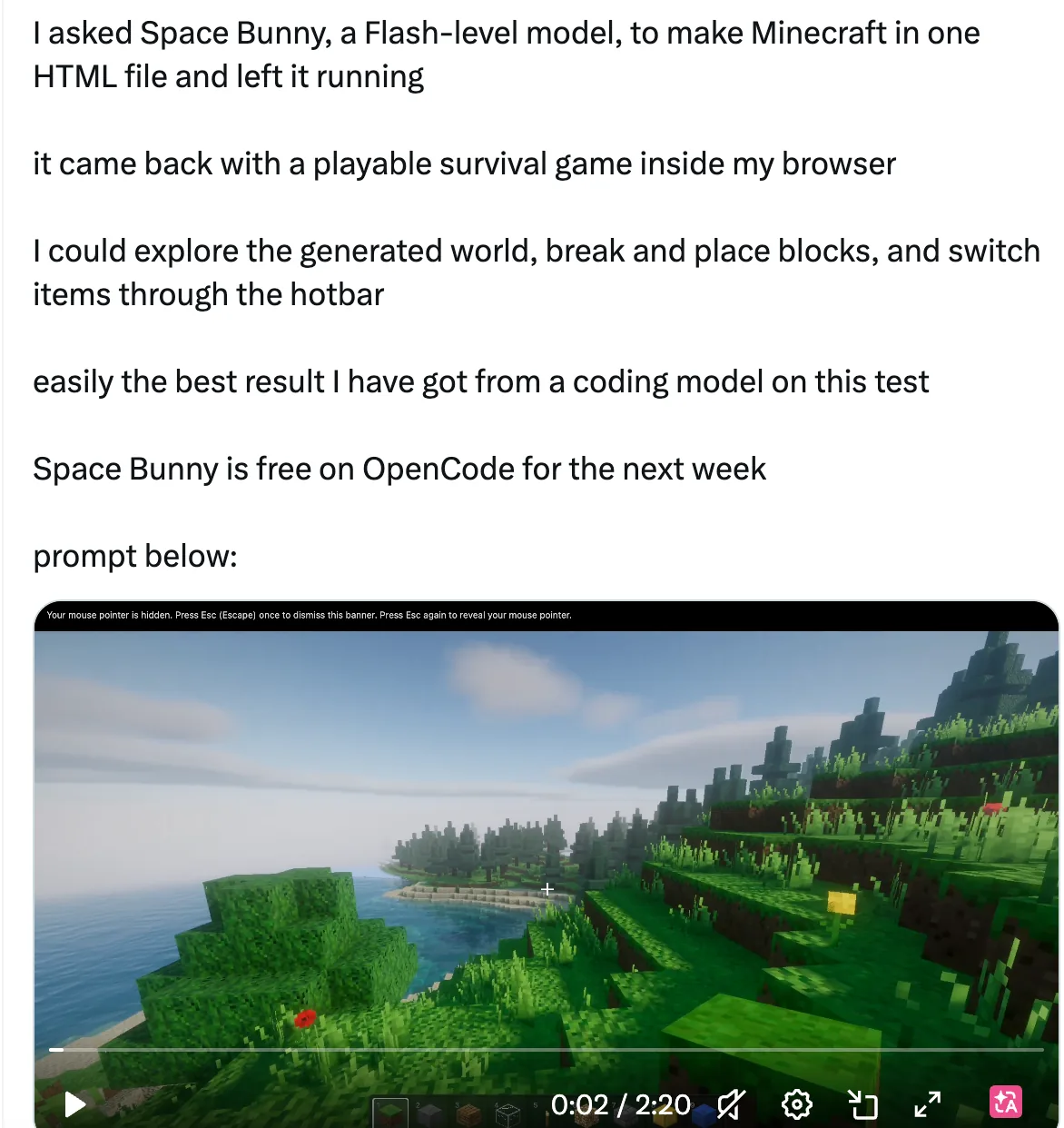
- Free access on the OpenCode platform
- Strong evidence suggests Flash-type architecture—prioritizing speed and cost-efficiency over raw capability
Expected vs. Actual: Where Space Bunny Shines—and Stumbles
Space Bunny’s standout performance centers on 3D modeling and frontend animation generation. Multiple developers produced production-grade Three.js projects in single turns, without iterative refinement.
Verified real-world examples:
- Complex mechanical bee: Using a comprehensive Three.js prompt, Space Bunny’s modeling accuracy, metal materials, and gear animation were rated superior to Claude Opus 5 by testers
- Future truck model: Completed in 85 minutes, featuring realistic suspension, hydraulics, and interactive view controls
- GPU-powered fluid simulation: 1,564 lines of pure WebGL code (no external libraries) generating drag-responsive particle animations
- Black hole interactivity: Elastic deformation across multiple scene phases, generated in under ten minutes
A key performance anomaly emerged: While “speed is very fast” was the common community refrain, actual task times tell a different story—94 minutes for a flight simulator and 85 minutes for the truck 3D model suggest latency well beyond typical Flash-model response patterns.
In voxel content, Space Bunny approached GPT-6 Astra’s completeness: its voxel garden auto-lit streetlights at night, rendered fish and falling petals coherently, though with visible roughness in peach-tree texture, water-pool geometry, and missing windows on the pavilion.
Head-to-Head Comparison: Capability Matrix (Based on Reported Tests)

| Capability | Space Bunny | GPT-6 Astra | Claude Opus 5 | Gemini 3.8 Flash |
|---|---|---|---|---|
| Rocket launch animation | 3-minute output, realistic smoke/ flame, minor support-structure flaws | Highest fidelity, physically accurate fluid/particle sim | Good quality | Medium quality |
| Voxel garden | Harmonious layout, light-up streetlights, visible roughness in foliage/architecture | Pixel-perfect, natural light/shadow physics | Not tested | Not tested |
| Storm lighthouse animation | Strong atmosphere, weaker physics | Accurate wave Mechanics, structurally sound | Not tested | Not tested |
| Three.js complex model (bee/truck) | Superior mechanical detail and articulation | Not tested with same prompt | Weaker than Space Bunny | Not tested |
| Frontend motion effects | Successful: black hole, fluid, solar system simulator | Not tested | Not tested | Not tested |
Who Should Use It Now? Practical Guidance
Based on verified tests, we recommend:
Try immediately if: You’re an indie dev building 3D/voxel demos; a frontend engineer needing rapid HTML prototype generation; or a researcher exploring massive-context memory without data retention concerns
Wait if: You require guaranteed sub-30-minute delivery for live demos; production-grade visual polish for commercial release; or a legally auditable model with clear provider accountability. Notably, the anonymous status precludes enterprise SLA guarantees or usage monitoring.
Final Thought
Space Bunny’s virality proves the market still craves audacious demonstrations—models that deliver working, interactive products with transparent operation and no hidden costs. Its rise is less about one company’s staging strategy and more about collective validation of utility, openness, and experimental freedom.