
Core Announcement: Opus 5.5 Officially Launched
Anthropic officially launched Claude Opus 5.5 on September 23, 2026, the first model in its new Claude 5.5 family, emphasizing performance parity with Fable 5.1 while achieving 40% lower operational costs.
Key Facts at a Glance
- Release date: September 23, 2026
- New version: Claude Opus 5.5 (first in 5.5 family)
- Availability: Accessible to approved institutions immediately
- Weight release: Biology research validation program live; cybersecurity program expands in coming weeks
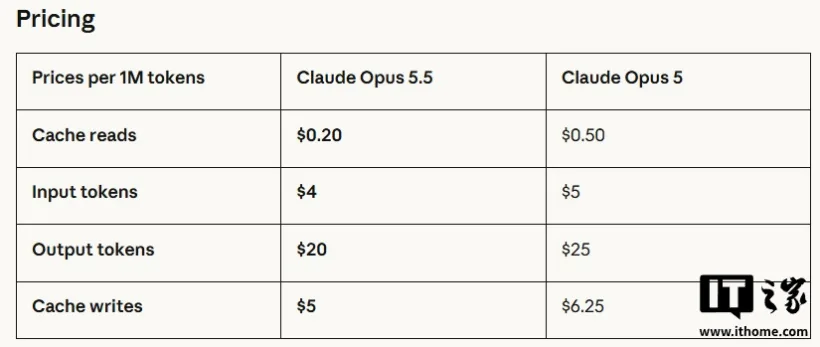
- Pricing adjustment: Input/output token prices down 20%, cache-hit prices down 60%
Performance Leap: Efficiency and Task Completion
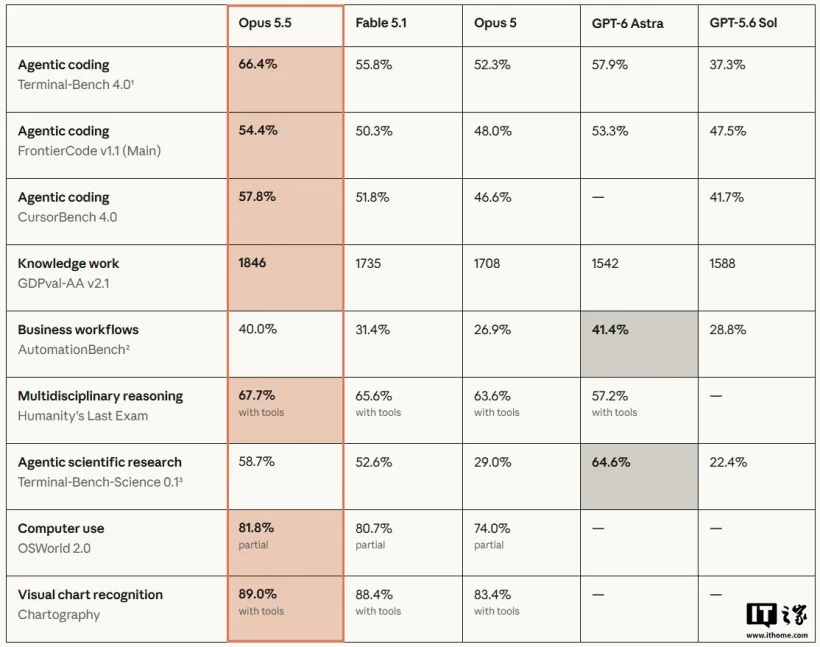
Opus 5.5 demonstrates substantial performance gains. In complex coding tasks, early testers completed 680,000 lines of code migration in one day—a task previously estimated at several weeks. In a web application optimization test demanding shorter load times per page, Opus 5.5 succeeded in 39 of 40 attempts, whereas Opus 5 merely made minor adjustments and even altered application behavior in some cases.
A surprising contrast: Despite achieving performance comparable to Claude Fable 5.1 (Anthropic claims similar capability across most workloads), Opus 5.5 cuts runtime costs by 40% lower than Opus 5—indicating significant improvements in inference efficiency rather than scaling up model size.
Game-building comparisons show Opus 5.5’s output scoring highest in visual quality and polish among competing models, underscoring its generative reliability.
Safety and Compliance: Controlled Access Model
Security saw notable improvements. Automated behavior audits across thousands of simulated scenarios awarded Opus 5.5 the highest score among all released models, with lower probability of irreversible actions or boundary violations. It also demonstrates enhanced resistance to prompt injection attacks than Opus 5. The alignment test suite now covers longer tasks, impossible tasks, and real-world event scenarios.
Given comparable capability to Claude Mythos 5.1 in biology and cybersecurity, Opus 5.5 deploys with the same safeguards as Fable 5.1. biology research institutions with approval can begin using it now; cybersecurity certifications expand access in upcoming weeks.
Cost Structure: Meaningful Price Cuts
Anthropic reduced pricing to reflect engineering efficiency:
| Item | Opus 5.5 Price | Opus 5 Price | Change |
|---|---|---|---|
| Input token (per million) | $4 | $5 | -20% |
| Output token (per million) | $20 | $25 | -20% |
| Cache hit (per million) | $0.20 | $0.50 | -60% |
| Typical workload cost | - | - | -40% |
| Output speed | - | - | +30%+ |
Enterprise plans (Pro, Max, Team) now have relaxed usage time limits and offer rate-limit reset functionality for subscribers.
Communication quality improved: testers describe the writing as “clearer, with key information prioritized at the start,” enhancing long-term collaboration fluency.
Product Strategy and User Recommendations
Users ready to adopt now
- Cost-conscious teams with existing Opus 5 workloads can realize immediate 40% savings with better results
- Engineering teams focused on code migration, refactoring, or application performance optimization
- Certified biology/cybersecurity institutions with approved programs can begin utilizing capabilities
Users who should wait
- Extreme-latency-sensitive workloads where even 30% speed gains require real workload validation against baseline throughput
- Pre-certification research entities requiring full compliance review before high-sensitivity access
Final Thoughts
Opus 5.5 reveals Anthropic’s focus on efficiency over raw scale: better performance at lower cost signals maturation in architectural optimization. As the industry争pping model size, this release highlights that smaller computational footprints can deliver broader production substitution potential.
- According to the announcement, Claude Sonnet 5.5 and Claude Haiku 5.5 will be released in the coming weeks with shared family-wide improvements.