
Apple’s Leadership Transition: Cook Steps Down, Ternus Takes Over

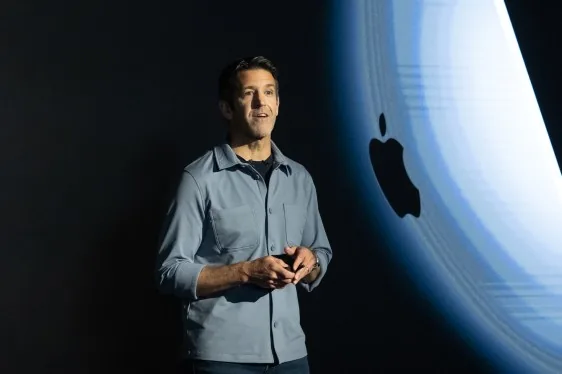
Apple completed a major leadership transition this week: Tim Cook stepped down as CEO, and former hardware chief John Ternus took over. Cook is not leaving the company; he will remain as Executive Chairman, with a focus on policy relationships and related external matters.
The timing is significant. According to the original report, Ternus’s first memo promised a “huge launch next week”, putting Apple’s next iPhone event on his desk almost immediately after the transition. For a new CEO, that creates both an opportunity to set the tone and an early pressure test.
Key facts at a glance:
- Outgoing CEO: Tim Cook
- New CEO: John Ternus, formerly Apple’s hardware chief
- Cook’s new role: Executive Chairman
- First major signal: Ternus’s memo previews a “huge launch next week”
Can a Hardware Leader Push Apple Forward on Software?

TechCrunch’s Equity podcast raises an interesting question: although Ternus is best known for hardware, he may be well positioned to help Apple make progress on software in the AI era.
That is not as contradictory as it sounds. Modern AI experiences depend heavily on hardware-software integration: on-device compute, power efficiency, privacy controls, system-level permissions, and interface design all shape what users actually feel. Apple has long emphasized vertical integration, and Ternus’s hardware background could help the company connect chips, devices, operating systems, and user-facing features more tightly.
Cook’s continued role as Executive Chairman also means this is not a clean break from the previous era. He is likely to remain influential in policy and external relations. The original report notes that even something as small as a map label recently became a public balancing act, underscoring how sensitive those relationships can be. Ternus will need to show that he can push Apple forward while preserving the company’s steady operating style.
Nvidia’s Full-Stack AI Ambition
The other major thread in the original report is Nvidia. The podcast discusses how Nvidia’s recent moves increasingly look less like those of a traditional chipmaker and more like those of a company trying to own the broader AI stack.
The report points to Nvidia’s Hugging Face acquisition, its investment in MediaTek, and deeper compute deals. Together, those moves suggest that AI competition is no longer limited to chips. It now spans developer tools, model ecosystems, compute access, and downstream applications.
Apple and Nvidia are pursuing very different strategies. Nvidia is expanding through a broad ecosystem around AI infrastructure, while Apple’s advantage lies in control over hardware, software, and user experience. As AI capabilities move further into phones, computers, and other devices, the contrast between those approaches will become more important.
Robotaxis Move Toward Head-to-Head Competition
Robotaxis were another focus of the episode. The original report highlights a busy week for the sector: Tesla’s Cybercab event, Waymo’s expansion into new cities, and Zoox’s first paid rides.
These developments show the industry moving from technical demonstration toward more direct commercial competition. But major challenges remain, including service-area expansion, regulatory approvals, operating costs, rider trust, and safety response. When multiple companies begin competing more directly, the market will get a clearer view of which models can scale reliably and sustainably.
AI Hardware Funding Is Still Heating Up
The report also notes Andreessen Horowitz’s new $1.1 billion “Machine Age” fund, aimed at early-stage AI hardware bets. That signals continued investor belief that AI will not be limited to cloud models and software products; hardware innovation still matters.
Future AI devices may depend on better on-device compute, sensors, power efficiency, thermal design, and interaction models. But for consumers, funding does not automatically translate into mature products. Many AI hardware startups still need to prove that they can deliver stable, useful, everyday value rather than impressive demos alone.
GoPro and the Consumer Hardware Cycle

The podcast also discusses the $285 million acquisition of GoPro, framing it as the end of an era for one of Silicon Valley’s original consumer tech darlings.
That is a reminder that consumer hardware is difficult even after a breakthrough product. Companies must keep iterating, build ecosystems, protect margins, and withstand substitution from general-purpose devices such as smartphones. Today’s AI hardware startups may be attracting capital, but they will face many of the same structural challenges.
In Closing
Ternus’s appointment opens a new chapter for Apple. In the short term, next week’s “huge launch” and the upcoming iPhone event will be his first public test. Over the longer term, the bigger question is how Apple will turn hardware, software, and services into compelling AI-era experiences.
At the same time, Nvidia is pushing deeper into the full AI stack, robotaxi companies are entering a more competitive commercialization phase, and AI hardware funding continues to grow. The center of competition in tech is shifting from individual products to full-system capabilities — exactly the terrain Apple and Nvidia are both trying to command.