
Asus Confirms ProArt Create 16 Launch: October 8 as First Agent PC with RTX Spark N1X
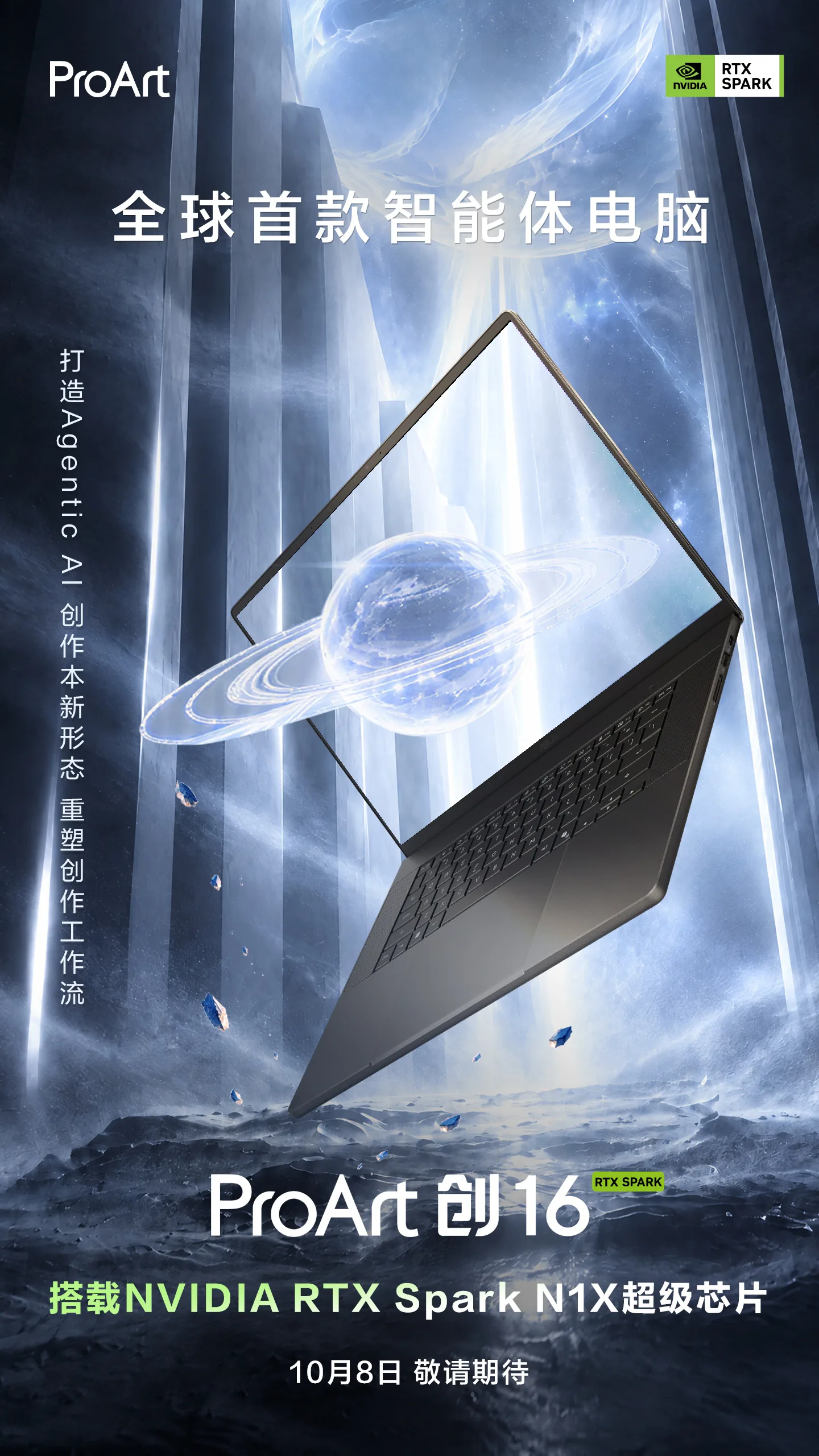
Asus has officially announced the ProArt Create 16 (P16), its creative laptop based on the NVIDIA RTX Spark N1X Superchip, will debut on October 8. The model, previously revealed at COMPUTEX 2026 under codename H7607, positions itself as the world’s first Agent PC. Key specifications and facts:
- Release date: October 8 (Beijing time)
- Processor: NVIDIA RTX Spark N1X Superchip
- Memory: Supports up to 128GB unified RAM
- Display: VESA DisplayHDR True Black 1000 certified OLED panel
- Battery: 99.9Whr capacity
- Portability: 12.9mm thin, approximately 1.77kg
- Form factor: 16-inch P16; 14-inch ProArt P14 variant also planned
- Core claim: Local AI agent processing without cloud dependency
Microsoft’s local AI PC event falls on October 7 (Beijing time October 8), making the timing strategically aligned for the emerging Agent PC category.
Technical Details and Design Philosophy
The ProArt Create 16 targets professional creators with hardware tuned for creative workloads. The RTX Spark N1X Superchip enables on-device generative AI and multi-step agent scheduling, allowing tasks like AI-assisted video editing or image generation to run autonomously.
The 128GB unified memory platform represents a significant leap for mobile workstations, facilitating large language model inference without swapping to slower storage. Combined with the VESA DisplayHDR True Black 1000 OLED screen, the device ensures high dynamic range, true blacks, and accurate color reproduction critical for content professionals.
Despite premium specs, the chassis remains portable at just 12.9mm thick and 1.77kg. The 99.9Whr battery sits just below the common 100Whr aviation limit, allowing larger capacity without regulatory hurdles. Though Asus has not disclosed specific cooling architecture in its announcement, the sub-13mm profile suggests reliance on the N1X chip’s power efficiency rather than bulky cooling systems.
Unexpected Trade-off: Thin Body + High-Capacity Memory
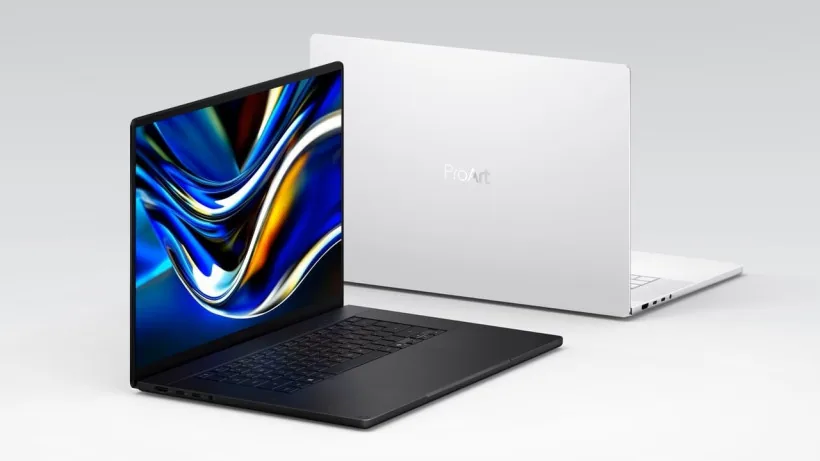
A notable tension lies in combining 128GB RAM with a sub-13mm profile. Such memory configurations typically require extensive thermal solutions—multiple heat pipes or vapor chambers—yet Asus has not disclosed additional cooling architecture in its announcement. This suggests reliance on the N1X chip’s power efficiency rather than aggressive cooling, a contrast to rivals that prioritize raw performance over slimness in similar specification tiers.
Who Should Buy Now—and Who Should Wait
- Perfect for: Professional creators (video/editing/color grading/3D), local AI experimenters, users requiring precise color accuracy and deep blacks
- Consider waiting: Budget-conscious buyers (premium pricing expected), those who primarily use cloud services (the device’s value is local processing), and travelers needing smaller 14-inch portability (await P14 details)
With pricing and base configuration details still undisclosed, potential buyers are advised to evaluate configuration tiers once available. If positioned at workstation-tier pricing, cross-comparison with Windows Copilot+ PC offerings is recommended.
Final Thoughts
The ProArt Create 16 signals a pivot from raw performance chasing toward intelligent workflow integration. As AI runs locally, creative professionals gain not just faster feedback, but reduced latency and enhanced privacy—fundamentally reshaping how tools serve the creative process.