LynxFlow Deep Dive: i-have-adhd | Make AI Stop Beating Around the Bush
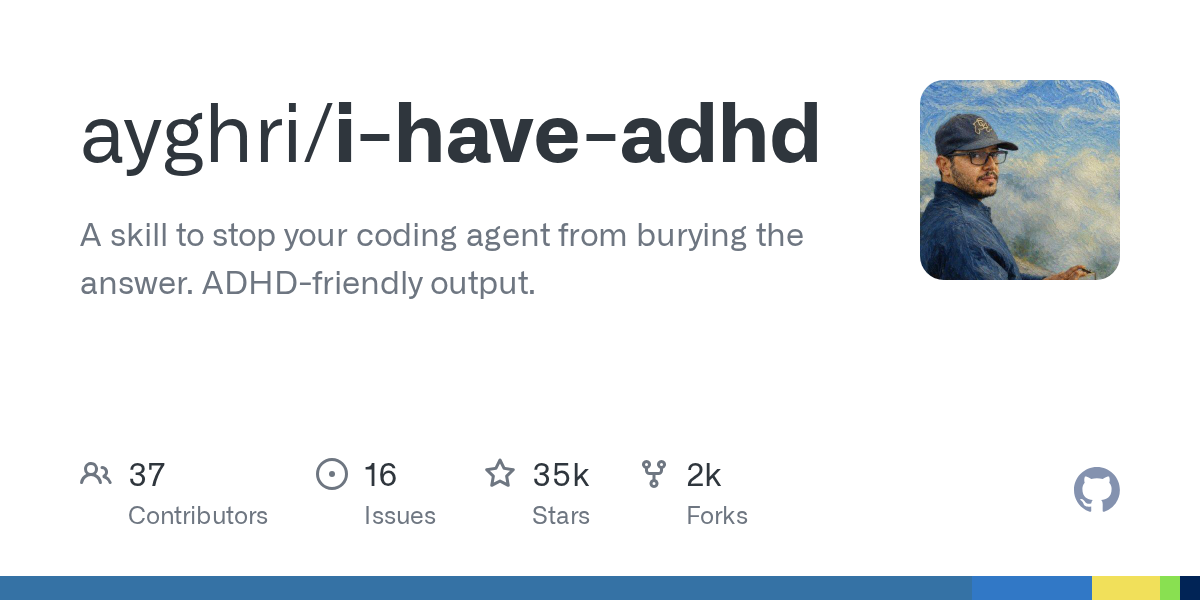
Today’s GitHub trending list isn’t just flashy 3D engines and automated deployment tools—there’s also an unassuming project that hits a real developer pain point: i-have-adhd. Using an “attention-deficit-friendly” design philosophy, it transforms AI assistants’ enthusiastic but lengthy replies into clear, actionable to-do lists. At a time when AI assistants are getting better and better at rambling, this project does the exact opposite: it doesn’t teach you how to organize your language—it teaches AI to shut up and get to work.
Core Feature: Compressing AI “Fluff” into Action Lists
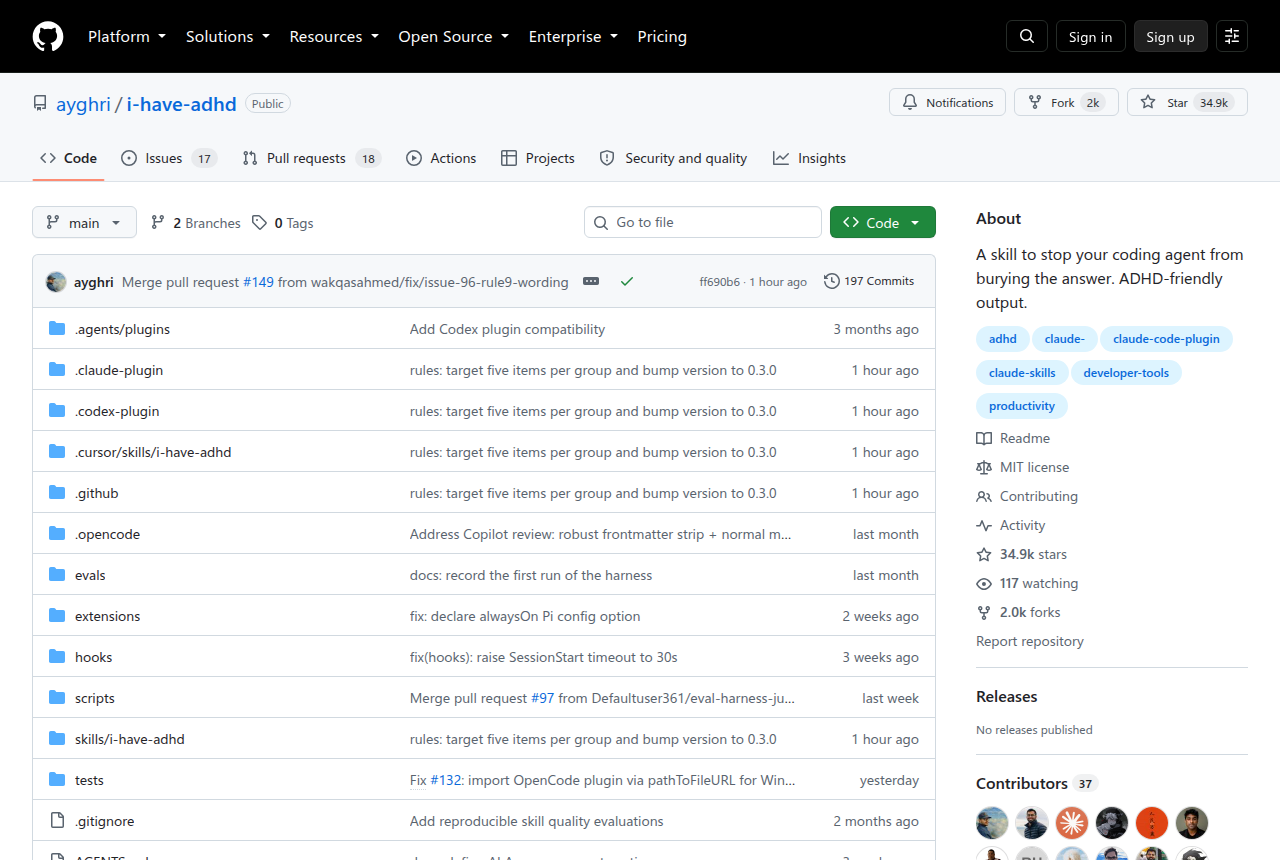
This project is essentially a Claude Code plugin, but what it modifies isn’t the AI model itself—it’s the AI’s “output mode.” Imagine asking a programming assistant how to fix a bug. A typical answer might be:
“Your auth flow is a bit complex; you’ll need to look at middleware, token verification, and cookie handling. I looked at the verifyToken function in src/auth.ts—around lines 42 to 58 it uses the old API… hope this helps!”
With i-have-adhd enabled, the same question gets this answer instead:
Run
npm install jsonwebtoken@latest, then editsrc/auth.ts:42.
- Open src/auth.ts
- Replace verifyToken (lines 42-58) with the code below
- Run
npm test -- auth.spec.tsNext step: if any tests fail, paste the first line of the error message
It doesn’t cut information—it restructures the delivery: numbered steps replace “first, then, finally”; explicit actions replace vague suggestions. Of the 10 rules, the core is a three-part output structure—“action first, steps second, next step last”—keeping every turn ending with an executable exit.
Getting Started: Install This “AI Switch” in Three Steps
Installation is straightforward. Run in your CLI:
| |
After restarting Claude Code, the /i-have-adhd command takes effect automatically. When you write up issues, the system defaults to concise mode.
Want to tune it to your own habits? Fork the repo and edit skills/i-have-adhd/SKILL.md—all 10 rules are written in plain natural language:
- Must start with the next action
- Multi-step tasks must be numbered
- Every turn ends with a concrete next step
- Time estimates precise to the minute, not “a bit”
- Error statements give conclusions directly, no comforting
- Lists capped at five items per group
Technical Highlight: Rules Instead of Training
The cleverest design choice here: it doesn’t touch model weights, only the output instruction template. Technically, it’s a classic case of “prompt engineering, engineered”—translating cognitive-behavioral techniques for ADHD from clinical psychology into output constraints for LLMs.
Some might worry “won’t it be too rigid?"—but the project deliberately preserves flexibility. For example, rule nine emphasizes “don’t drop related items when grouping,” meaning semantic clustering happens before list compression; rule seven requires “making wins visible,” quantifying progress feedback into explicit markers. These aren’t simple string replacements—they’re dynamic structure generation based on the task chain.
Another technical trade-off is the “low-key tone”: the entire project avoids API-doc-style technical anxiety, simply borrowing time estimation and task decomposition methods from the “Adult ADHD Toolbox” and writing them as a conversion for LLMs rather than a self-management guide for humans. This explains why it notes “no ADHD diagnosis required”—what it really solves is everyone’s common struggle with information overload.
Who It’s For / Comparable Projects
- Good fit: Engineers who call AI frequently for coding, Tech Leads who need to break down tasks for teams, anyone whose focus gets scattered by lengthy replies
- Not for: Users who enjoy exploratory conversation (it actively cuts off tangents), or non-technical decision-makers who only need conceptual answers
Similar projects mostly focus on “enhancing AI capabilities” (multi-turn memory, code execution), while this one focuses on “reducing AI interference.” If AI assistants were personal assistants, some projects make them smarter; i-have-adhd makes them more tactful—knowing what to say and what to cut.
- Focus savings: 70% less visual noise per interaction
- Task conversion: Direct steps improve task executability
- Customization freedom: Rules file can be forked and modified
Final Thoughts
As AI learns to speechify, i-have-adhd reminds us: good communication starts with getting the meaning across. Technology’s value isn’t in how flashy it is, but in how much hassle it saves.
Star it—not because it’s cool, but because it saves you from zoning out during late-night debugging sessions.