
AI Agents Enter Founding Teams: The New Question of ‘Human or AI?’ at Disrupt 2026
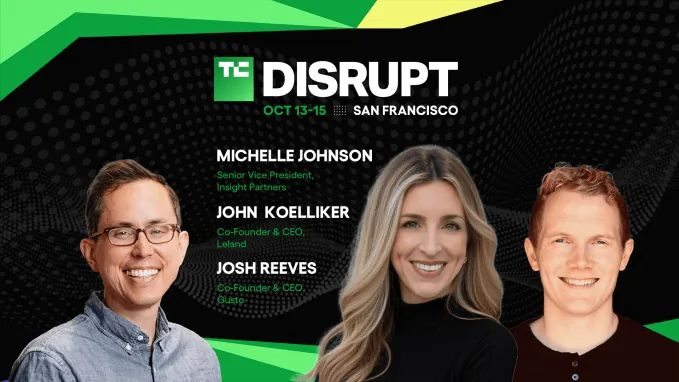
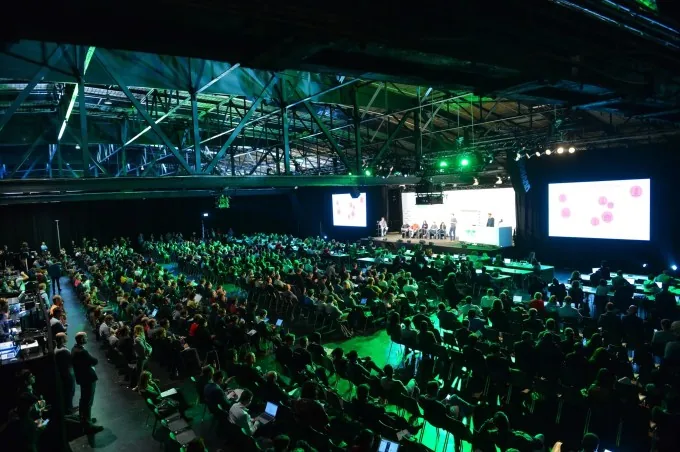
TechCrunch Disrupt 2026, held October 13–15 at Moscone West in San Francisco, featured a pivotal session titled “Hiring When AI Is a Co-Founder” on the Builders Stage. PANELISTS included Josh Reeves (CEO, Gusto), Michelle Johnson (Senior VP, Insight Partners), and John Koelliker (CEO, Leland).
Key Registration Details:
- Event Dates: October 13–15, 2026
- Location: Moscone West, San Francisco
- Early Bird Deadline: September 25, 23:59 PT
- Savings: Up to $200 off individual passes; up to 30% more for group registration
- Key Status: Public registration open; no indication of broadcast or replay access inclusive of base ticket
The discussion centers on a fundamental shift: as AI agents independent handle multi-step work (engineering, customer support, research, operations), pre-10 hires may no longer all be human. Founders now face this before opening a job requisition: “What work needs to be done—and is a person the best way to do it?”
The Promise and Accountability Gap of AI Co-Founders
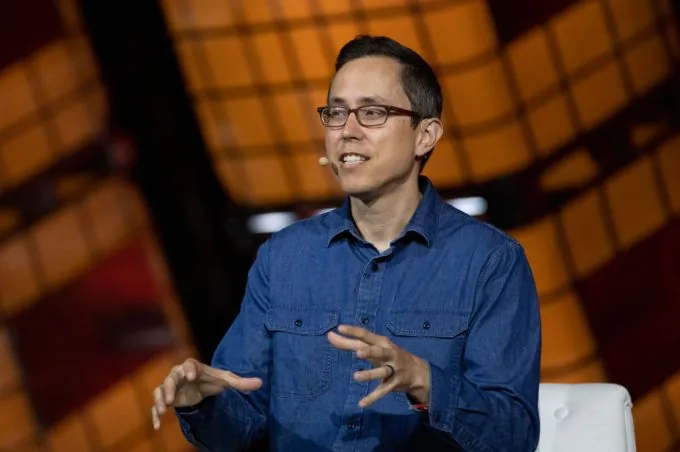
Gusto, serving over 500,000 small businesses with integrated payroll, benefits, compliance, HR, and retirement, observes real-world adoption patterns: AI agents augment rather than fully replace early humans for routine but multi-step work.
Michelle Johnson’s background sets the growth-stage lens: she scaled Flock Safety from under $1M to $90M ARR and now advises CEOs and CROs on AI implementation. Her key question: When AI agents handle prospect research, outreach prep, and customer data analysis, what remains uniquely human in revenue roles—and which competencies should startups prioritize?
John Koelliker, ex-LinkedIn and Uber product/growth leader, represents the talent archetype. His startup Leland focuses on skills for the AI era. He emphasizes ownership challenges: Who reviews AI output? Who owns final decisions? Which responsibilities are too critical to delegate? These are no longer hypothetical.
Counterintuitive Insight: The panel affirmed that while AI agents accelerate simple tasks, “the more automatable a task becomes, the higher the need for human oversight of its boundaries and outcomes.” Over-reliance without robust checks can increase coordination overhead—a caution echoed in studies showing human monitoring costs rising when task complexity exceeds agent reliability.
Three Complementary Perspectives
The session synthesizes three interlocking frameworks:
| Perspective | Representative | Focus Area | Core Question |
|---|---|---|---|
| Infrastructure Layer | Gusto (Josh Reeves) | Real-world deployment patterns at scale | Should an AI own equity for payroll miscalculation errors? |
| Growth Layer | Insight Partners (Michelle Johnson) | AI integration into revenue operations | Does AI front-line engagement erode customer trust in high-stakes sales? |
| Talent Layer | Leland (John Koelliker) | Skill redefinition and hiring criteria evolution | Will the priority shift to “AI instruction designers” over task executors? |
No specific tools, APIs, or pricing tiers are discussed—the emphasis is on organizational design principles. A recurring theme: early employee value increasingly derives from judgment, ownership, and the ability to direct both people and machines—not just throughput.
Actionable Advice for Different Startup Stages
Ideal for Early Adopters:
- Pre-seed or seed-stage teams with repetitive, structured, low-risk multi-step workflows (e.g., ticket classification, code completer, internal data summarization)
- A technical founder capable of designing agent workflows, not just orchestrating APIs
- Willing to invest upfront time in process refactoring (AI agents are not plug-and-play)
Worth Waiting On:
- Companies where decisions require deep human judgment (e.g., premium B2B, healthcare counseling)—the panel explicitly identified “empathy and situational judgment under pressure” as remaining human irreplaceables
- Teams lacking data governance and access controls—Koelliker stressed that “AI error root causes are typically data quality or prompt design, not model architecture,” requiring foundational maturity first
Read Theory at the End
The competitive moat in startups shifts from “human density” to “human-AI coordination efficiency.” AI agents free early teams from routine labor, enabling greater experimentation and financial runway—but the organizational complexity remains, merely repositioned onto the boundary of human-AI accountability. That nuanced shift, TechCrunch Disrupt 2026 suggests, is where founder judgment still decides the outcome.