
Event Overview
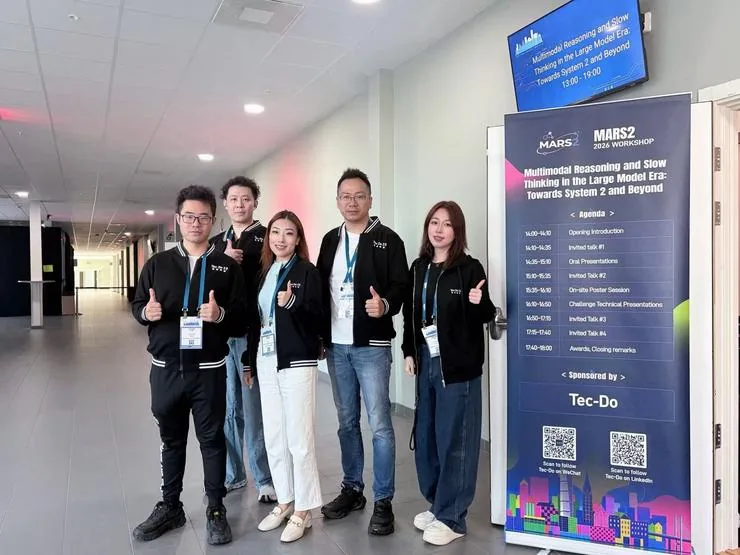
On September 9, 2026, the MARS2 Workshop (2nd Multimodal Reasoning and Slow Thinking in the Large Model Era), initiated by Chinese tech firm TitanMove, was successfully held during ECCV 2026 in Malmö, Sweden. This marks the only Agentic Commerce-themed Workshop at ECCV 2026 led by a Chinese tech company. Concurrently, the MARS2 Multimodal Reasoning Challenge concluded, attracting 64 top-tier global teams and over 1,060 submitted solutions.
Key Details:
- Conference dates: September 8–12, 2026 (ECCV 2026)
- Workshop date: September 9, 2026
- Prize pool: USD 100,000
- Teams competing: 64
- Solutions submitted: 1,060+
- Open-source resources: M-CAR benchmark dataset and codebase available on GitHub (https://mars2workshop.github.io/eccv2026/)
Bridging Academia and Industry
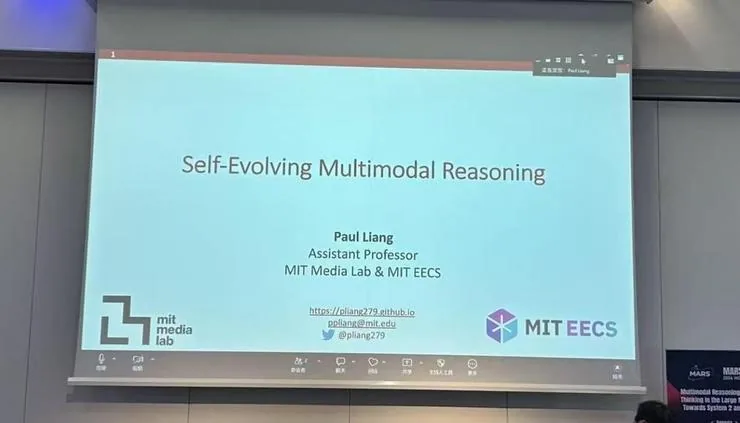
MARS2 Workshop brought together leading institutions. The organizing committee included scholars from Tsinghua University, Oxford University, Nanyang Technological University, and Seoul National University. Keynote speakers were MIT’s Paul Pu Liang, Oxford’s Yarin Gal, Queen Mary University’s Shanxin Yuan, and Linnaeus University’s Fahad Shahbaz Khan, discussing multimodal reasoning, long-chain inference, and zero-shot generalization.
The challenge evaluated three core capabilities:
- MAC (Macro-level Semantic Understanding)
- VTG (Temporal Video Timeline Grounding)
- MDC (Marketing Decision Causality)
Counterintuitive finding: Adding cross-modal audio-event timelines improved localization accuracy by 16.7 points, while scaling model parameters from 4B to 8B degraded performance by 0.2 points. This suggests modal augmentation matters more than raw model size under practical constraints.
Engineering Wins from Winning Solutions
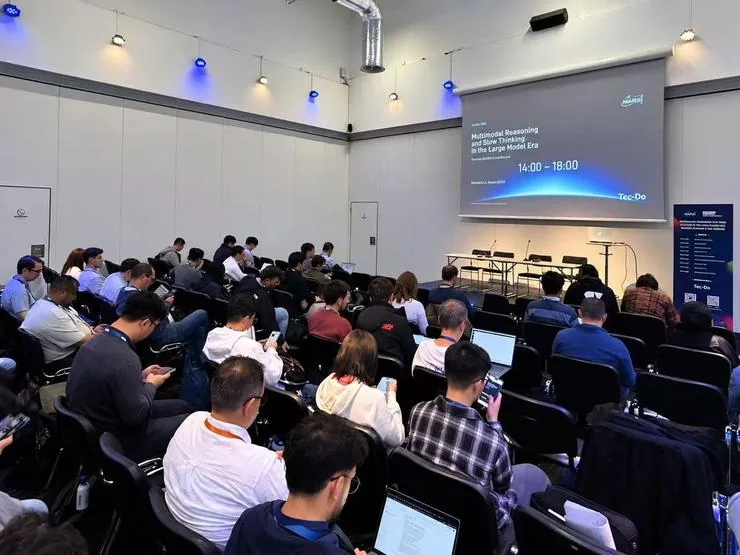
Winner teams consistently employed Proposer-Critic dual-model validation, coarse-to-fine two-stage定位, and duration-adaptive token allocation. Their shared insight: replace “parameter stacking” with “evidence-chain engineering”—a closed loop of evidence acquisition, spatiotemporal alignment, and consistency validation.
TitanMove’s proprietary TitanQ large models previously ranked #1 globally (85.82 points) on SuperCLUE’s ad marketing benchmark (Jan 2026) and placed #2 (86.43 points) on its video understanding leaderboard (Jul 2026).
Implementation Recommendations
- Early adopters: Marketing AI product teams and e-commerce agent developers should explore evidence-chain design patterns from winning solutions
- Wait-and-see: Startups with limited budgets should wait for M-CAR datasets to reproducibly validate approaches before investing in parameter scaling
Final Thoughts
Multimodal AI is shifting from perception to reasoning, and TitanMove’s hybrid model—Workshop + competition + open benchmark—may become a template for industry-academia collaboration. Future competition in Agentic Commerce will likely favor design of transparent, verifiable reasoning chains over model scale alone.