
The Core Update
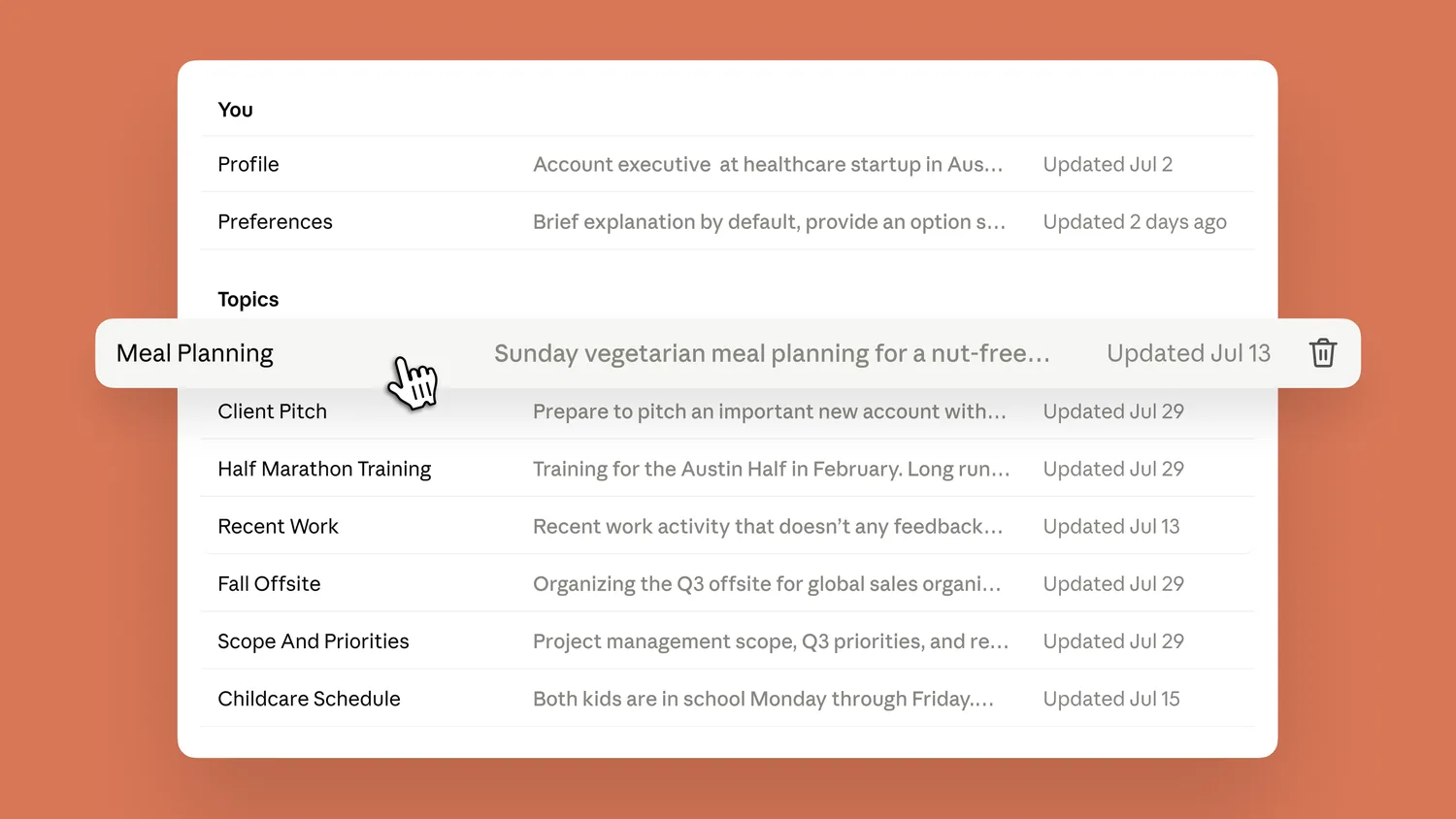
Anthropic announced on August 25, 2026, that Claude’s memory system is being unified across Chat and Claude Cowork. Context Claude learns in one experience can now carry over into the other, reducing the need for users to repeatedly brief the AI on the same projects, preferences, and background.
The feature is enabled by default for Free, Pro, and Max plans across web, desktop, and mobile. iOS and Android users need to update their apps to the latest version.
- Release date: August 25, 2026 (Tuesday)
- Scope: Shared memory across Chat and Claude Cowork
- Availability: Enabled by default
- Plan support: Free / Pro / Max
- Device support: Web / Desktop / iOS / Android (mobile app update required)
Memory Evolution: From “Post-Conversation Summary” to “Updated During Chat”
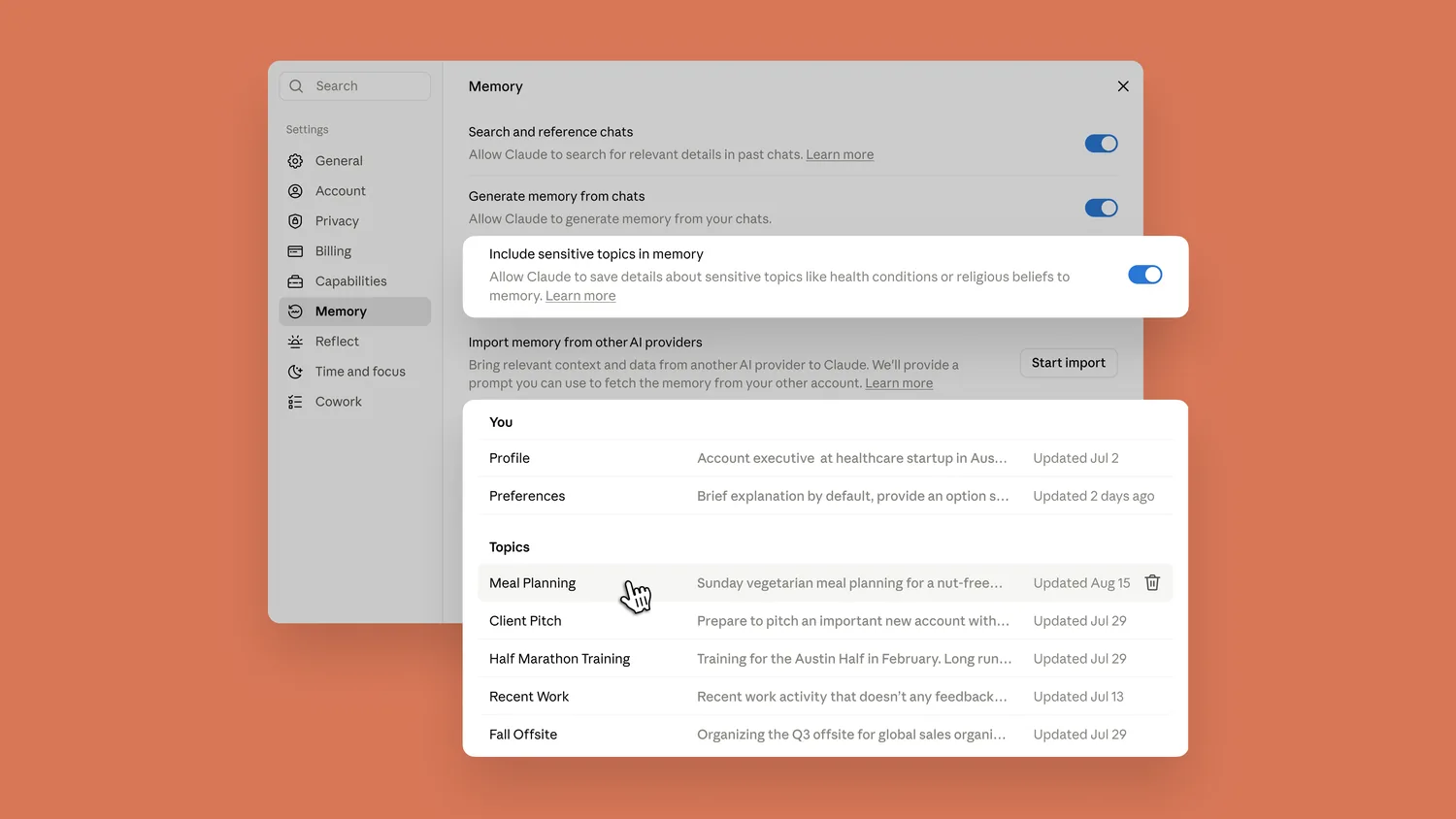
Previously, Claude summarized a conversation when it ended and then stored memory from it. With the new system, Claude adds topics to memory as users chat. That makes new context available more quickly across Chat and Cowork, even while a conversation is still ongoing.
The key change is memory continuity. In the old setup, a user might spend time developing ideas with Claude in Chat, then have to re-explain the same details when switching to Cowork to take action. The update makes Claude feel more like one continuous assistant rather than two separate products under one roof.
Anthropic gives the example of a user drafting a manager update or a conference agenda. If earlier conversations included details such as headcount, city, and speakers, Cowork can understand those references without requiring the user to enter the same information again.
Transparent, User-Controlled Memory
The update also gives users more visibility and control. Claude now exposes what it has retained in memory, allowing users to read, edit, or delete information on any topic.
Anthropic’s sensitive-data policy includes several safeguards:
- By default, Claude will not store personal or sensitive information such as health data, race, ethnicity, religious beliefs, politics, or gender identity
- Users can choose to enable this by turning on “include sensitive topics in memory”
- The app will notify users whenever a sensitive topic is saved in memory
Anthropic also says Claude will never save certain categories of information, including government-issued IDs, Social Security numbers, criminal history, immigration status, or other content that violates its acceptable use policy.
Experience Comparison: Closing the Memory Gap

| Dimension | Before | After |
|---|---|---|
| Cross-mode memory | Chat and Cowork memories were separate | Chat and Cowork share memory |
| When memories form | Summary after a conversation ends | Topics added during conversation |
| User control | Less visibility into retained memory | Read, edit, or delete memory items |
| Sensitive data handling | Re-briefing often required | Sensitive data excluded by default, with notifications when saved |
Who Will Notice the Difference?
- Frequent Chat-to-Cowork users: People who brainstorm in Chat and then use Cowork to act on those ideas should spend less time repeating context
- Long-running project users: Projects that unfold over multiple sessions benefit from more persistent context
- Privacy-conscious users: Visible memory management makes it easier to understand and control what Claude remembers
If your workflow stays mostly in a single mode, such as Chat-only or Cowork-only, the improvement may be less noticeable than it is for users who move between both experiences.
Final Thoughts
Memory is one of the features that can make an AI assistant feel less like a one-off response engine and more like a continuing collaborator. By sharing memory across Chat and Cowork, Claude is addressing a practical frustration: users do not want to explain the same project to the same AI over and over again. For project-heavy workflows, that continuity may matter as much as the quality of any single answer.