
A Release Framed Around Agentic AI
DeepSeek released DeepSeek-V3.1 on August 21, 2025, describing it as its first step toward the agent era. The central change is hybrid inference: one model can operate in two modes, Think and Non-Think. On DeepSeek’s chat product, users can switch modes through the “DeepThink” button; in the API, the separation is reflected through different model endpoints.
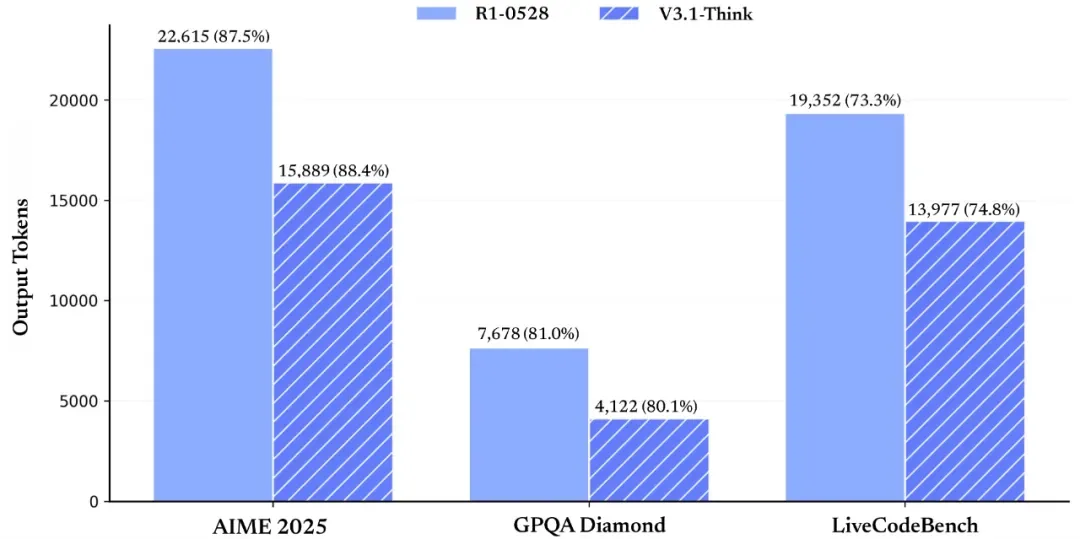
In practical terms, a thinking mode lets the model spend more effort on intermediate reasoning before producing an answer, while a non-thinking mode is designed for faster, more direct interaction. DeepSeek says V3.1-Think reaches answers in less time than DeepSeek-R1-0528, and that post-training improves tool use and multi-step agent tasks.
API Changes for Builders
For developers, the update reorganizes how V3.1 is accessed. The deepseek-chat endpoint maps to non-thinking mode, while deepseek-reasoner maps to thinking mode. Both support a 128K context window, which is the amount of text the model can consider during a request and is especially relevant for long documents, code repositories, and extended task histories.
Key API points include:
- deepseek-chat for Non-Think mode;
- deepseek-reasoner for Think mode;
- 128K context for both;
- support for the Anthropic API format;
- Strict Function Calling support in the Beta API.
Function calling is the mechanism that lets a model request external tools in a structured way, such as search, database queries, code execution, or workflow actions. The “strict” variant emphasizes adherence to predefined schemas, which can reduce formatting errors when models are connected to production systems.
Tools, Agents, and Long-Context Training
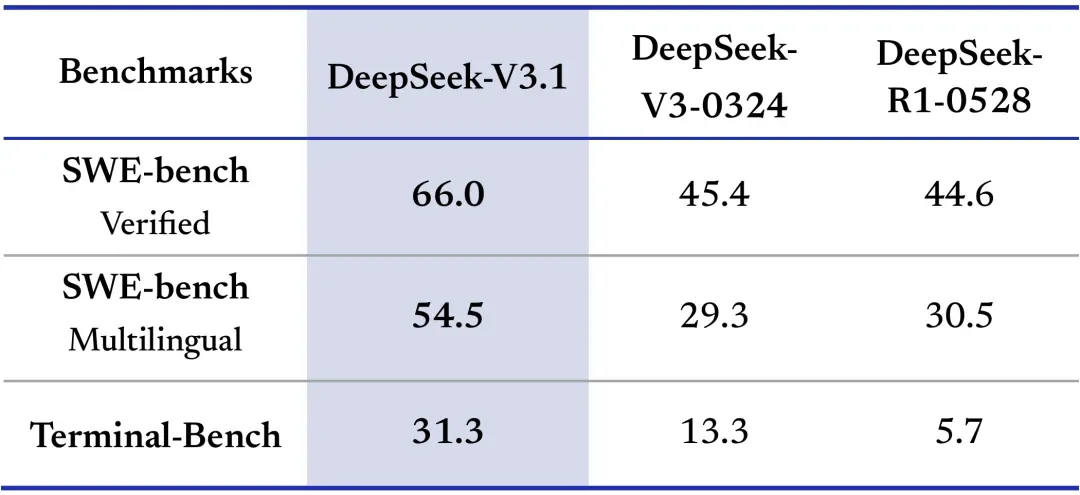
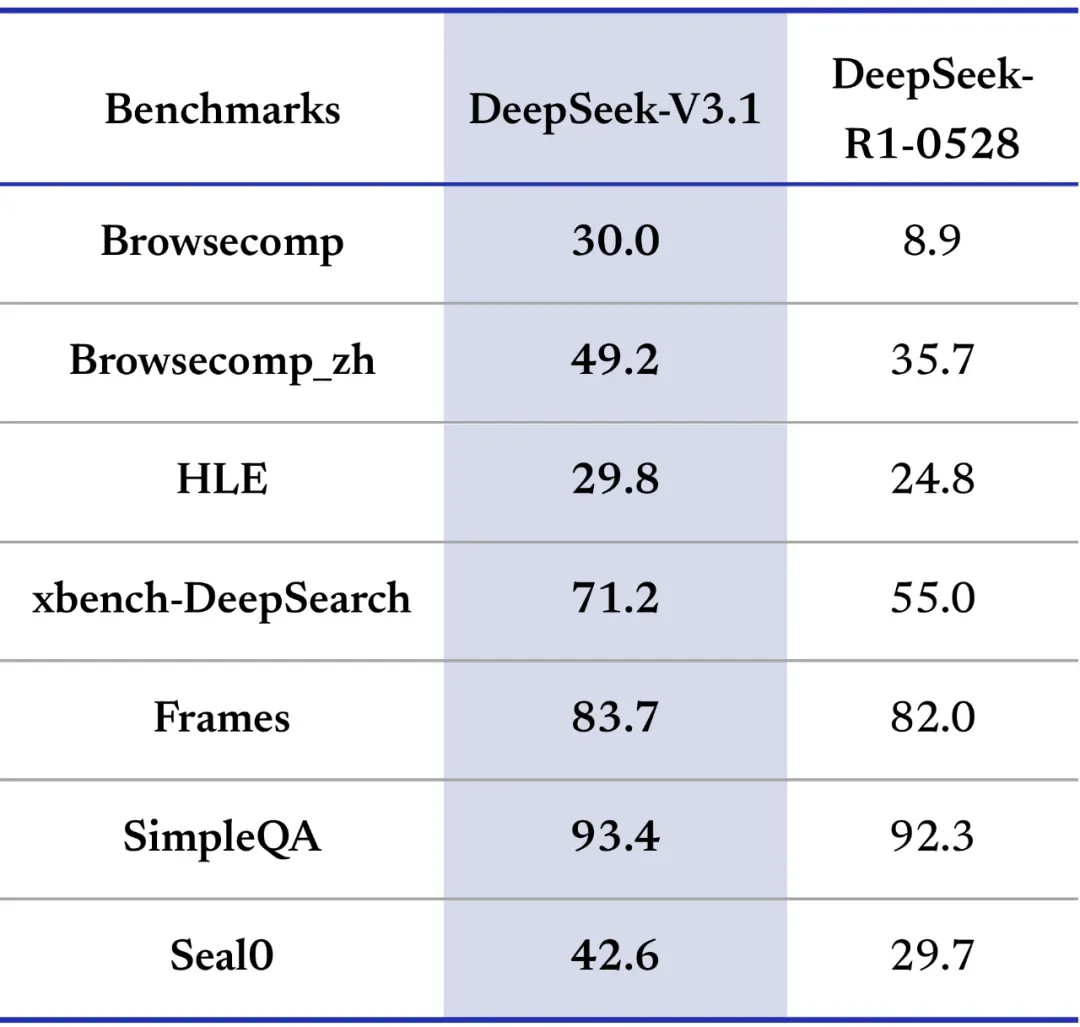
DeepSeek highlights upgrades in tools and agents, saying V3.1 performs better on SWE and Terminal-Bench, improves multi-step reasoning for complex search tasks, and delivers gains in thinking efficiency. SWE-style evaluations focus on software engineering tasks, while terminal-oriented benchmarks test whether a model can operate closer to command-line workflows.
The model update also includes continued pretraining of V3.1 Base on top of V3 with 840B tokens for long-context extension. Tokens are the text units processed by a model, and continued pretraining means extending training from an existing model rather than starting from scratch.
DeepSeek also updated the tokenizer and chat template, and published a new tokenizer_config.json. This matters for local deployment and reproducibility, because tokenization determines how input text is converted into model-readable units. Open-source weights for DeepSeek-V3.1-Base and DeepSeek-V3.1 are available on Hugging Face.
Pricing Timeline and Market Implications
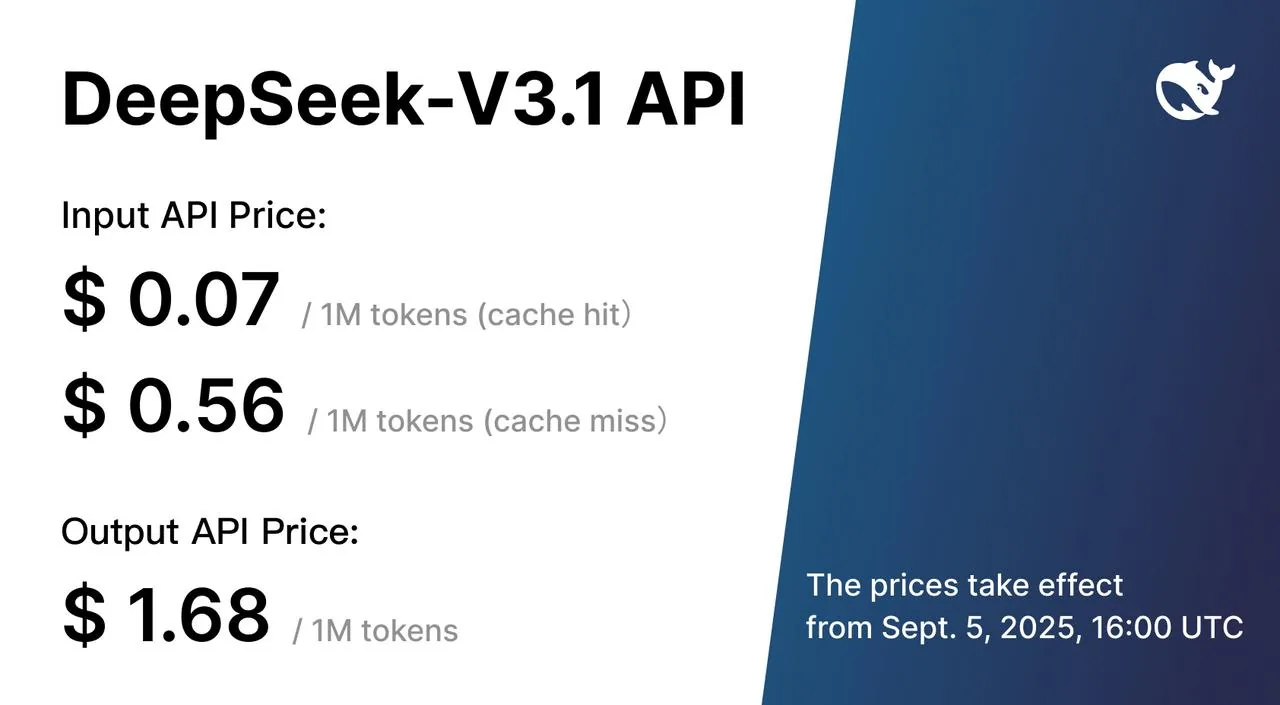
DeepSeek says new pricing starts on September 5, 2025, at 16:00 UTC, when off-peak discounts also end. Until then, APIs remain under current pricing. For teams with heavy inference workloads, this gives a clear deadline to reassess cost models and decide when to use Think mode versus Non-Think mode.
The broader message is that frontier model releases are moving beyond chat quality alone. Agentic workloads require long context, reliable tool calls, efficient reasoning, and compatibility with existing developer ecosystems. DeepSeek-V3.1 addresses all four areas at once, but the release note does not provide detailed benchmark scores, so real-world validation will depend on developer testing and independent evaluations.