What happened
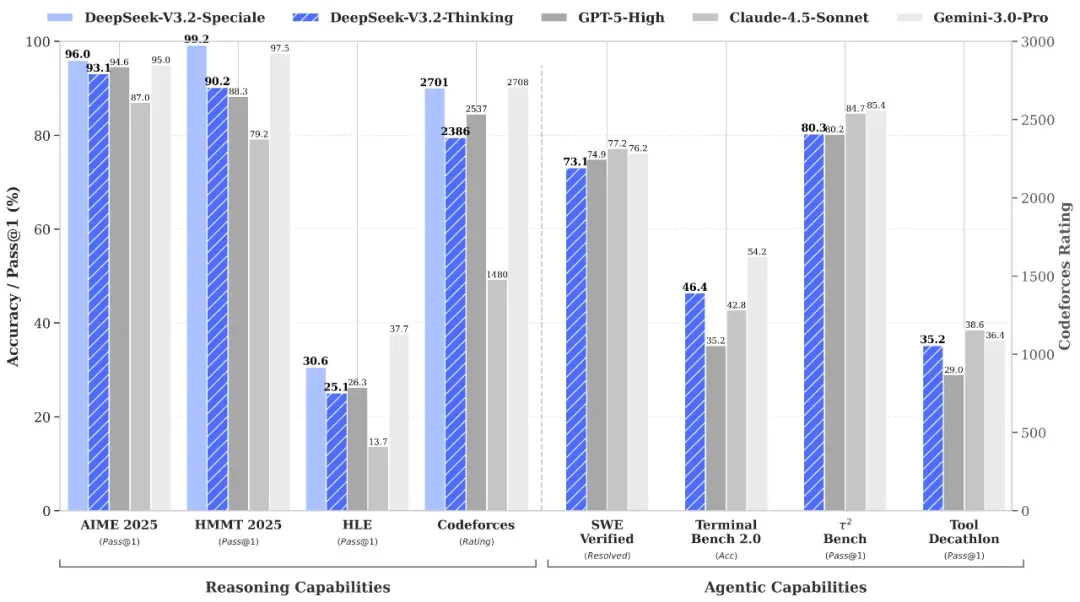
DeepSeek announced DeepSeek-V3.2 and DeepSeek-V3.2-Speciale on December 1, 2025, positioning the release as a reasoning-first step for open large language models built for agent workflows.
V3.2 is the official successor to V3.2-Exp and is now available through the DeepSeek App, Web product, and API. V3.2-Speciale is a separate reasoning-focused variant, offered through API only for the time being so that the community can evaluate and study it.
Two models with different priorities
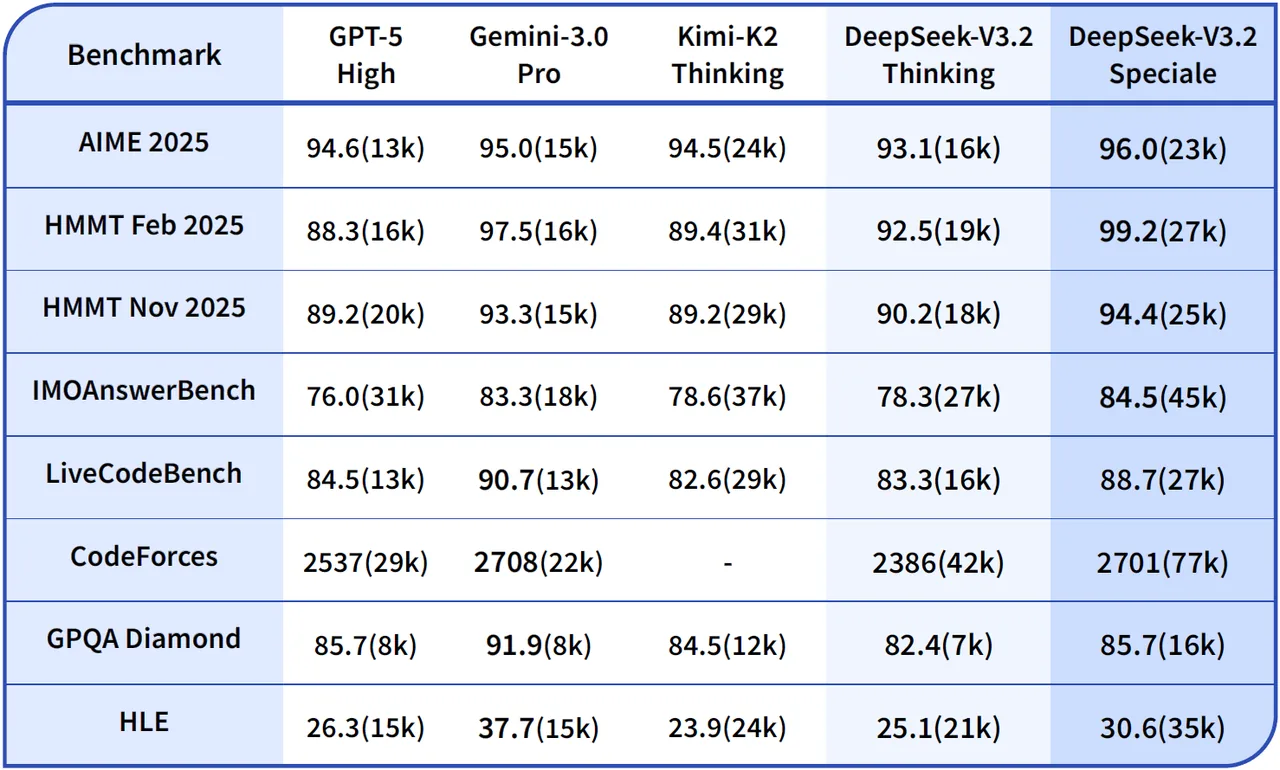
DeepSeek describes V3.2 as a balanced model for everyday use, trading off inference strength and response length. The company says it reaches GPT-5-level performance and is intended to be the daily driver in the new lineup.
V3.2-Speciale is presented as the more extreme reasoning model. DeepSeek says it rivals Gemini-3.0-Pro and reaches gold-level results in demanding competition settings, including IMO, CMO, ICPC World Finals, and IOI 2025.
Key facts from the release:
- DeepSeek-V3.2 is live on App, Web, and API.
- DeepSeek-V3.2-Speciale is API-only for now.
- Speciale is stronger on complex tasks but uses more tokens.
- Speciale currently does not support tool calls.
- Both models and the technical report are released on Hugging Face.
A token is the basic unit a language model uses to process text. Higher token usage usually means longer prompts, longer reasoning traces, or longer answers, which can affect cost and latency.
Reasoning inside tool use
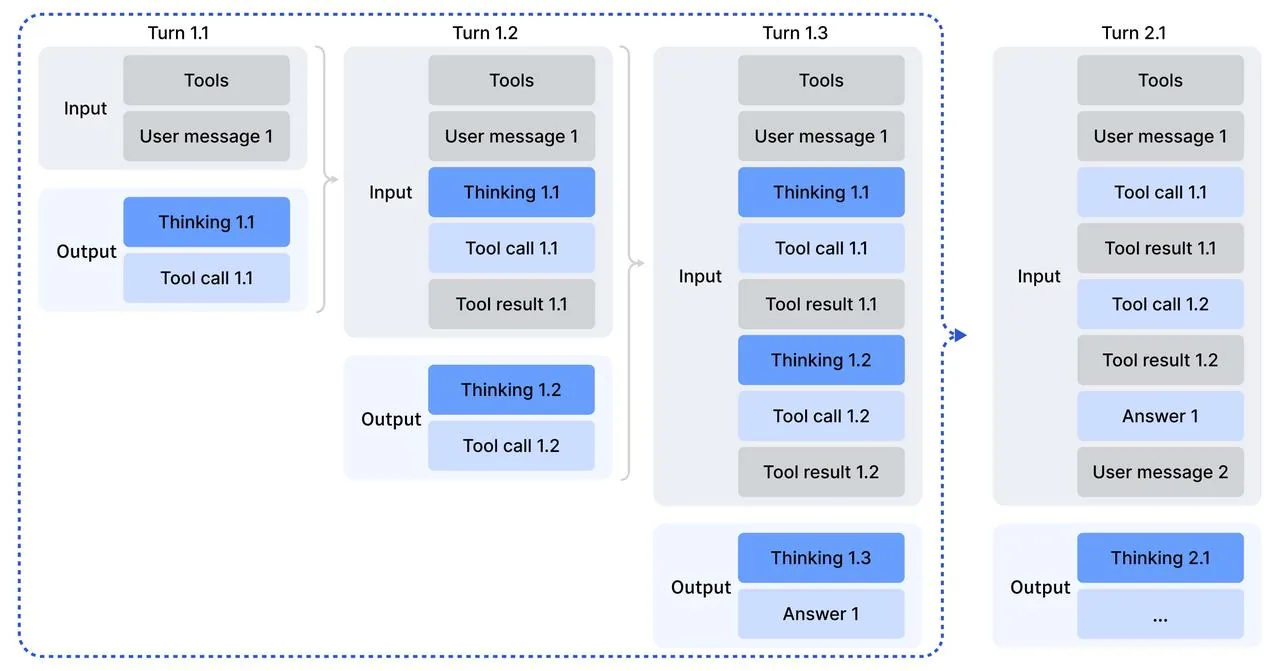
A central theme of the release is “Thinking in Tool-Use.” Tool use refers to a model calling external functions or services, such as search, code execution, calculators, or APIs. In agent systems, a model may plan steps, call tools, observe results, and continue working toward a goal.
DeepSeek says it introduced a large-scale agent training data synthesis method covering more than 1,800 environments and over 85,000 complex instructions. The goal is to train the model not only to answer questions, but also to operate across multi-step tasks where tool selection and execution matter.
According to DeepSeek, V3.2 is its first model to integrate thinking directly into the tool-use process. It also supports tool use in both thinking and non-thinking modes. That distinction matters for developers building agents, because the model’s ability to reason around a tool call can be as important as the final response.
At the same time, DeepSeek makes a clear separation between the two releases: V3.2 supports the new tool-use capability, while V3.2-Speciale is focused on reasoning evaluation and currently has no tool calls.
API and open release
For API users, V3.2 follows the same usage pattern as V3.2-Exp. V3.2-Speciale is served through a temporary endpoint: https://api.deepseek.com/v3.2_speciale_expires_on_20251215. DeepSeek says Speciale has the same pricing as V3.2, does not support tool calls, and will remain available until December 15, 2025, 15:59 UTC.
DeepSeek also points developers to a Thinking Mode Guide in its API documentation for details on V3.2’s tool-use behavior. The company has released DeepSeek-V3.2, DeepSeek-V3.2-Speciale, and the V3.2 technical report on Hugging Face.
Why it matters
The release reflects a broader shift in open model competition. The frontier is no longer only about chat quality or benchmark scores; it is increasingly about combining strong reasoning with reliable agent execution.
DeepSeek’s split strategy is notable. V3.2 is the deployable general model with tool-use support, while V3.2-Speciale exposes a higher-reasoning ceiling for evaluation despite heavier token usage. The next phase for open models will likely depend on how well vendors can improve reasoning, control inference cost, and make agent workflows dependable enough for real applications.