On the evening of August 13, DeepSeek dropped this year’s most significant open-source move—DeepSeek Harness (DSH). This isn’t just another large model update; it’s DeepSeek’s first time open-sourcing its own AI Agent runtime framework, released under the MIT license and free for commercial use.
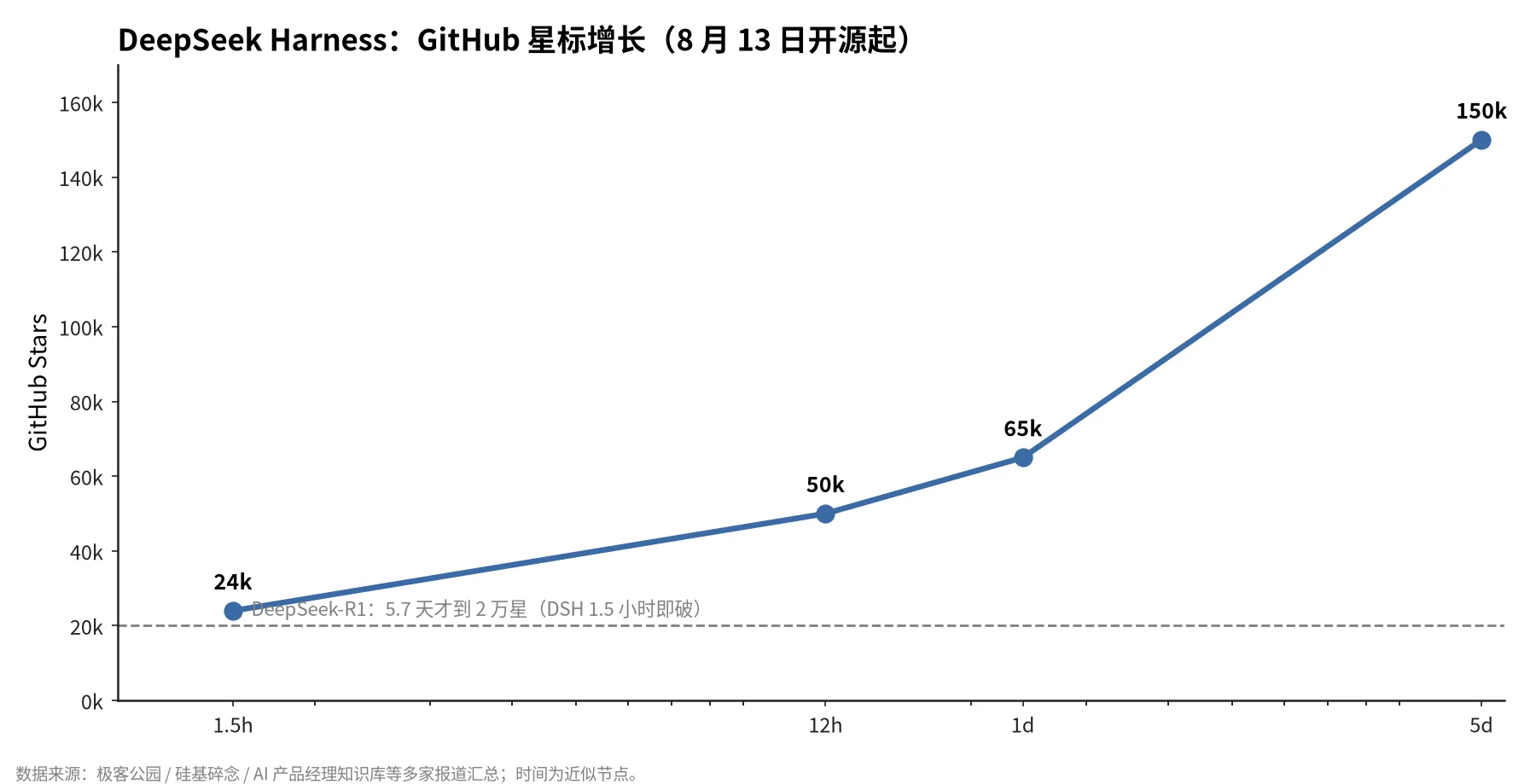
Five days later, GitHub stars surged past 150,000 with 15,000 forks, shooting it into the ranks of GitHub’s fastest-rising projects of all time. For comparison: DeepSeek’s own flagship model, R1, took about 5.7 days to hit 20k stars; Harness reached that milestone in just 1.5 hours.
1. What It Actually Is
In the AI community, there’s a widely accepted formula: Agent = Model + Harness. The model is the thinking brain, while the harness provides the “hands, feet, and workstation” that let that brain get things done—reading and writing files, executing commands, browsing the web, writing code, and controlling the computer.
Before this, DeepSeek had only open-sourced the “Model” half of the equation; the harness side went quiet. Now, they’ve finally completed it.
DSH’s most disruptive design boils down to eight words: Everything is a plugin. Models, tools, skills, sessions, sandboxes, storage, loops, schedulers, UIs—all agent capabilities are composed of plugins. At its core sits the Cordis kernel, which handles only plugin loading, unloading, and dependency management, deliberately shying away from baking in any agent functionality itself. Want to swap models, tools, or UIs? Just replace them at the configuration layer—no source code changes needed.
Think of it this way: tools like Claude Code and Codex are more like “fully furnished apartments”—move right in, everything’s there, but try to knock down a wall and redesign the layout, and you’re out of luck. DSH, on the other hand, is a “raw plot of land”—the official team lays the foundation and runs the utilities, but whether you build a mansion or a loft is entirely up to you. And even the “look of the house” itself is just a UI plugin. Don’t like it? Swap it out.
2. Why It Broke the Records
“Open source” alone doesn’t explain this velocity. What really ignited it was the community ecosystem: in just 5 days, the community shipped over 5,100 plugins from 3,500+ authors,