
A New Open-Source Harness for DeepSeek Agents

DeepSeek Harness, or DSH, has been released as an open-source project. The most notable part is not merely a new coding-agent interface, but a runtime that exposes models, tools, strategies, storage, context handling and plugins as replaceable building blocks.
Users can try it through a Web UI by running npx @deepseek-ai/dsh web in an environment with the Node.js toolchain, or install it from the GitHub source repository. On first launch, it asks for a model API key. DeepSeek’s own developer platform is supported, while other models can also be connected. The original report notes that DeepSeek API pricing is set to rise on the 17th, especially around caching, so DSH includes a bottom-panel dashboard for token usage and cache hit rate.
Presets Shape the Agent Workflow
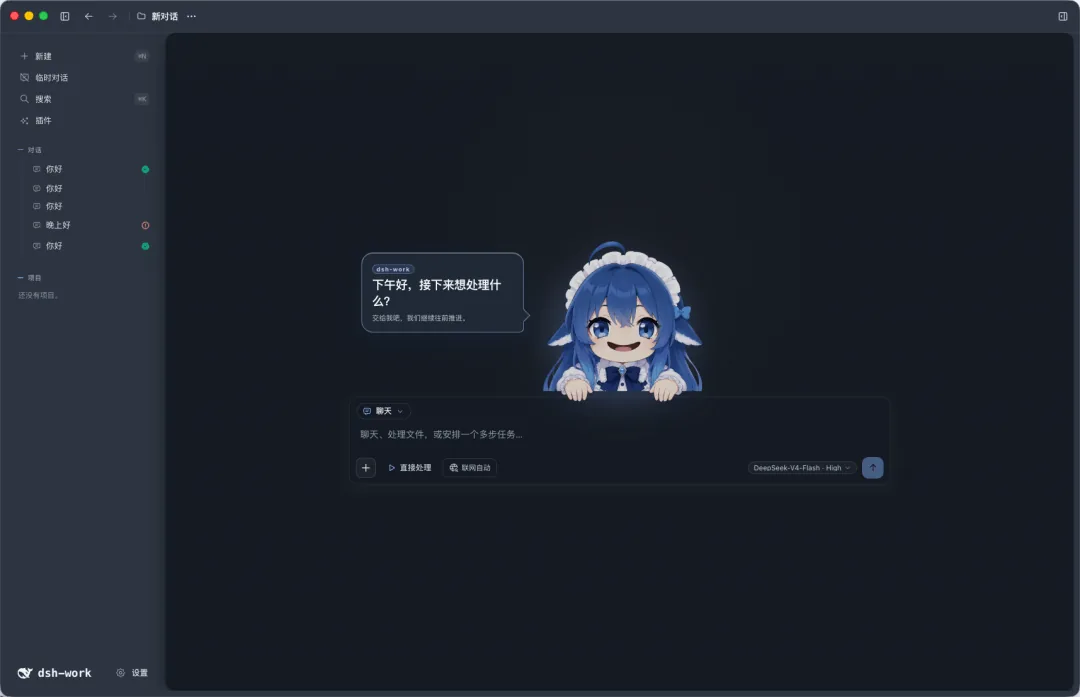
Before starting a session, users choose a working directory and an agent preset. The official presets currently include four options:
- Standard mode, with file editing, shell access, search, Skills, planning, goal tracking, sub-agents and workflows.
- PTC mode, which adds the Code Mode SDK and allows the model to write TypeScript programs to combine multi-step actions.
- Minimal mode, which keeps only bash and
str_replace_editorfor benchmarks and minimal reproduction. - Creative mode, designed for runtime checks, plugin experiments and preset authoring.
An agent here means an AI system that can call tools, break down tasks and keep working across steps. Skills are reusable prompts or workflow conventions. DSH ships with development-focused Skills such as code review, code simplification suggestions, documentation standards and prose quality checks across a repository.
The hands-on report highlights two user-facing details. First, DSH tends to ask clarifying questions when instructions are vague, often providing suggested options instead of rushing into an unfinished result. Second, its “Trajectory” view exposes raw event-level execution records, making it easier to inspect what the agent actually did and where cost was consumed.
Cordis and the Plugin-First Architecture
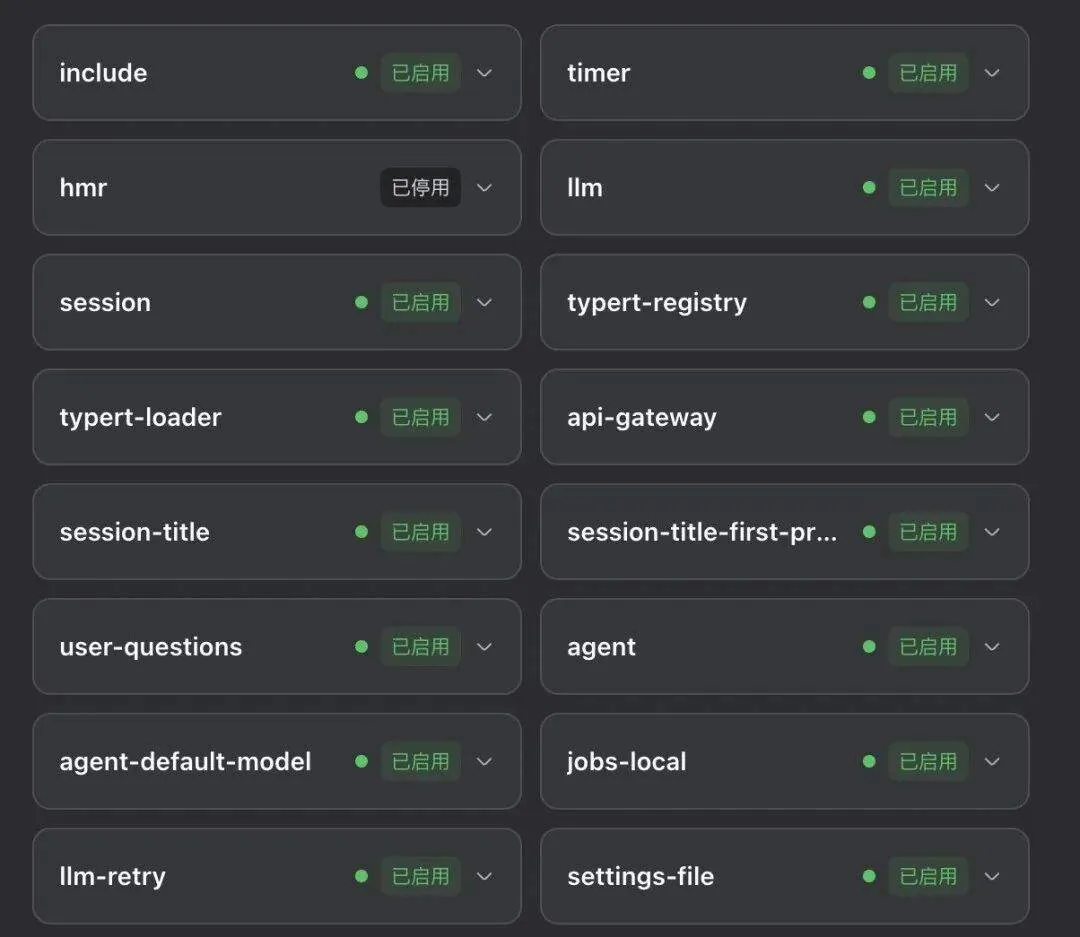
The deeper architectural idea is Cordis. The article describes it like a Lego baseplate: developers do not have to rebuild the entire agent runtime from scratch, but can attach different modules for tools, models, context, storage and policies.
This matters because DeepSeek has already included more than 100 plugins and reserved space for a future Plugin Store. Developers can build new plugins or replace existing ones according to the framework rules, rather than only adding extensions around a closed core.
That is why the author compares DSH to “Android for the agent era.” The system favors openness, reusability and composability over a tightly sealed runtime. Some competing agent harnesses may offer stronger integration and control, but give the wider community less room to modify the main system itself.
Early Experience: Strong Ambition, Rough Edges
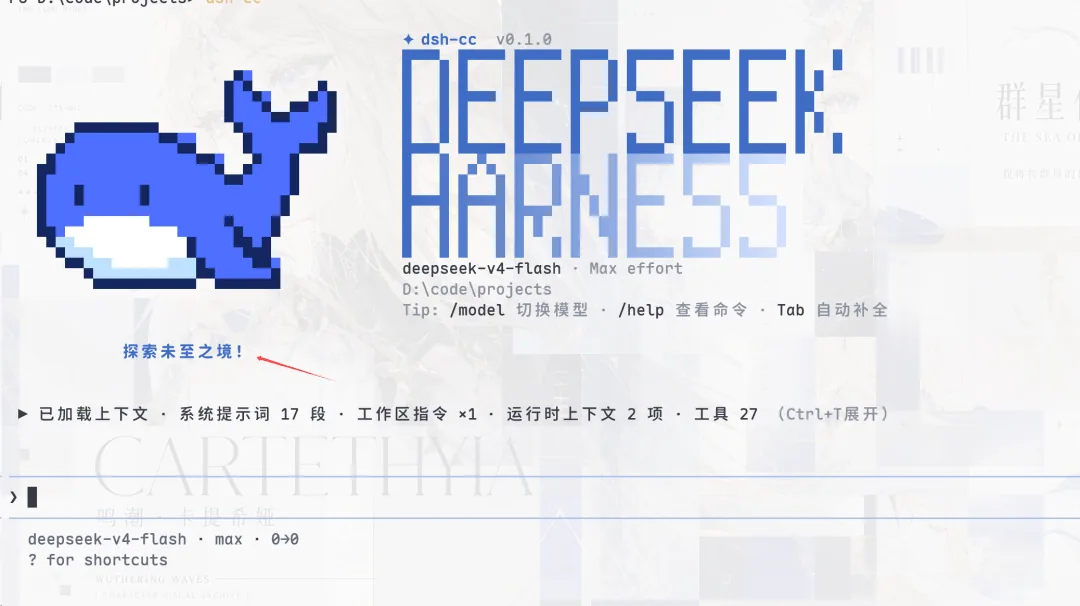
In the reported tests, pairing DSH with DeepSeek’s own model appeared to encourage longer-horizon execution. With simple prompts, the agent spent more time iterating and improving outputs, such as a 3D character mockup or a first-person shooter demo, instead of quickly delivering an early draft. The article also mentions community feedback of an agent run lasting up to 10 hours.
Still, DSH is not yet polished as an everyday product. There is no Electron desktop app for now, so usage goes through the browser. Common agent UI conveniences such as a mature right-side panel, built-in browser, file manager and preview area remain less complete than some rival tools. Image attachment upload is supported, but it still requires a multimodal model if the chosen model cannot process images.
Why It Matters
DSH points to a broader shift in agent tooling: competition is moving beyond raw model quality toward runtime ecosystems. If developers can modify workflows, publish plugins and reuse each other’s improvements, an agent platform may evolve faster than a closed tool that only updates from the vendor side.
For ordinary users, Cordis may not bring an immediate, visible improvement until high-quality plugins accumulate. For power users and tool builders, however, DSH offers a clear proposition: the next phase of AI agents may be shaped by open, composable and community-maintained infrastructure as much as by the models themselves.