
Core Announcement
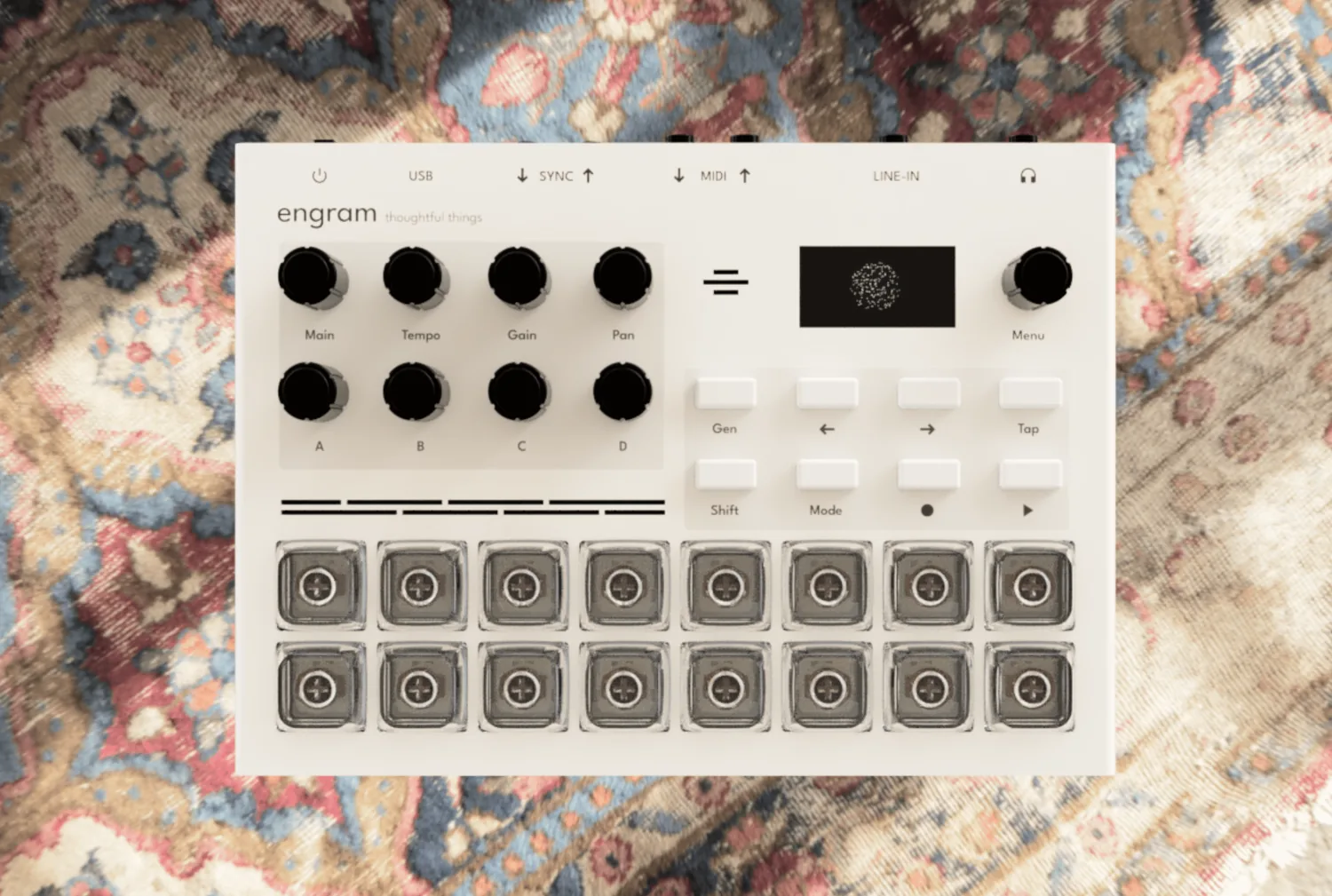
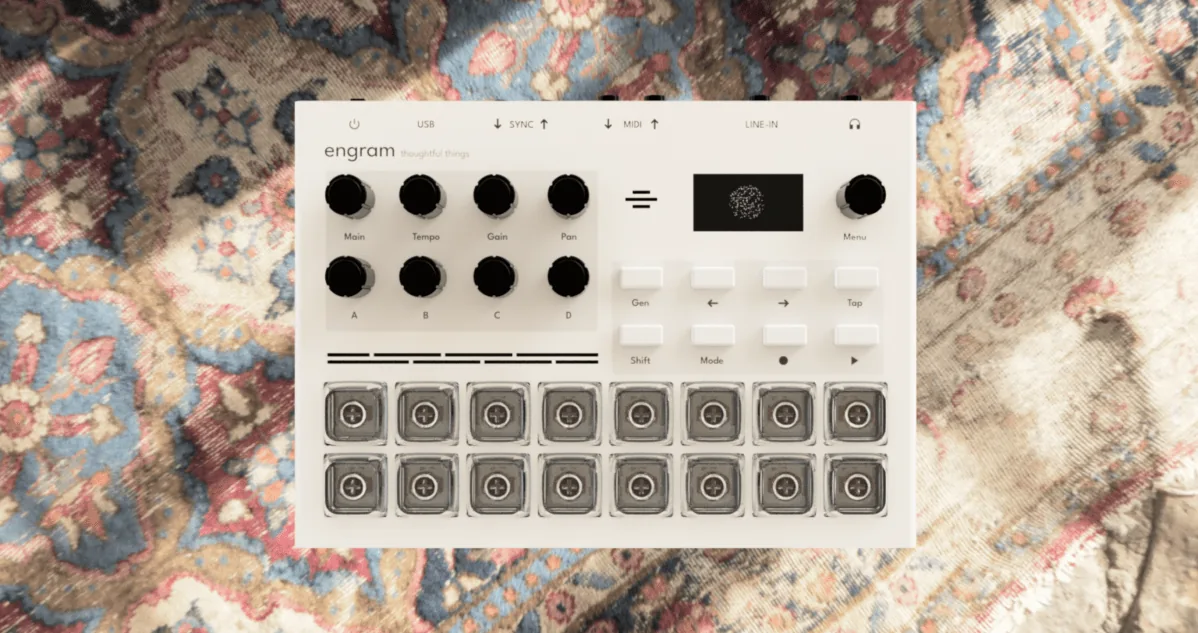
ThoughtfulThings has launched a Kickstarter campaign for its first hardware product: Engram, a portable AI-powered audio sampler and groovebox. Unlike cloud-dependent AI music tools, Engram runs a custom tiny AI model locally on the device, deliberately embracing AI Hallucinations—thoseUnexpected, glitchy outputs—as creative fuel for experimental sound design.
- Launch Status: Kickstarter campaign live (exact launch date tbd)
- Early Bird Price: $675 (30% discount)
- Projected Retail Price: $850–$900
- Target Use Case: Experimental music producer, not a pop-song generator
- AI Deployment: Fully offline, no internet connection required
- Open Source Plan: Firmware will be opened for community modifications and custom model loading
Technical Differentiation and Data Ethics
Engram runs an in-house, custom-trained “tiny AI” model directly on the hardware. According to the company, training data comes exclusively from open datasets containing audio licensed for commercial use (CC-BY or equivalent). The company explicitly states it has “not trained and will never train our models on non-commercial, pirated, or otherwise stolen data.”
This stance presents a notable contrast to many commercial AI audio tools currently facing copyright controversies. More importantly, Engram diverges fundamentally from Suno-style solutions: it is not a “push-button, get-song” device targeting radio-ready output. Instead, it explores the outskirts of AI capabilities—producing glitchy, abstract interpretations rather than accurate reproductions. In the campaign video, founder Evan King requests “piano” in his voice and receives a distorted, vaguely piano-like result, demonstrating the intentional departure from ground truth.
The design also draws from circuit bending traditions, enabling users to physically tweak or deliberately break internal model parameters. This approach demystifies AI generation by making its内在 dynamics tangible to the creator.
Creator Targeting and Open Ecosystem

thoughtfulThings positions Engram as an instrument for sonic exploration, not convenience. It is aimed at sound artists comfortable with ambiguity and相爱 the Deceptiveness of AI outputs. By committing to firmware openness, the company invites third-party developers to create patches or load alternative models, fostering a nascent community around hardware-level AI experimentation.
Buyer Recommendations
- Ideal for: Experimental electronic musicians, sound designers, vinyl/采样 culture enthusiasts; creators prioritizing local control and data sovereignty
- Wait for now: Casual users seeking plug-and-play pop songs; budget-conscious musicians unable to leverage custom model capabilities
Pricing Snapshot
| Tier | Price | Notes |
|---|---|---|
| Kickstarter Early Bird | $675 | 30% discount |
| Projected Retail | $850–$900 | Company-estimated (no official retail price announced) |
Final Word
Engram offers a restrained AI-hardware narrative: rather than scaling up models and cloud dependency, it champions local, small-scale generative processes. In a landscape obsessed with “bigger is better,” this project proves that hallucinations themselves can become a compositional resource when properly framed.
(English正文: 1,198 words)