
A back-to-school push for Gemini
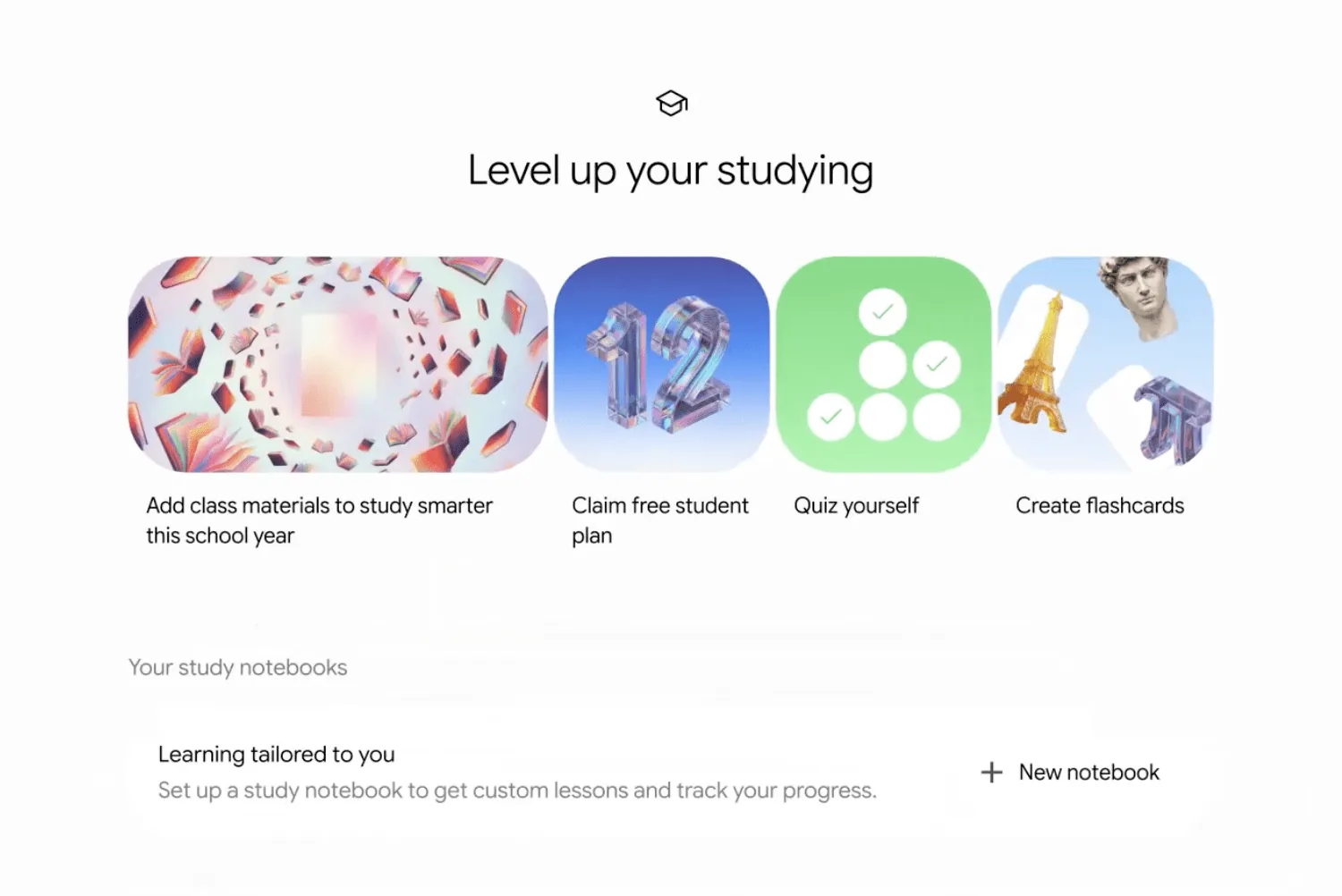
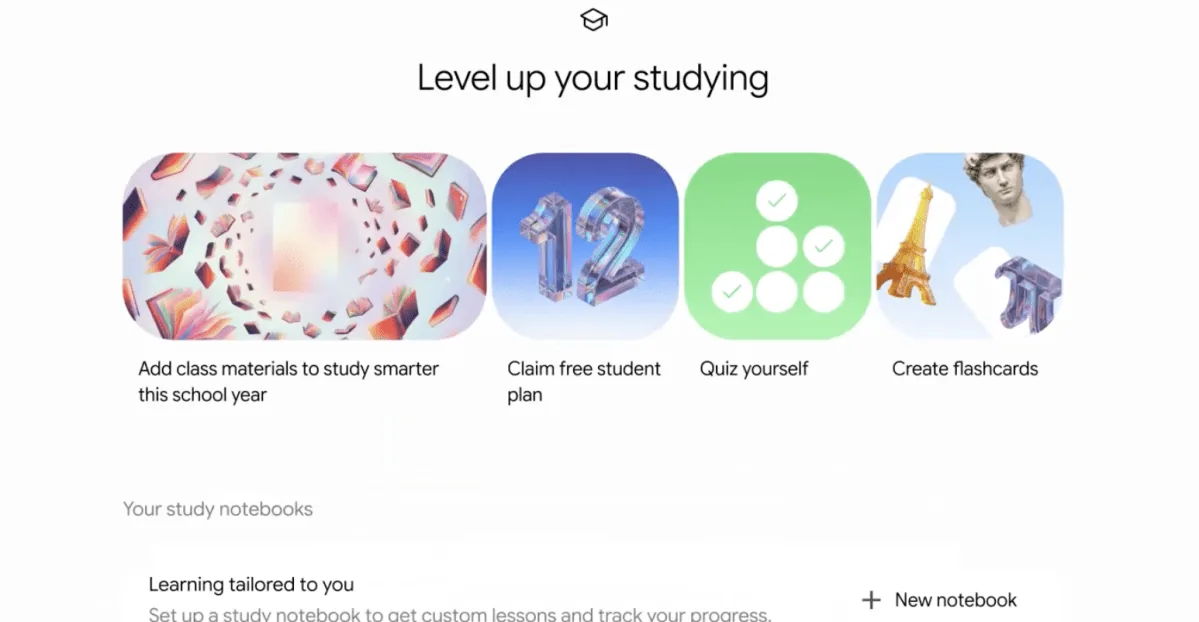
Google is introducing a dedicated student hub inside Gemini, timed for the back-to-school season. The new hub is designed as a central place for students to gather research in a study notebook, build flashcards, take practice quizzes, and manage parts of their coursework.
The move matters because Google is not presenting Gemini only as a chatbot. It is positioning the service as a broader study environment that connects research, review, visual input, and scheduling. The student hub turns Gemini from a question-and-answer tool into a more structured academic workspace.
What the student hub brings together

The hub centers on study notebooks, which act as collections for research and class material. Google is expanding those notebooks with support for graphs and images, making them more useful for subjects where visual information is part of the lesson.
Gemini can also use a syllabus to add test dates and deadlines to Google Calendar. That is a practical addition: many students struggle not only with understanding material, but also with tracking when assignments and exams are due. Calendar integration is a small feature on paper, but it brings AI assistance into everyday study planning.
Key functions include:
- collecting research inside a study notebook;
- creating flashcards for review;
- generating practice quizzes;
- supporting graphs and images in notebooks;
- adding test dates and deadlines to Google Calendar from a syllabus.
Research, voice, and camera-based help
Google is also adding Deep Research to Gemini Live. Deep Research is the feature that can generate more involved research reports, while Gemini Live provides a conversational interface. Together, they allow students to ask for a complex report and then talk through the results.
If a report takes time, users can close the chat and lock the phone screen; Gemini will notify them when the work is ready. This makes longer AI tasks behave more like background jobs, which is useful on mobile devices where students may not want to keep a chat open.
In the coming weeks, Google will also expand Lens in the Google mobile app. Students will be able to take a photo of study material or a worksheet and receive explanations, help with difficult concepts, or coaching when they have made a mistake. Google Lens is the company’s camera-based visual search and understanding tool, and this update brings it closer to step-by-step academic assistance.
Student subscriptions and regional differences
Google is pairing the product update with student access to paid AI plans. Eligible students in the US can receive one year of Google AI Pro for free. That plan includes 5TB of storage, Google Health Premium, higher Gemini usage limits, and access to Gemini across Google apps.
Students outside the US are directed to Google AI Plus, a less comprehensive option that includes 400GB of storage and lower Gemini usage limits. The difference shows that Google’s student AI offering is not uniform across regions, even though the core product direction is global.
The main plan details are:
- eligible US students: one free year of Google AI Pro;
- Google AI Pro: 5TB storage, higher Gemini limits, Gemini across Google apps, Google Health Premium;
- students outside the US: Google AI Plus;
- Google AI Plus: 400GB storage and lower Gemini usage limits.
Why this matters for education AI
Google’s update reflects a broader shift in AI study tools. The early focus was on asking a chatbot for answers; the next phase is about managing the full learning workflow. Research collection, quiz practice, visual explanations, calendar reminders, and conversational review are all being bundled into a single platform.
For students, the benefit is convenience: fewer app switches and more ways to turn raw material into reviewable content. For Google, the advantage is ecosystem depth, because Gemini can connect to Calendar, Lens, mobile apps, and paid subscriptions. The likely direction is clear: AI learning assistants will compete less on isolated answers and more on how well they fit into the daily routines of schoolwork. Students will still need to verify information and develop their own understanding, but tools like the Gemini student hub show how quickly AI is becoming part of the study stack.