
Core Update: Google Home MCP Now Live
Google has launched Google Home MCP, a new integration that allows third-party AI agents supporting the Model Context Protocol (MCP)—a standardized interface for AI agents to exchange contextual data—to securely access and control devices in Google Home ecosystems. The rollout has begun and is currently limited.
Key facts:
- Release timing: Current rollout with staggered availability
- Eligibility: Google Home Premium Advanced users in the US only
- Pricing: $20/month or $200/year subscription required
- Setup: Requires manual creation of a Google Cloud project and MCP configuration
- Open access: Not broadly available; opt-in with subscription and technical setup
MCP explainer: The Model Context Protocol standardizes how AI agents retrieve and pass context (e.g., device states, event histories) to external systems. It enables interoperability and prevents protocol fragmentation across different AI platforms.
Functionality: From raw data to proactive automation

MCP’s value lies in granting agents access to the underlying device event history and multi-device telemetry, not just basic commands. Taylor Lehman, Group Product Manager at Google Home & Nest, outlined these confirmed capabilities:
- Cross-camera behavioral analysis: e.g., “What did my child do after arriving home from school?”
- Usage pattern inference: estimate laundry loads, lighting duration, and other temporal patterns
- Voice feedback delivery: push audio notifications via Google Home speakers upon task completion
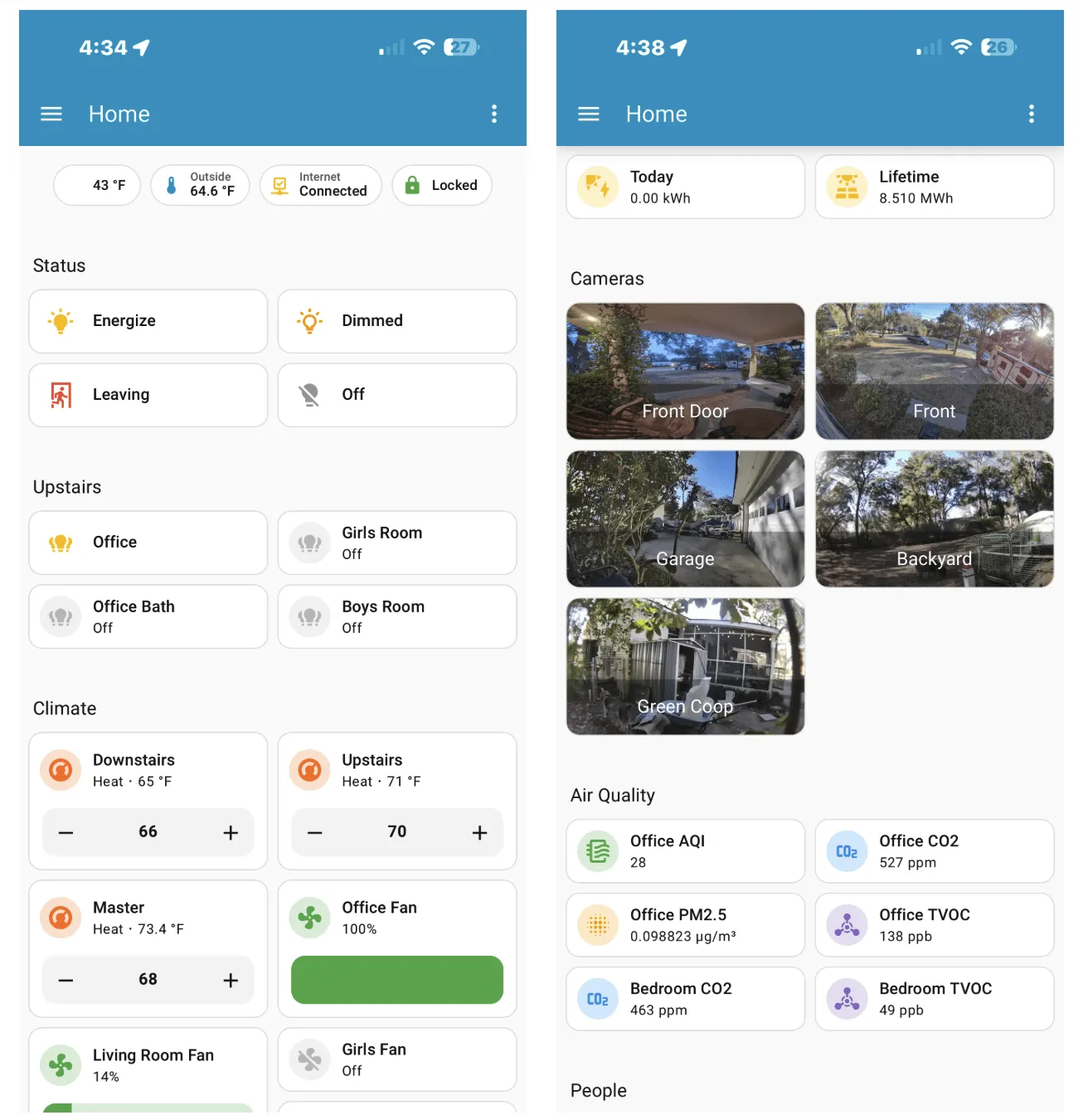
- Custom dashboard creation: agents can build and update control interfaces for Google Home devices
Unexpected contrast: MCP is explicitly not a replacement for Google’s Gemini for Home assistant. Gemini remains the official, user-facing interface for most interactions via the Home App and Nest speakers—MCP adds a parallel, programmatic control layer for developers and advanced users.
Pricing and access tiers: Premium-tier only for now
Access to MCP is gated behind Google’s top-tier smart home subscription. No pricing is offered at lower tiers:
| Tier | Price | MCP Access | Notes |
|---|---|---|---|
| Google Home Premium Advanced | $20/month or $200/year | ✅ | US rollout in progress |
| Free tier | $0 | ❌ | Not available |
Safety guardrails are baked in: Google Home MCP enforces rate limits and blocks high-risk actions (e.g., door unlocking). Still, Lehman cautioned that “connecting it to Home MCP can result in unexpected or even undesired behavior,” advising users to review Google’s developer terms.
Who should try it—and who should wait?
Good fits:
- Smart-home tinkerers: Users comfortable with natural-language automation, debugging, and dashboard-building will benefit from reduced complexity
- Google ecosystem developers: Can leverage Antigravity or other agents to rapidly prototype Home-integrated AI workflows
- B2B integrators: Hotel or rental-property operators can build centralized control layers atop Google’s infrastructure
Wait recommended if:
- You prioritize privacy over functionality: Even with safety limits, granting third-party agents access to historical device telemetry shares raw behavioral data—each agent’s own privacy policy remains uncontrolled by Google
- You use multi-platform setups: Google positions MCP as one smart home control layer, not a universal hub. Cross-ecosystem integration (e.g., with Apple HomeKit or Amazon Alexa) still requires custom bridges
Final thoughts
With MCP, Google adds the final piece to its smart home infrastructure strategy: after launching API access and more recent Gemini for Home upgrades, it now offers third parties direct device-execution rights. Though prior platform shifts (Android@home, Weave, Brillo) left developers wary, Google’s current positioning suggests a stable, long-term infrastructure bet—positioning itself as the AWS of residential AI automation.