
Core Event Summary
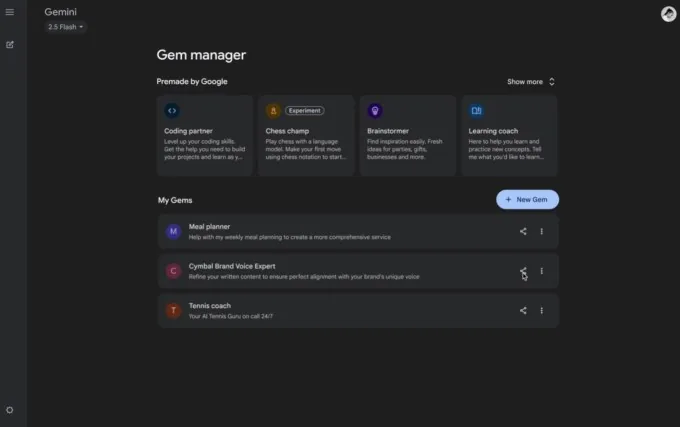
Google officially announced on September 28, 2026, the retirement of the “Gems” feature in Gemini, to be replaced by a new “Skills” system.
Key deadlines and migration rules:
- Feature end date: November 17, 2026
- Migration approach: Fully automatic; users need no manual action
- Pre-migration availability: Existing Gems remain functional until termination date
- Functional transition: Gems convert to Skills format, enabling reuse across different AI tasks
The Gems feature launched in 2024. This adjustment reflects Google’s ongoing strategic refinement of its AI assistant product architecture rather than a standalone decision.
Technical Logic and Functional Evolution

Gems essentially functioned as task-specific AI agents, permitting users to create customized assistants for specialized scenarios. Google’s pre-built Gems included Learning Coach, Brainstorming Assistant, Career Guide, Coding Partner, and Editor; users could also develop personal assistants such as Running Coach, Nutritionist, or Vacation Planner, and share them with others—a design intended to boost Gemini app engagement and community participation.
The shift to Skills introduces a pivotal change in interaction paradigm. While Gems activated via dedicated interfaces or context detection, Skills require users to input a forward slash “/” in a task thread and manually select the desired skill from a menu. Google notes you’ll have to enter a forward slash “/” in a task thread to select the skill you want to use — a user interface that engineers, not regular folks, tend to prefer.
Despite Gems empowering user customization and sharing—and despite Google’s initial hopes that Gems would drive Gemini app adoption—the feature was ultimately superseded by Skills, which prioritize platform simplification. This contrast in user experience reveals a fundamental tension: the openness of community-driven co-creation versus the platform operator’s desire for streamlined experience.
Product Comparison and Historical Context
The core change between Gems and Skills lies not in technical architecture but in product philosophy.
| Dimension | Gems | Skills |
|---|---|---|
| Activation method | Dedicated interface / context recognition | Input “/” then menu selection |
| User operation | Direct selection | Requires command syntax familiarity |
| Interaction naturalness | Closer to conversational assistant | Closer to command-line tool |
| Customization openness | Supports user creation and sharing | Maintains sharing capability |
This adjustment echoes Google’s historical pattern of product consolidation. As noted in the source, the company previously operated multiple messaging and communication apps simultaneously before consolidating them—a behavior predating the AI era.
User Guidance
Suitable for immediate action:
- Existing Gems creators and users—the migration is fully automated; normal usage prior to November 17 ensures seamless transition
- Teams relying on Gems sharing functionality—Skills retain the original sharing capability post-migration
Recommended for观望 (watch-and-wait):
- New users who have not deeply engaged with the Gems ecosystem should evaluate the new slash-based workflow after Skills are fully rolled out. Google acknowledges that the slash interface remains non-intuitive for non-technical users, aligning more closely with developer preferences than consumer expectations.
Practical reminder: After November 17, 2026, the legacy Gems entry point will be fully decommissioned, accessible only via the new Skills interface. User-collected assets—custom prompts and configuration parameters—will persist, though their presentation format will be irrevocably altered.
Final Thoughts
This adjustment underscores a shared challenge facing major tech firms: balancing functional depth with interaction simplicity. As competitors like Meta Muse rapidly gain traction through end-to-end conversational experiences, Google opts for an engineering-centric path to reduce platform complexity—even as it risks short-term user experience trade-offs.