Core Event: AI 3D Company Meshy Scales to $100M ARR in Under Two Years

Key facts: 3D generation company Meshy increased its Annual Recurring Revenue (ARR) from $1 million to $100 million in under two years, achieving growth speed rivaling or exceeding AI industry “supernova” benchmarks. ARR measures sustainable recurring subscription revenue, a core SaaS metric.
Timeline & key data points:
- Growth period: Under two years
- Starting point: $1M ARR
- Current level: $100M ARR
- Benchmark comparison:
- ElevenLabs (speech generation): ~20 months to $100M ARR
- HeyGen (video generation): 29 months to $100M ARR
- Meshy is faster than HeyGen
Divergent Routes: General Models vs. Specialized Models
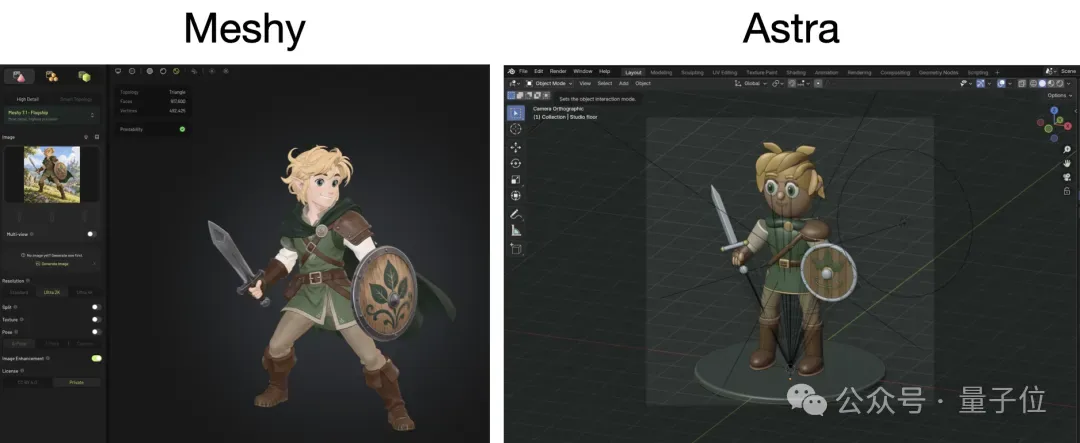
After GPT-6 Astra’s release, general-purpose LLMs drew attention for operating Blender via code to generate basic scene structures. However, when pushing tasks toward characters and complex props—where proportion, structure, and detail matter—the gap between specialized and general models quickly widens.
Contrast test revelation:
- Rendering the same golden-haired warrior reference image, Meshy produced models with individual hair strands, layered capes and belts, and accurate shield patterns
- Astra produced an abstract version: hair as a solid “helmet”, cartoon-style round eyes, and a body assembled from geometric primitives
Meshy 7/7.1 technical barriers in three dimensions:
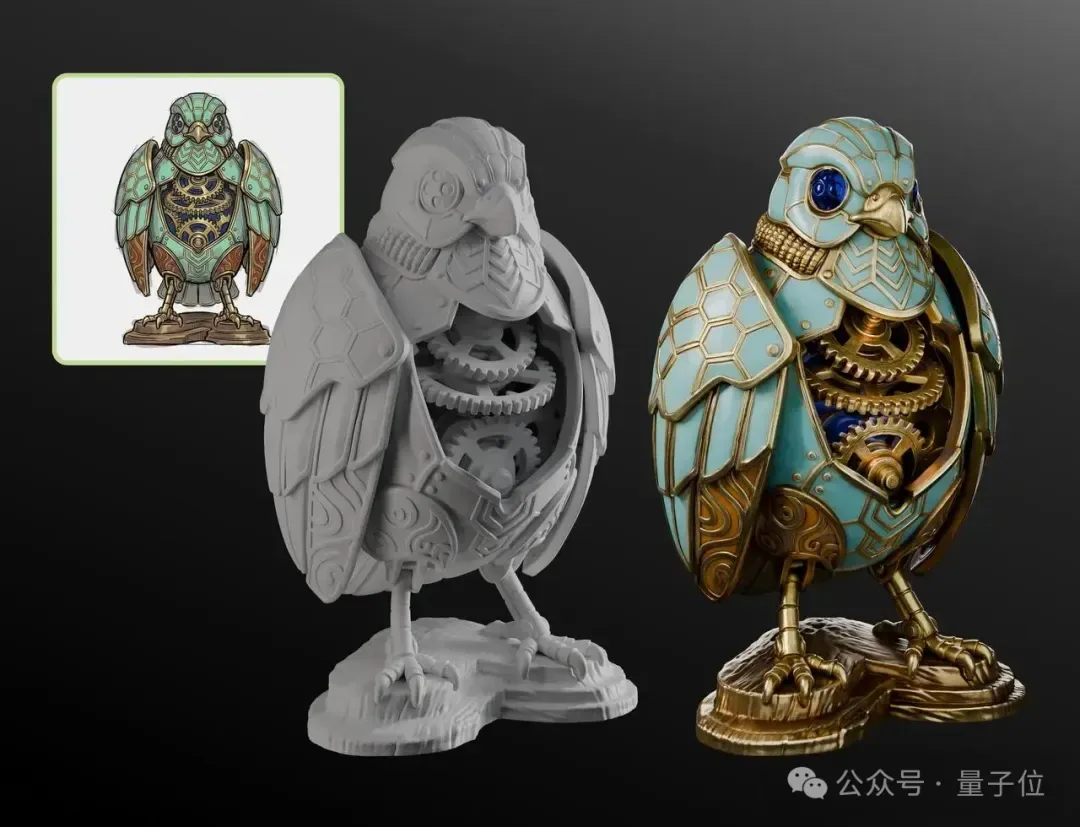
- Shape fidelity: Multi-layer armor scales, gear mechanisms, and carved bases preserved as separate structures for a mechanical owl model; Surface Detail score: 59.8% (competitors 49%-55%, Meshy 6 Lite: 52.7%)
- Detail resolution: Geometric generation upscaled from 2048³ to 4096³; Detail Richness benchmark 4K rendering: 23.1% (industry-leading)
- Color & pattern alignment: legible text on radio nameplates, intact scales; end-to-end texture alignment test: 66.2% composite score
Commercial adoption: From tool to production pipeline
Monetization channels now proven:
| Scenario | Value proposition | Case study |
|---|---|---|
| Game development | Reduces manual sculpting workload, shortens modeling cycles | 37 Interactive: 30%-40% reduction in base sculpting workload for complex character parts; casual game modeling time: 5 days → 2.5 days |
| 3D printing | Solves content supply gap | Customers include top bamboo, Chenxiang 3D, Elegoo, FlashForge, xTool; MakerWorld: ~50M registered users globally, 10M monthly active |
Three-tier pricing model:
- Individual subscriptions: Independent devs, educators, printing enthusiasts
- Enterprise API: Integrated into 37 Interactive, NetEase Games, Nexon pipelines—becomes high-frequency call
- Hardware ecosystem: Partnerships with 3D printer brands, forming “device + content” closed loop
Technical evolution: From assets to world-building
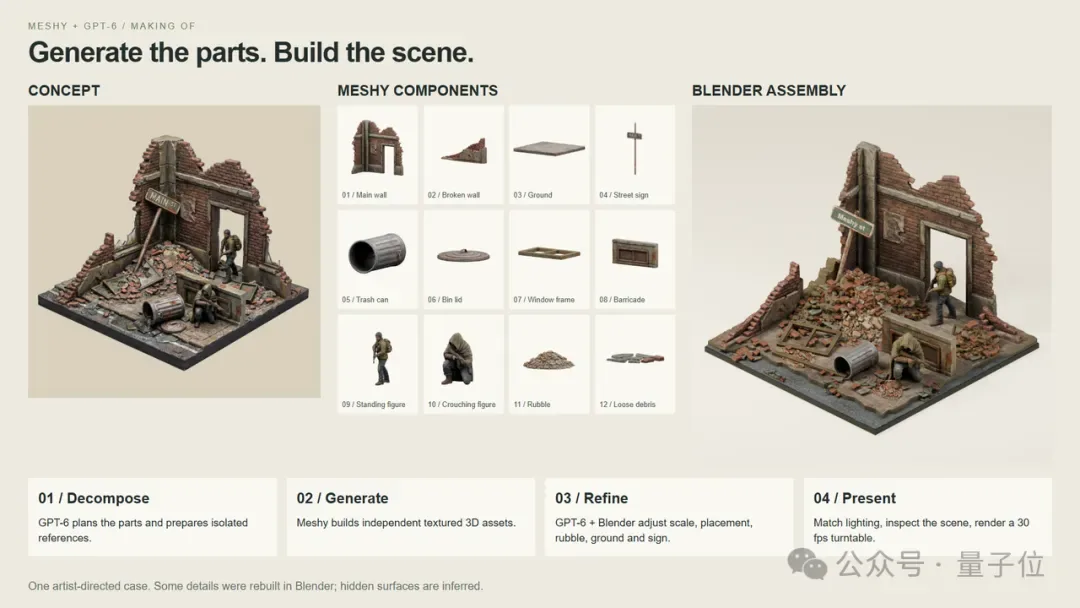
Meshy’s Mora real-time interactive multi-modal architecture represents expansion from AI for Work to AI for Fun:
- Layered architecture: Coding Agent handles structure/logic design; Meshy generates 3D assets and video model control signals; video model outputs real-time visuals and audio
- 3D as structural skeleton: Solves spatial consistency issues in pure video generation—the room layout, door locations, object placements are defined by 3D structure, ensuring persistent interactive objects
- Meshy T2 exploration: Flow Matching route for direct mesh generation, controlling vertex connectivity and complexity balances speed and structure quality
Practical recommendations
- Try now: Indie game developers, 3D printing hobbyists, small-to-medium art teams—can quickly obtain usable assets via individual subscriptions, lowering entry barriers
- Wait longer: Projects requiring high-fidelity style matching or specific cultural details (e.g., traditional Chinese architecture motifs)—current specialized models still require manual refinements, making rework costs non-trivial
Final thoughts
AI 3D has proven commercially viable, but the core business cycle depends on how quality drives actual usage frequency, which in turn determines revenue sustainability. As general models advance, demand for professional 3D models increases—they complement rather than replace each other.