
Core Announcement: Grab Applies a Five-Level AI Agent Model to Analytics
Grab is using AI agents to automate analytics workflows, reducing the share of routine work handled by analysts and shortening the time needed to answer business questions. Key updates include:
- The share of routine tickets handled by analysts fell from 44% in February to 30% in June, a decline of 14 percentage points;
- The Spartan system supports natural-language analytics requests, including questions submitted via Slack;
- The system uses 50+ skills and 120+ analytical frameworks to route requests to specialized workflows;
- From March to May, self-service analytics requests completed without human intervention rose from 53% to 67%; data extraction rose from 63% to 90%; SQL queries rose from 50% to 81%;
- The BriX portal has seen usage grow more than 10x since September, while the team completed 31 production deployments, 283 merge requests, and 60 feature developments in the first half of the year;
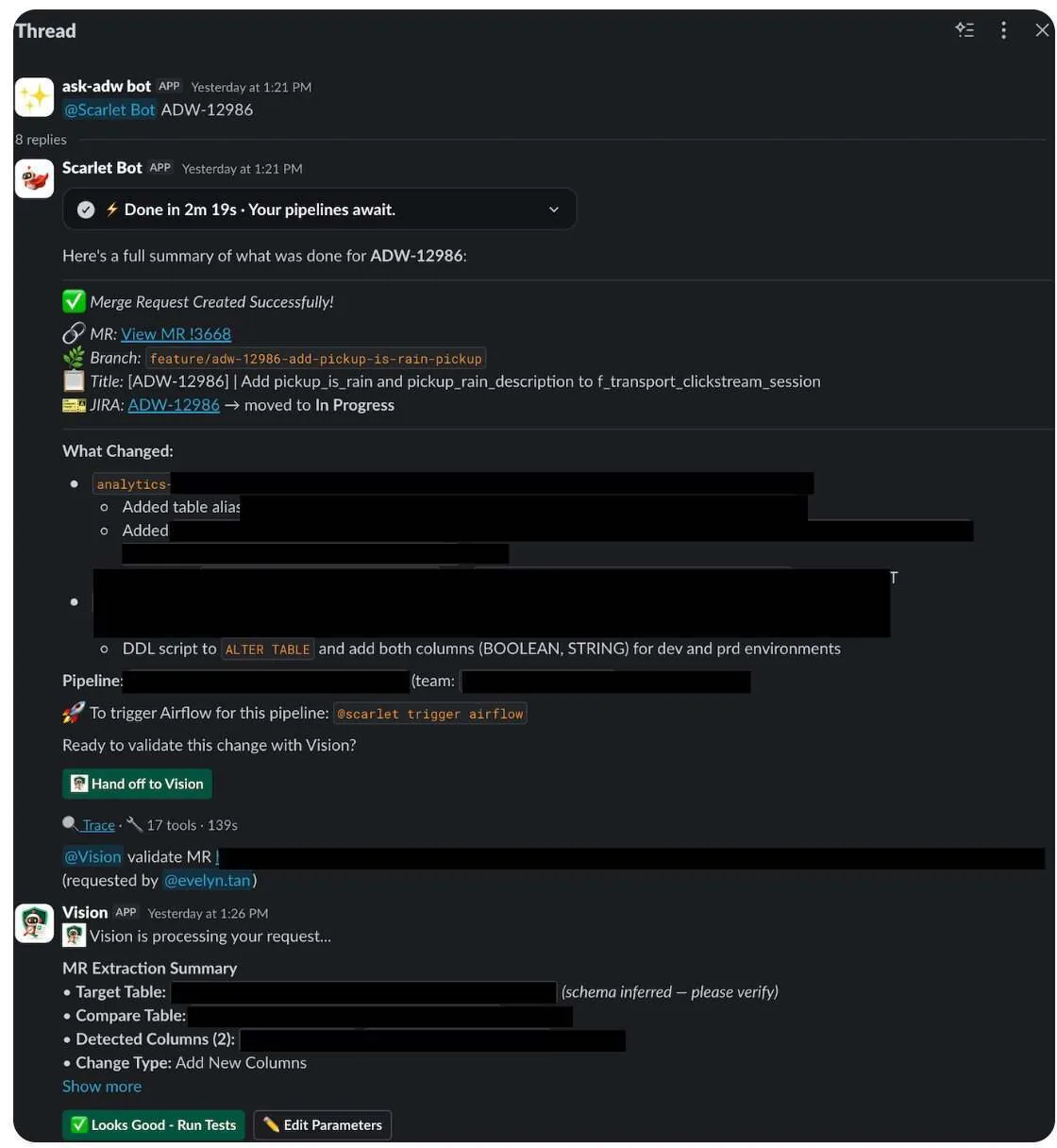
- Scarlet performs root-cause analysis and remediation for pipeline failures, escalating when predefined checkpoints or documented runbooks are insufficient.
The Five-Level Autonomy Model: Defining Human-AI Responsibilities
Grab’s five-level autonomy model defines how far AI agents can go in analytics workflows while preserving human oversight. The original report highlights several levels:
- Level 3: Humans ask the questions and review the results; AI agents discover data, write and execute queries, validate results, and draft analysis reports;
- Level 4: AI agents can plan and coordinate workflows, while humans review predefined checkpoints;
- Level 5: End-to-end autonomy, with humans setting goals, quality thresholds, and escalation rules.
Grab still keeps key judgment calls in human hands: metrics definition, causal interpretation, business assumptions, and final decisions remain human responsibilities. In other words, the framework is less about replacing analysts and more about reshaping their work. Grab’s analytics head Maanas Prabhakar also raised the central question in a LinkedIn post: what should analysts do when data preparation, analysis, and related tasks are handled by agents?
The current data suggests that data extraction is one of the clearest automation wins: by May, 90% of data extraction requests could be completed without human intervention. As repetitive and well-bounded tasks move to agents, analysts can spend more time designing self-service workflows, interpreting business context, and tackling deeper questions.
Data and Knowledge Foundation: Quality Comes Before Automation
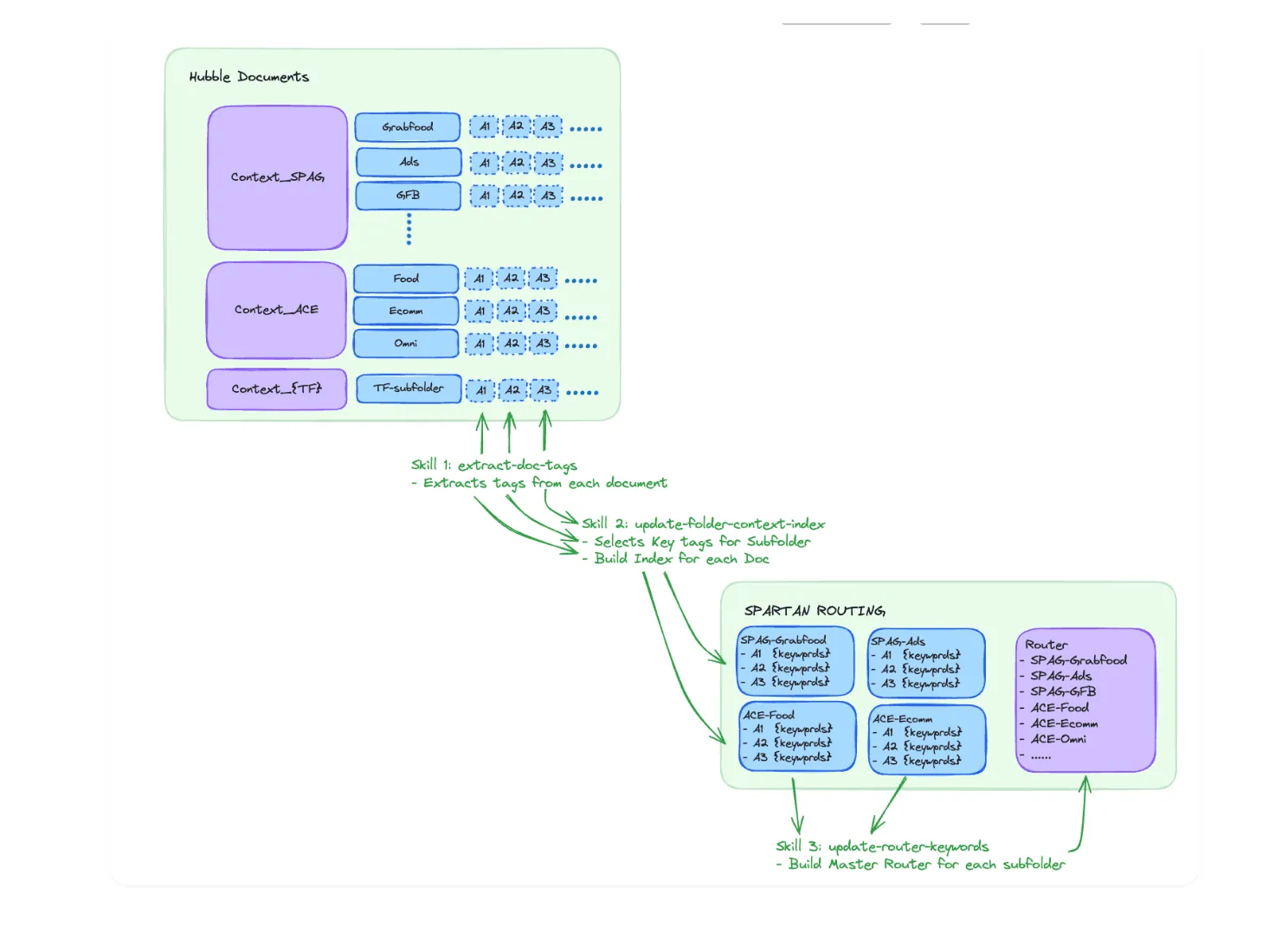
Grab emphasizes that reliable AI agents require strong data context, not just capable models. The company maintains:
- More than 5,000 certified tables and metrics;
- 4,000 context documents;
- 2,000 golden records;
- ContextIQ, a system that manages the lifecycle of this context, updates it as monitoring configurations change, and incorporates fixes identified from production agent failures.
This context layer helps Spartan choose the right workflow for different types of questions. For example, a root-cause question can trigger analysis of certified metrics and relevant dimensions; an experiment-related question can retrieve existing scorecards instead of querying the data lake directly. This reduces the risk of low-quality queries and inconsistent definitions.
Another notable signal is adoption beyond the analytics team: roughly three-quarters of discussion threads come from outside the analytics organization, and 85% of requests receive a first response within one minute. That suggests the system is becoming a broader self-service analytics interface, not just an internal analyst tool.
BriX and Scarlet: Analytics Development and Operations
Beyond Spartan, Grab is also applying agent-based automation to reporting and analytics operations:
| Tool | Primary Function | Reported Progress |
|---|---|---|
| BriX | Supports analytics workflow development, automatically generates metrics and OKR analysis reports, and evaluates significant data movements | Usage up more than 10x since September; 31 production deployments in the first half of the year |
| Scarlet | Handles pipeline failures through root-cause analysis and remediation | Escalates when checkpoints or runbooks cannot resolve the issue |
BriX can break down metrics by country and segment, and relate changes to operational adjustments and experiments. Scarlet focuses on failure handling in analytics operations. Together, they reflect the same operating principle: AI agents take on standardized and verifiable workflows, while humans retain review, interpretation, and decision-making responsibilities.
Implementation Guidance

- Best suited for: Organizations with high analytics request volume, mature metric systems, certified data assets, and established documentation practices;
- Wait if: Metric definitions are inconsistent, data assets lack certification, or business context still lives mostly in individual experience. In those cases, data governance and knowledge management should come before agent-layer automation.
Final Thoughts
AI agents in analytics are moving from “answering questions” to “executing workflows.” But analysts do not disappear; their role shifts toward workflow design, business interpretation, and quality control. The value of automation depends not only on model capability, but also on how clearly human and AI responsibilities are divided.