
Apple Introduces New Siri Audio AI Features: Privacy by Hardware Isolation
On September 10, 2026, Apple unveiled the Siri AI Audio Intelligence suite during its iPhone Duo launch event, featuring Siri Recap, Live Rewind, Sound Recognition, and Music Recognition. These capabilities run on the S11 chip inside the new Apple Watch Series 12 and Apple Watch Ultra 4. No release date, pricing, or backward compatibility details have been announced.
Hardware-Isolated Processing: The Secure Exclave Difference
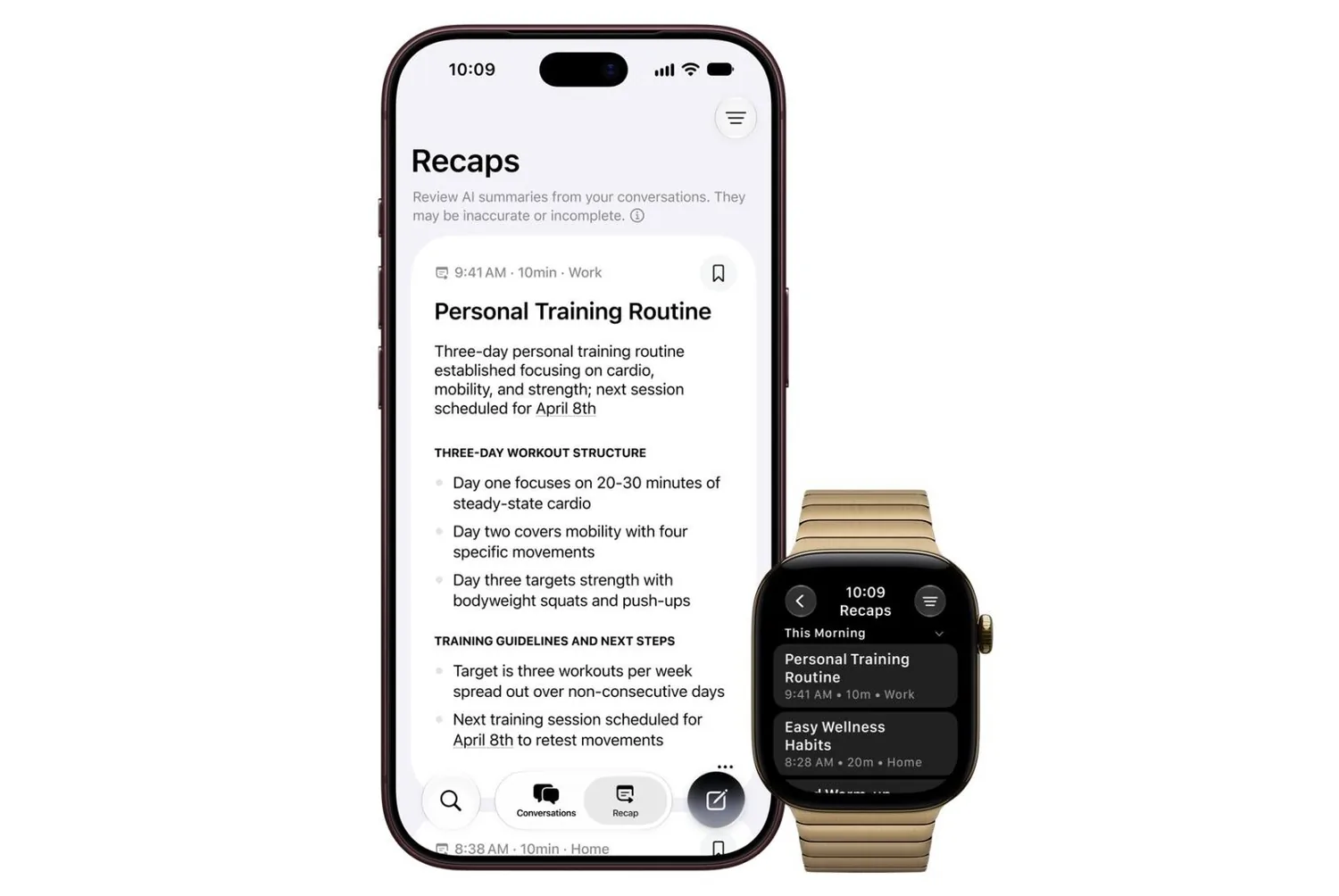
Apple’s technical documentation outlines how raw audio remains protected through the S11 chip’s Secure Exclave—a hardware-isolated compartment embedded directly in silicon that processes sensor data separately from the main system. This architecture ensures data processed within the Secure Exclave is inaccessible to watchOS, apps, users, or Apple itself.
Core technical facts:
- No raw audio files are ever created or stored; microphone input is processed internally for speech, sounds, or music recognition
- Continuous buffer rotation: Audio data exists as a fleeting stream that gets overwritten in real time, making actual recording impossible
- Complete isolation: Even system-level access cannot reach data inside the Secure Exclave
- End-to-end encrypted transfer: When results move to the iPhone, both Secure Exclaves participate in encrypted transmission
The surprising technical trade-off: Apple sacrifices some processing flexibility to gain stronger privacy guarantees. By using dedicated hardware exclusion zones instead of software-based models, it Eliminates the possibility of accidental data leakage—even if attackers compromise watchOS, the raw audio stream remains mathematically unrecoverable.
User Control by Design

Apple emphasizes active user consent:
- Double-tap activation for Live Rewind: Requires manual double press on the Digital Crown each time
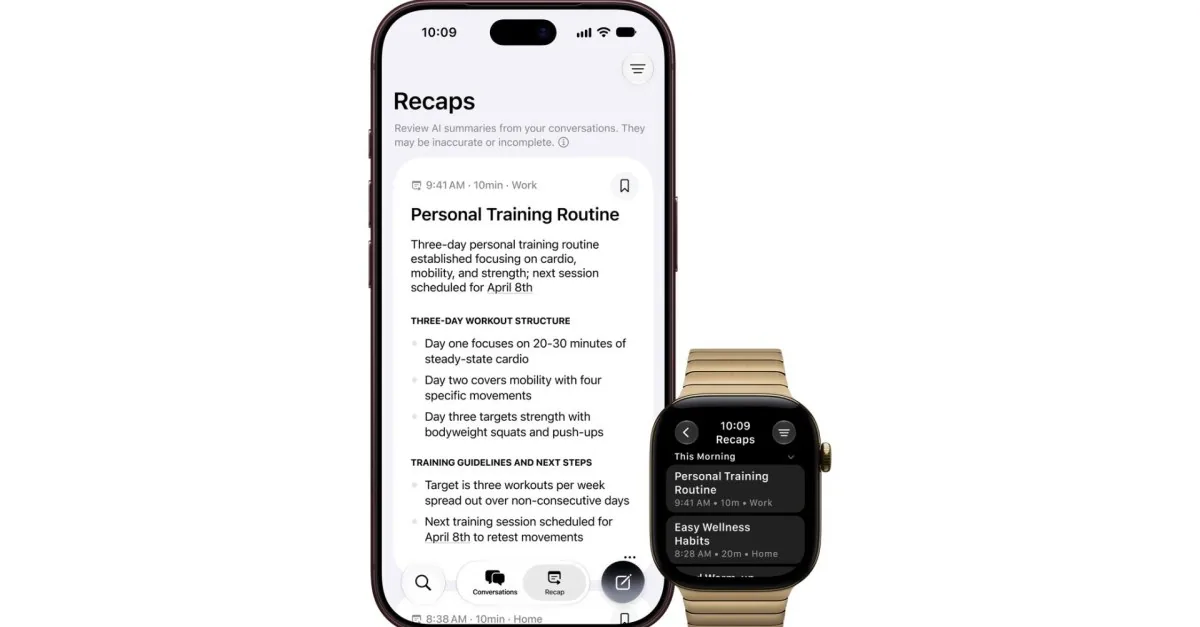
- User-curated summaries: Siri Recap and Live Rewind text must be manually reviewed and kept by the user
- E2E encryption dependency: Syncing to iCloud requires both a device passcode and two-factor authentication enabled
Who Should Try It—And Who Should Wait
- Early adopters: Business users needing meeting summaries, hearing assistance users wanting conversation recall, and those frequently requiring ambient sound detection
- Recommended to wait: Privacy-skeptical users awaiting independent security audits, and owners of older Apple Watch models (functionality limited to Series 12/Ultra 4 only)
Competitive Technical Landscape
Unlike competitors who rely on device-side neural networks or cloud processing, Apple’s approach separates computation from data access at the silicon level:
| Feature | Apple S11 Secure Exclave | Industry Standard |
|---|---|---|
| Raw audio storage | Never stored, only transient stream | Some retain brief clips |
| Processing environment | Hardware-isolated, OS-bypass | OS-level or subsys software |
| Third-party access | Physically blocked | Permission-gated |
| Cross-device transfer | Secure Exclave-to-Exclave encrypted | typically device-to-cloud |
Final Thoughts
Apple’s strategy here—embedding privacy into hardware architecture rather than relying on software policies—sets a higher bar for audio AI in wearables. As ambient listening grows, physical isolation may emerge as the premium differentiator between genuine privacy and marketing claims.