
Huawei Launches HarmonyOS 7 and Tri-Fold Mate XT 2

On September 7, Huawei held its autumn launch event, unveiling HarmonyOS 7 and a full suite of hardware including phones, watches, earbuds, and tablets. The combined user base for HarmonyOS 6 and 7 has surpassed 85 million units, with over 50 devices entering public testing immediately after the event.
Key product specs and availability:
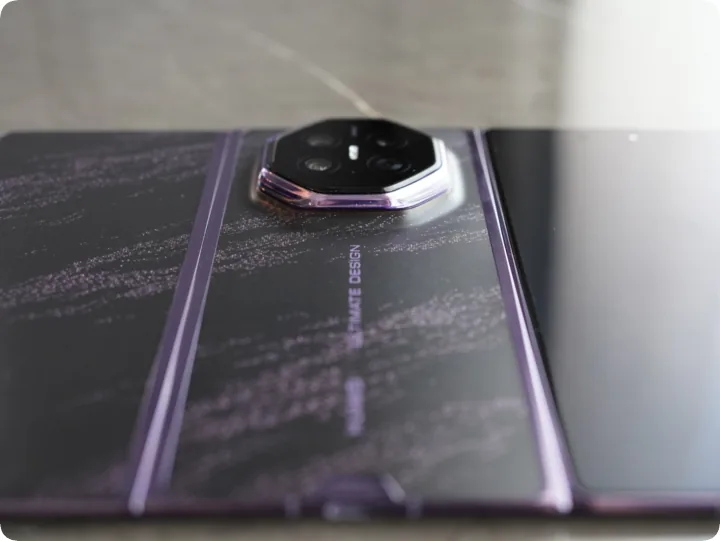
- Mate XT 2 (tri-fold): First flagship with Kirin 9050 Pro chip (LogicFolding 3D stacking architecture), 42% performance uplift, supports 30B-parameter MoE models on-device; 19,999 RMB for 16GB+256GB, 29,999 RMB for top-tier Jinzi version; available September 12
- Pura X View (ultra-slim): Kirin 9030S chip, 96.1% screen-to-body ratio, 7000mAh battery, 200MP main camera; 5999 RMB for 12GB+256GB
- HUAWEI WATCH 6: HarmonyOS 7 debut with 60-second micro体检 and hypertension risk assessment; 2799 RMB starting, available September 23
- FreeBuds 7: Semi-open design with Starlink E2.0 lossless audio; 999 RMB, available the day after launch
- MatePad Air: 12-inch 2.8K OLED screen with 2000 nits peak brightness; 5299 RMB starting
HarmonyOS 7 features significant UX upgrades: XiaoYi now operates without wake-up phrases, offering proactive notification aggregation, voice-to-text meeting notes, and SMS categorization. Cross-app workflow orchestration supports calendar, maps, and spreadsheet linkage. Notably, Huawei now pushes call notifications to Apple Watch and displays AirPods battery status on the leftmost home screen—expanding cross-platform compatibility.
Xiaomi Unveils澎湃SUV and 18 Fold Foldable
小米 followed with its own flagship event, introducing a premium electric SUV alongside flagship phones and tablets. The澎湃SUVN line starts at 209,900 RMB, marking the lowest entry price for China-made增程式SUV.
| Model | Price | Key Features |
|---|---|---|
| N70 Pro | 209,900 RMB | Dual-motor AWD, 5.9s 0-100km/h |
| N70 Max | 239,900 RMB | 1705km CLTC range, air suspension |
| N90 Max | 269,900 RMB | 2+2+3 seating, Longjia battery |
| N90 Max Explorer | 299,900 RMB | Armor cage chassis, adaptive damping |
The Xiaomi 18 Fold arrives as a mid-fold device: 5.38" outer + 7.58" inner display, 5.02mm thick when unfolded, 219g; powered by the Xuanjie O3 chip, 6000mAh battery with 67W wired/50W wireless charging; 200MP main + 50MP telephoto + 50MP ultrawide triple camera; 10,999 RMB starting, available September 10; 16GB+1TB silicon nitride ceramic special edition priced at 15,999 RMB with 1500-unit limit.
The Xiaomi Tablet 9 Pro Max features a 13.3-inch 3.4K 144Hz display and 12,000mAh battery with 120W fast charging; supports USB-C DP-in for dual-screen use; 4799 RMB starting.
vivo and Nubia Set Launch Dates

vivo confirmed its X500 series launch for September 21, having previewed core imaging capabilities at its creator summit: first-ever Blue-Era Biomimetic 900 sensor enabling 17EV dynamic range, native 4K 240fps slow-motion, and 4K 120fps HDR video. The Pro Max variant will include a 200MP APO telephoto lens based on Samsung HP0 sensor, with both main and telephoto lenses matching CIPA 7.0 stabilization. Pro models feature professional Log video hardware supporting 4K 120fps 10-bit Log recording and 8K live photo output.
Nubia announced the NaviX Ultra for September 16, positioning it as an “AI agent phone.” The device has completed AI model registration and received MIIT certification, with four core capabilities highlighted: instruction understanding, task execution, persistent memory, and security protection. Launch perks include up to 24-month interest-free financing and 1500 RMB trade-in subsidy.
Who Should Buy Now?

Ready to buy: Users integrated into Apple’s ecosystem can leverage HarmonyOS 7’s Apple Watch notification forwarding and AirPods battery display—features填补了跨平台协同缺口. Professional content creators should watch vivo’s X500 Pro Max for its 200MP telephoto and professional Log video support, ideal for high-frame-rate vlogging requiring direct 4K grading.
Better to wait: Foldable phones remain niche, with Counterpoint predicting only 2% global smartphone market share by end-2026 despite hitting 100 million cumulative units. While Xiaomi 18 Fold and Huawei Mate XT 2 start at 10K RMB, premium variants reach 30K RMB; consumers may benefit from price correction after Samsung’s Z Fold8 and Apple’s first foldable launch in 2027. For automotive buyers, Xiaomi’s澎湃SUV targets premium增程 market; those prioritizing autonomous driving may prefer Huawei’s乾崑system, already deployed in over 60 models across 25 brands with 2 million users.
final word
The mid-autumn tech wave underscores China’s smartphone leaders shifting from raw specifications to integrated ecosystem experiences: Huawei’s tri-fold innovation, Xiaomi’s cross-industry expansion into EVs, and vivo/Nubia’s focus on imaging and AI agents—all indicate a maturing high-end market where inter-device synergy matters more than isolated hardware峰值.