
Robots Move From Demonstrations to Wet-Lab Work
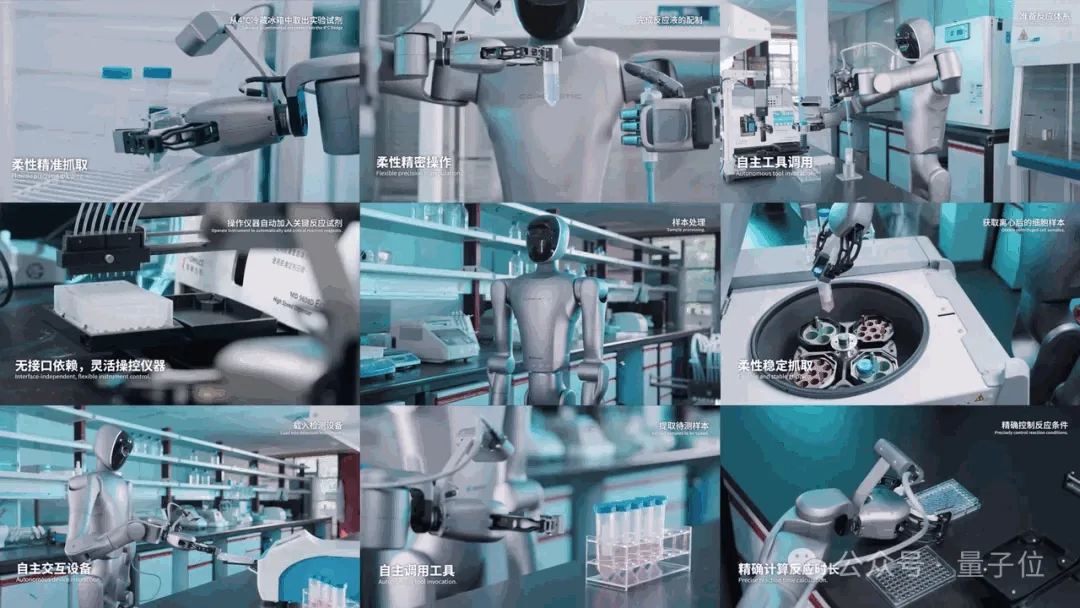
AI for Science is beginning to leave the realm of computation and enter physical experimentation. In mid-July, a batch of Monte2 humanoid robots entered a national-level research platform laboratory in China, taking on tasks such as reagent handling, reagent preparation, automated dispensing and cytotoxicity testing.
Monte2 was jointly developed by Yuanluo Technology and the national-level research laboratory. Its appearance is relatively plain, with two robotic arms and a compact body, but its assigned work is highly delicate: transferring small volumes of reagents, handling instruments, coordinating tools, and performing preprocessing for nucleic-acid extraction and cell-related experiments.
The lab plans to scale the deployment to around 100 robots by the end of 2027 and use AI to coordinate the robot fleet. The shift is significant: AI for Science is no longer only about models that help researchers calculate, read literature or design experiments; it is also moving toward machines that can execute experiments in the physical world.
A Global Push Toward Autonomous Labs
Autonomous laboratories are becoming a major direction in scientific research. In 2024, a University of Liverpool team demonstrated a robotic system that ran continuously for eight days, with results published in Nature. The system switched between instruments such as chromatography and nuclear magnetic resonance, used AI to decide which reactions to pursue, and completed 680 experiments in eight days.
Other research programs are exploring different routes. Berkeley’s A-Lab focuses on materials synthesis, using AI to analyze literature and generate preparation plans; its robots synthesized 41 new materials in 17 days. Researchers at North Carolina improved workflow efficiency and increased data-collection speed by 10 times, compressing screening tasks from months to weeks.
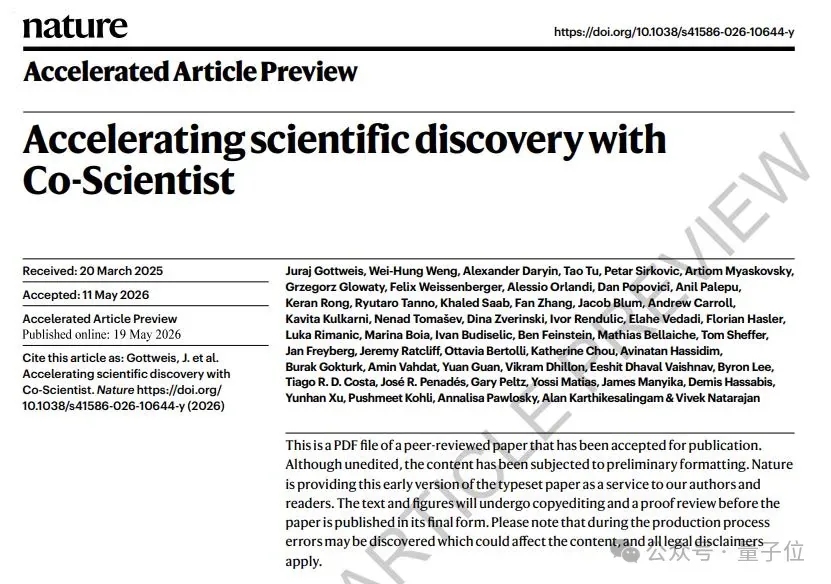
Large models are also becoming the “brain” of the lab. Systems such as Carnegie Mellon University’s Coscientist, Google DeepMind’s Co-Scientist and Sakana AI’s AI Scientist are exploring literature understanding, experimental design, hypothesis generation and even research-writing assistance.
What “Lab 3.0” Means
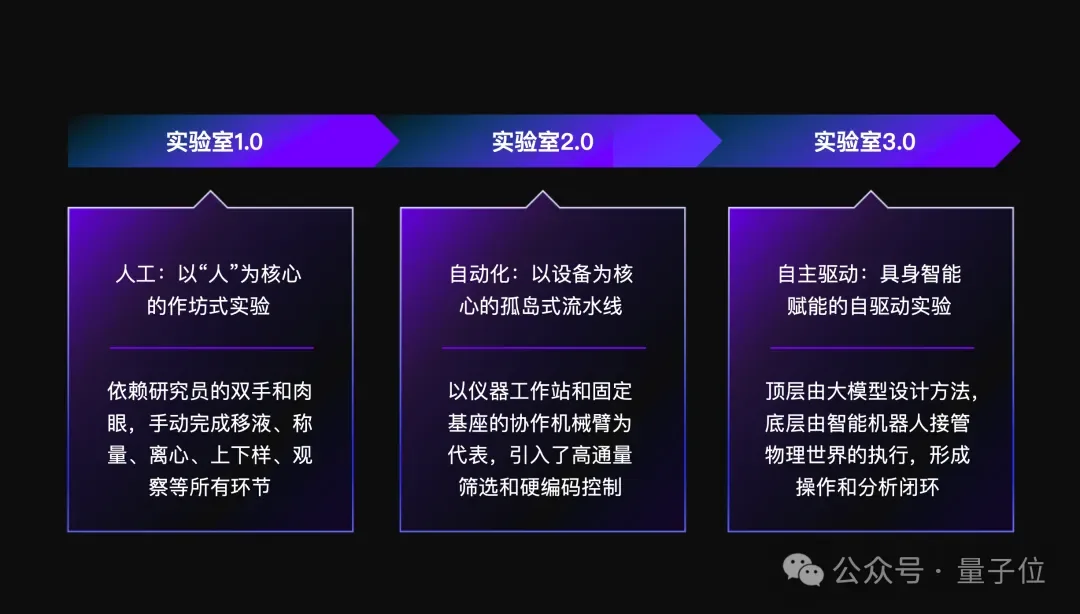
Yuanluo frames lab development in three stages. Lab 1.0 relies mainly on human researchers for pipetting, weighing, centrifuging and observation. Lab 2.0 uses automated workstations and fixed robotic arms to execute predefined procedures. Lab 3.0 aims to combine high-level AI planning with embodied robots that can operate in the real world and close the loop between execution and analysis.
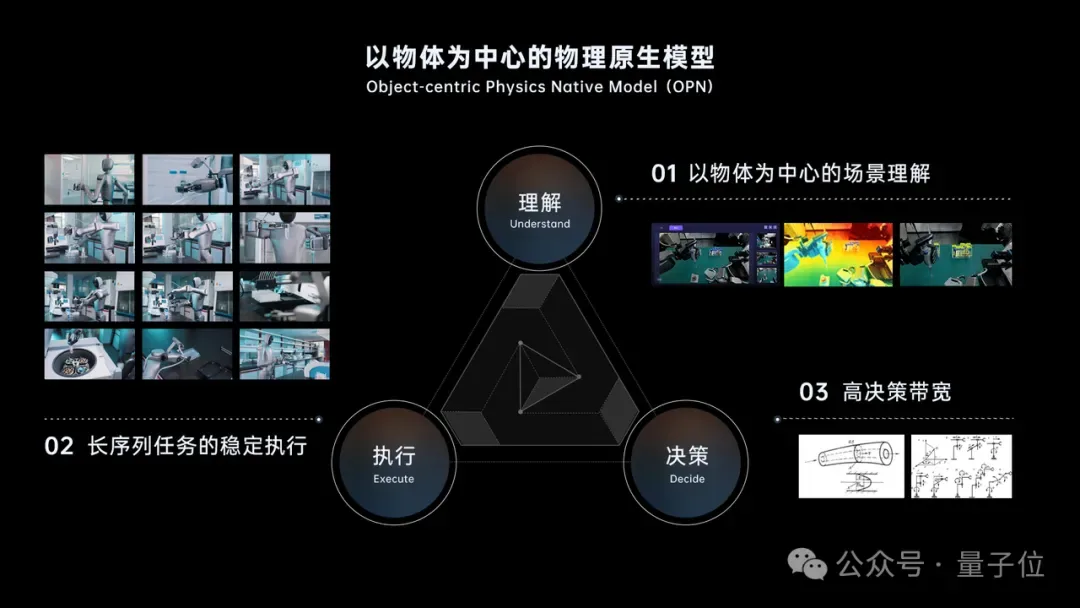
Embodied AI refers to AI systems that perceive and act through a physical body, rather than only processing information on a screen. Yuanluo says its OPN, an object-centric physical-native model, is designed to help robots understand samples, reagents, consumables, instruments and their interactions, rather than merely repeating isolated motions.
The company highlights three required capabilities: object-centric scene understanding, several hours of continuous long-sequence operation, and multimodal real-time perception through vision, force and touch. In the deployed lab, the robots have reportedly completed full workflows such as cell passaging and cytotoxicity testing, coordinated multiple instruments, and performed more than 40 fine-grained biological operations with sub-millimeter precision.
Collaboration, Not Replacement
The most immediate value of lab robots lies in repetitive, detail-sensitive work. Cell culture and cytotoxicity assays involve many small steps—sampling, solution preparation, repeated pipetting and instrument operation. Human fatigue and experience differences can affect details such as pipetting depth or added volume, which may influence experimental results.
This is why the key question is not whether robots will replace scientists, but whether they can take over long, precise and repetitive execution so researchers can spend more time on problem definition, interpretation and scientific judgment. Yuanluo has also launched the Origin Program, seeking the first 100 partners from universities, research institutes and biopharma companies to test embodied AI in fields including biomedicine, materials science and chemical analysis.
The next milestone for Lab 3.0 will be reliability in real workflows. If robot fleets, AI scheduling and experimental-design systems can be integrated at scale, autonomous labs may become one of the most concrete forms of AI for Science in practice.