
A Full Match, Not a Ball-Feeding Demo
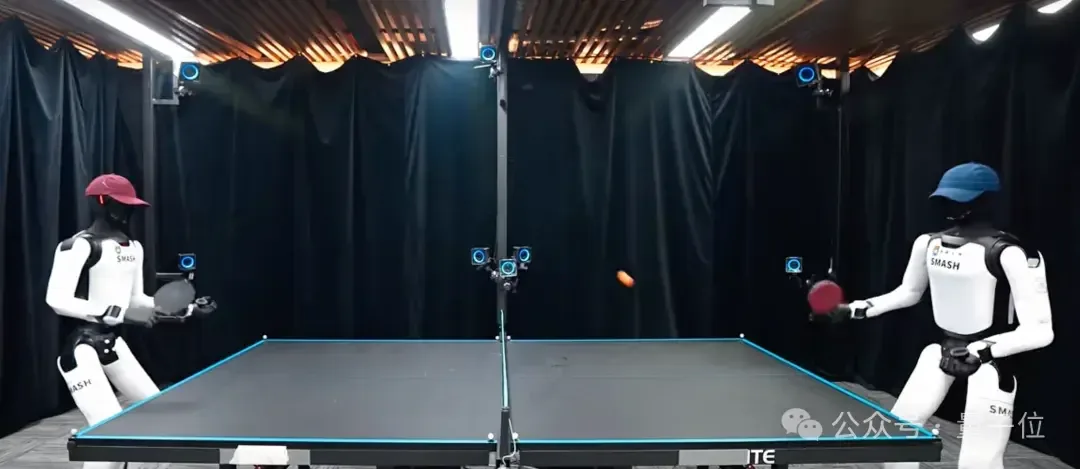
Two humanoid robots have completed an autonomous 11-point table tennis game without remote control or human ball feeding, marking a notable preview ahead of the second World Humanoid Robot Games in Beijing’s National Speed Skating Oval.
The demonstration was carried out by the HKU–Chaowei KAI team, formed by the University of Hong Kong and the Chaowei Dynamics KAI research team. The upcoming event, scheduled for August 22 to 26, will feature more than 2,000 robots, with over 1,000 appearing together during the opening ceremony. Table tennis is one of the highlighted events, and the team’s robots are also expected to appear alongside well-known table tennis players.
The key difference from earlier robot table tennis demos is that both sides were robotic. In many human-versus-robot clips, the human player tends to feed manageable balls. Here, each robot had to serve, receive, and compete under the goal of winning the game.
What SMASH 2.0 Adds
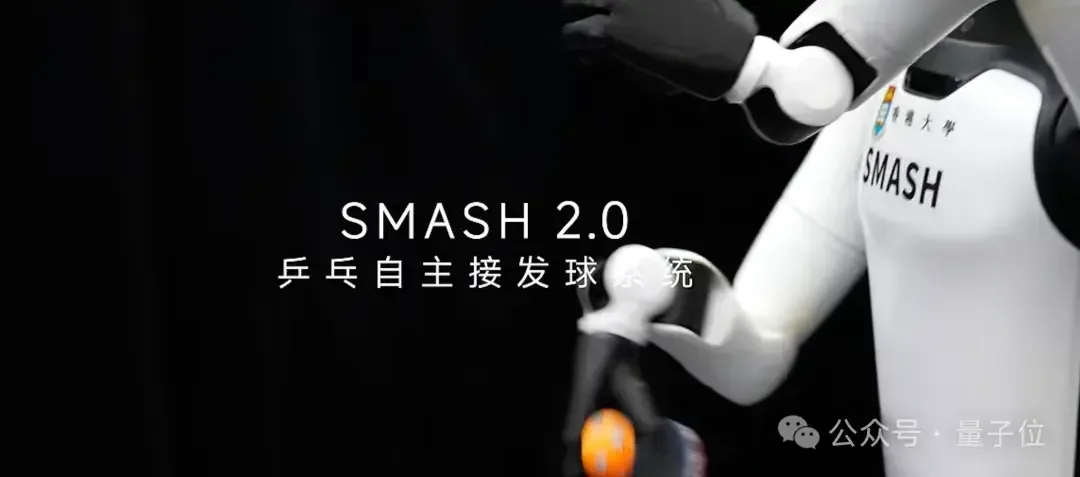
The match was powered by the team’s SMASH system, which connects visual perception, trajectory prediction, motion planning, and whole-body control into a closed loop. In simple terms, a closed-loop system keeps sensing the environment and adjusting its behavior instead of merely replaying fixed movements.
According to the team, SMASH 2.0 improves on the earlier 1.0 version in two major ways: broader coverage of incoming balls, including both short and long balls, and autonomous serving, which is required for a complete 11-point game.
Key facts include:
- Match format: a full 11-point table tennis game with a winner, not simply 11 consecutive rallies;
- Data collection: one to two months of data gathering, four to eight hours per day, mainly from coaches wearing motion-capture equipment;
- Development roadmap: SMASH 1.0 focused on whole-body motion and active perception, 2.0 expands coverage, and 3.0 is planned to address spin;
- Competition hardware: the event requires teams to use the Zhiyuan Yuanzheng A3 platform to reduce hardware differences.
Short balls and backhand shots remain challenging. Short balls require the robot to avoid collisions among its body, racket, and the table, while backhand returns demand tighter coordination across the torso, legs, and arms to maintain balance.
Why Table Tennis Matters
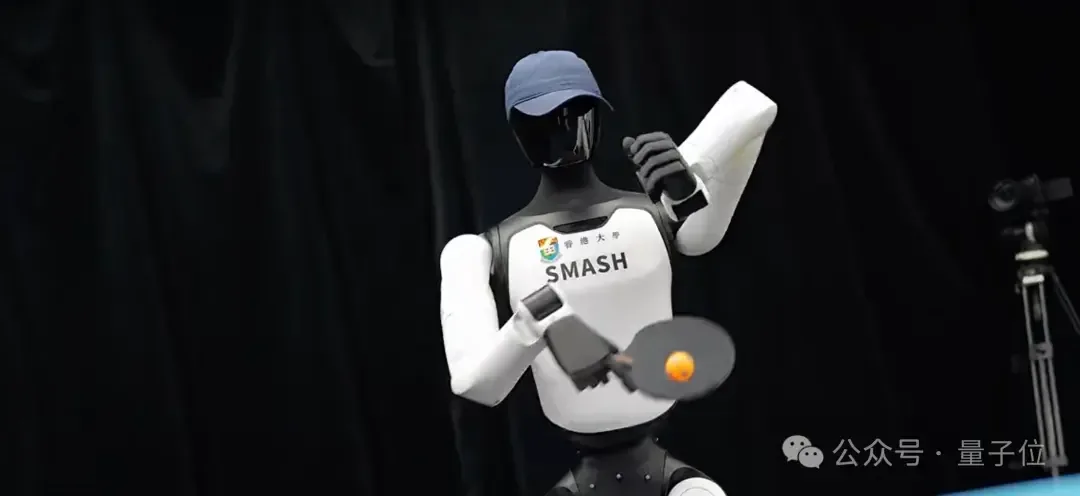
The team sees table tennis as more than a popular sport. It is a compact testbed for embodied AI: systems that perceive, decide, and act through a physical body. Compared with tasks that follow a fixed route, every table tennis shot changes the timing, position, and decision requirements.
At this stage, the robots do not yet learn an opponent’s style in real time. Strategies such as faster or slower play and different landing targets can be preset, but online adaptation remains a future goal. Match data, including both successful and failed points, will be stored for later real-robot reinforcement learning, a trial-and-feedback approach used to improve robotic policies.
From Showcase to Real Use
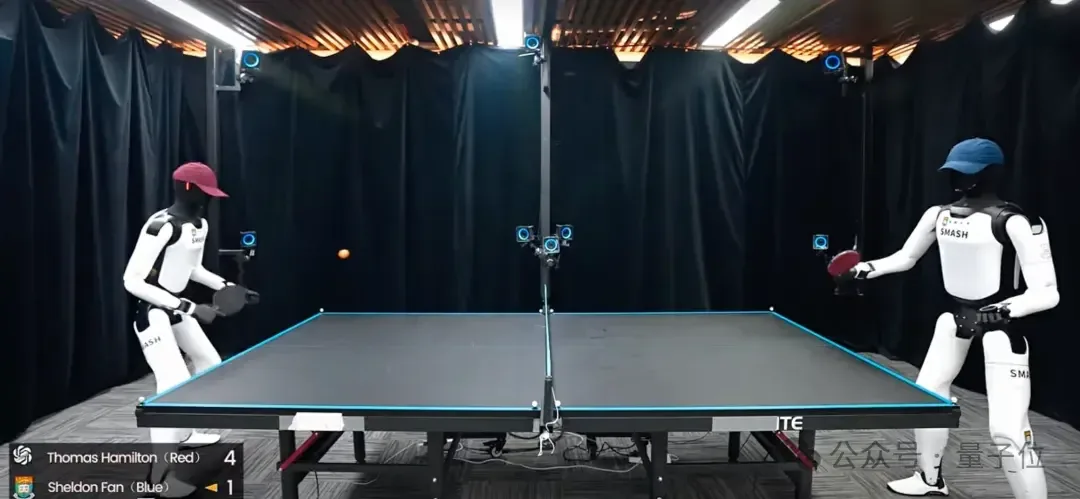
Although SMASH has been designed to move toward onboard vision, competition settings still use external motion-capture or vision systems for stability. The long-term product goal is to rely only on the robot’s own sensors, but onboard vision is harder because robot motion and vibration affect visual stability.
Hardware generalization is another issue. The team has tested SMASH on its own robot body and Unitree G1, while the competition will use Zhiyuan A3 under the rules. Consistency between machines is critical: if two robots of the same model behave differently, transferring the same control policy becomes difficult.
Industry Takeaway
The significance of this 11-point game is not that humanoid robots are close to professional athletes. Rather, it shows a shift from isolated ball-return demos to rule-based autonomous interaction. Table tennis offers a measurable, repeatable, and relatively safe environment for testing high-speed perception, decision-making, and whole-body control.
The next major barrier is spin. To approach expert human play, a humanoid must detect ball rotation and adjust its wrist and racket within a millisecond-level window while preserving biped balance. In the near term, robotic table tennis will be a benchmark and a spectacle; in the longer term, the underlying perception, planning, and control stack may matter far beyond sport.