
IFA 2026 Opens: Chinese Brands Dominate Display Tech, AI Appliances Enter Practical Era
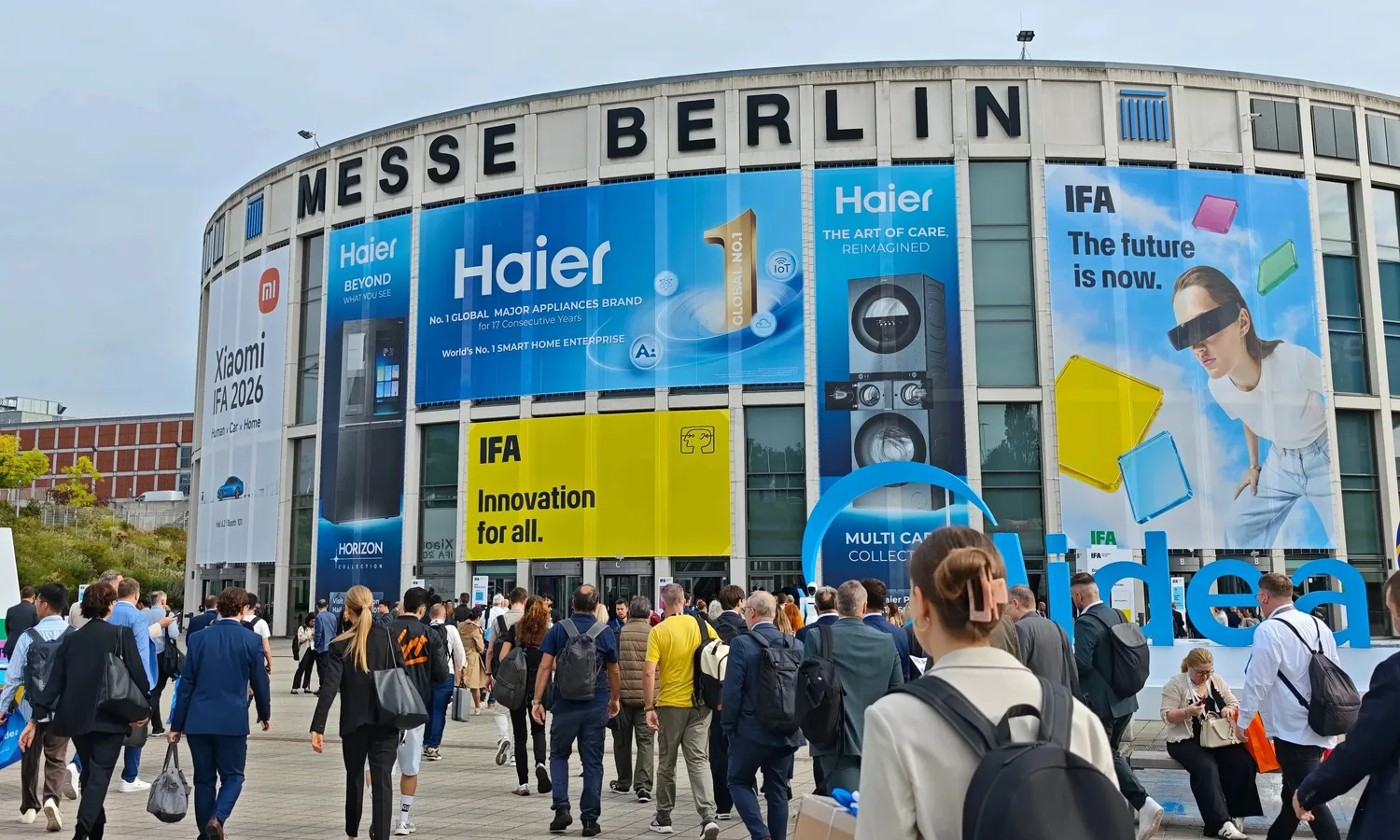
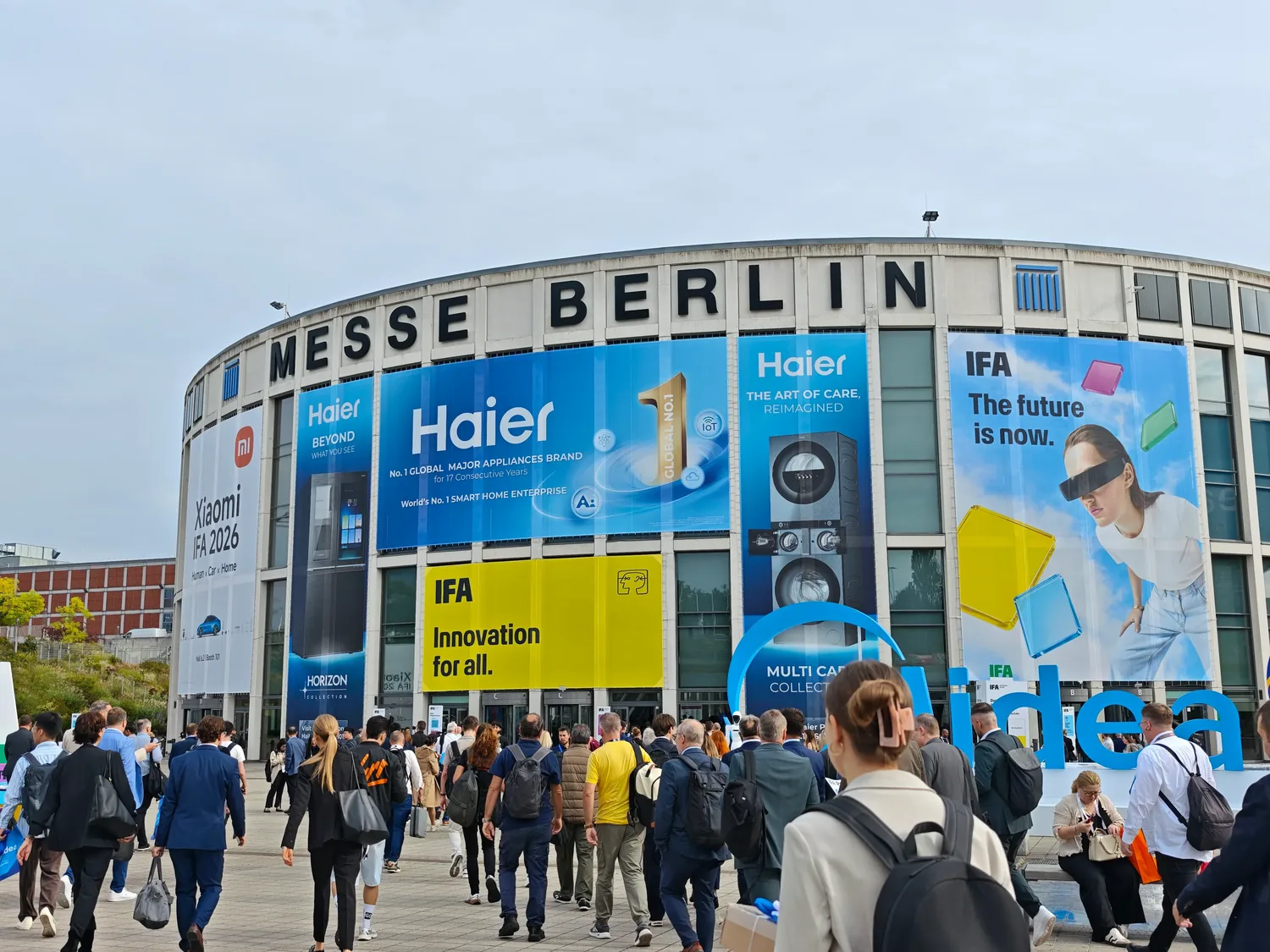
IFA 2026 officially opened in Berlin on September 4, themed “The Future is Now.” As one of the world’s three major consumer electronics exhibitions, the show features over 1,900 exhibitors from 49 countries and regions, drawing an expected 220,000 visitors from more than 140 nations. The Chinese contingent is unprecedented, with over 900 Chinese companies exhibiting to vie for European market share.
Key developments include:
- RGB-Mini LED technology evolving from Hisense’s exclusive offering to an industry “standard configuration”
- Launch of the ConnectLife AIoT cloud platform, covering five scenarios: kitchen, laundry care, air management, and more
- Printed OLED display technology achieving mass production and commercial use, with TCL CSOT launching a 28-inch foldable desktop display
- South Korean brands accelerating AI appliance deployment; Samsung’s new AI refrigerator integrates Google Gemini to identify over 3,000 ingredient types
Display Technology: Chinese Brands Lead RGB-Mini LED Popularization

The TV zone remains the exhibition spotlight, yet the competitive landscape has shifted. Last year’s RGB-Mini LED monopoly by Hisense has this year become an industry “standard configuration”—brands lacking this technology risk market exit.
Hisense unveiled the RGB-Mini LED evo version, centered on its “Exquisite 4-Core True-Color Backlight,” and globally premiere Dolby Vision Gen 2 on its 116-inch UX 2026 flagship. The company’s strategic focus has clearly shifted toward technology popularization, with plans to apply the technology to more mid-range models.
TCL, ranking global no. 1 in both Mini LED TV and extra-large TV (85 inches and above) shipments, unveiled the world’s first next-generation flagship SQD-Mini LED TV X11L. Powered by trio backlight technology, advanced quantum dot, and premium panel, it delivers full 100% BT.2020 wide-gamut coverage across the entire screen with zero color crosstalk and elevated peak brightness. Notably, since January 2026, TCL has released Q10M, Q9, and T7 models—premium experiences reaching mainstream consumers.
Printed OLED technology has now crossed from lab to market. Abandoning traditional vacuum evaporation, this method “prints” OLED materials like an inkjet printer, greatly improving material utilization and reducing power consumption. Its LCD-like pixel arrangement mitigates image fringing along text edges. TCL CSOT has partnered with MSI to launch a 27-inch 4K 120Hz professional monitor, while its 28-inch foldable portable desktop display marks a critical step toward commercial adoption.
AI Appliances: From Pseudo-Smart to Real Coordination
Last year’s IFA墙面 AI" overlays triggered trust issues; this year’s competition pivots to “whose AI can actually get things done.” Infrared sensing, AI chips, and multimodal interaction are now differentiators.
Hisense articulated AI appliance four criteria: sensory capability, decision-making brain, communication capacity, and task execution—resulting in the ConnectLife AIoT cloud platform integrating whole-home control, multimodal perception, and AI agents for five core scenarios.
TCL’s NXTHOME ecosystem enables white goods coordination: “Little Blue Wing” P7 Ultra AC uses millimetre-wave radar to detect sleep movements, auto-adjusting temperature while learning personalized profiles; the dual-magnet fresh refrigerator simulates Arctic conditions ("-40°C deep freezing plus high-stability magnetic") for food preservation; the heat-pump washer-dryer adapts parameters based on fabric conditions, drying clothes in just 30 minutes.
Haier’s hOn ecosystem deeply integrates refrigeration, washing, and climate control for proactive services. South Korean rivals are catching up, with LG shifting focus from TVs to AI home ecosystems, while Samsung’s AI refrigerator pairs Google Gemini, expanding ingredient recognition from hundreds to over 3,000 types—a tenfold increase in perception accuracy.
Display Technology Comparison (RGB-Mini LED Focus)
| Brand | Core Technology | Key Features | Commercial Status |
|---|---|---|---|
| Hisense | RGB-Mini LED evo | 4-core true-color backlight, Dolby Vision Gen 2 | Widespread mainstream rollout |
| TCL | SQD-Mini LED | Full 100% BT.2020 coverage, zero color crosstalk | Q10M/Q9/T7 models available |
| Changhong | RGB MiniLED + Hongtu V8 chip | Single-chip light/color/scene control, freed compute for AI enhancement | Hongtu V8 integrated into Gold Label series |
| Samsung | Micro RGB TV | paired with VisionAI Companion interface | Display moved off main floor, commercial units available |
Buyer Recommendations
General consumers should consider staged upgrades:
- “A/V enthusiasts” should watch Hisense UX 2026 and TCL X11L—Dolby Vision Gen 2 and SQD-Mini LED combos deliver top-tier HDR
- “Budget-conscious buyers” may wait for Q-series and Changhong Gold Label shipments, as RGB-Mini LED prices head seasonal downward
- “Smart home early adopters” should prioritize Haier hOn and Hisense ConnectLife ecosystems, emphasizing devices that主动协同而非被动互联
- “Small-space/mobile workers” may find TCL CSOT’s printed OLED foldable displays suitable—28-inch portable screens enable flexible workflow expansion
Those disappointed by “pseudo-interaction” AI features should wait until 2027, when millimetre-wave radar, multimodal perception, and eagle-eye chips delivering true scenario closure enter mid-tier products.
Final Notes
Display technology’s shift from exclusive monopoly to standard configuration confirms systematic Chinese industrial advancement. AI appliances’ pivot from marketing hype to functional value signals an industry entering an era where “demonstrated capability, not buzzwords, determines success.” As technical barriers flatten, business model innovation and user experience will define the next competitive frontier.