
Event Summary: Multiple Smart Home AI Brains Debut at IFA 2026
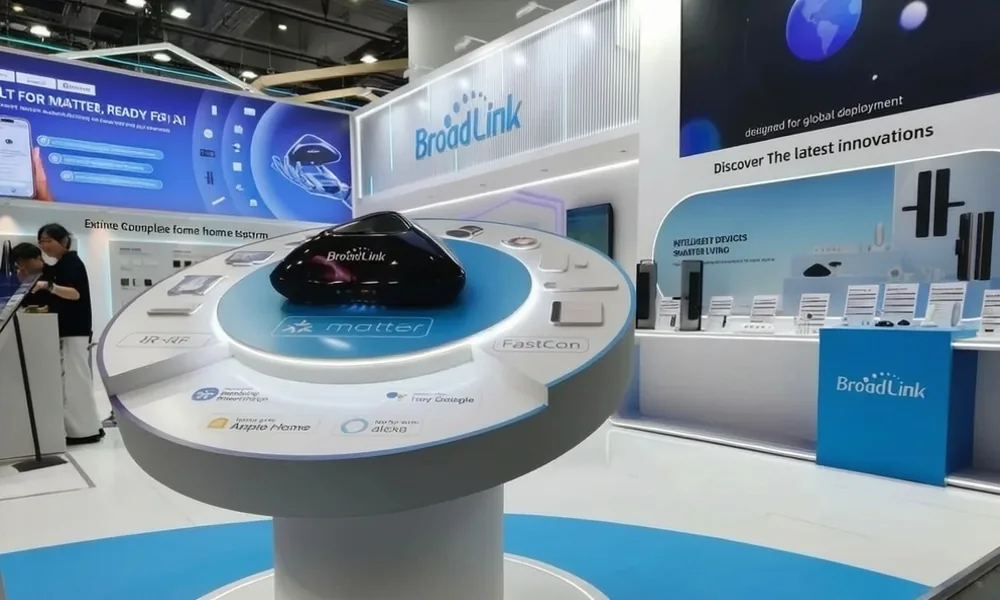
IFA 2026 opened in Berlin on September 4, with multiple vendors unveiling新一代 smart home AI hubs. Key specifications include:
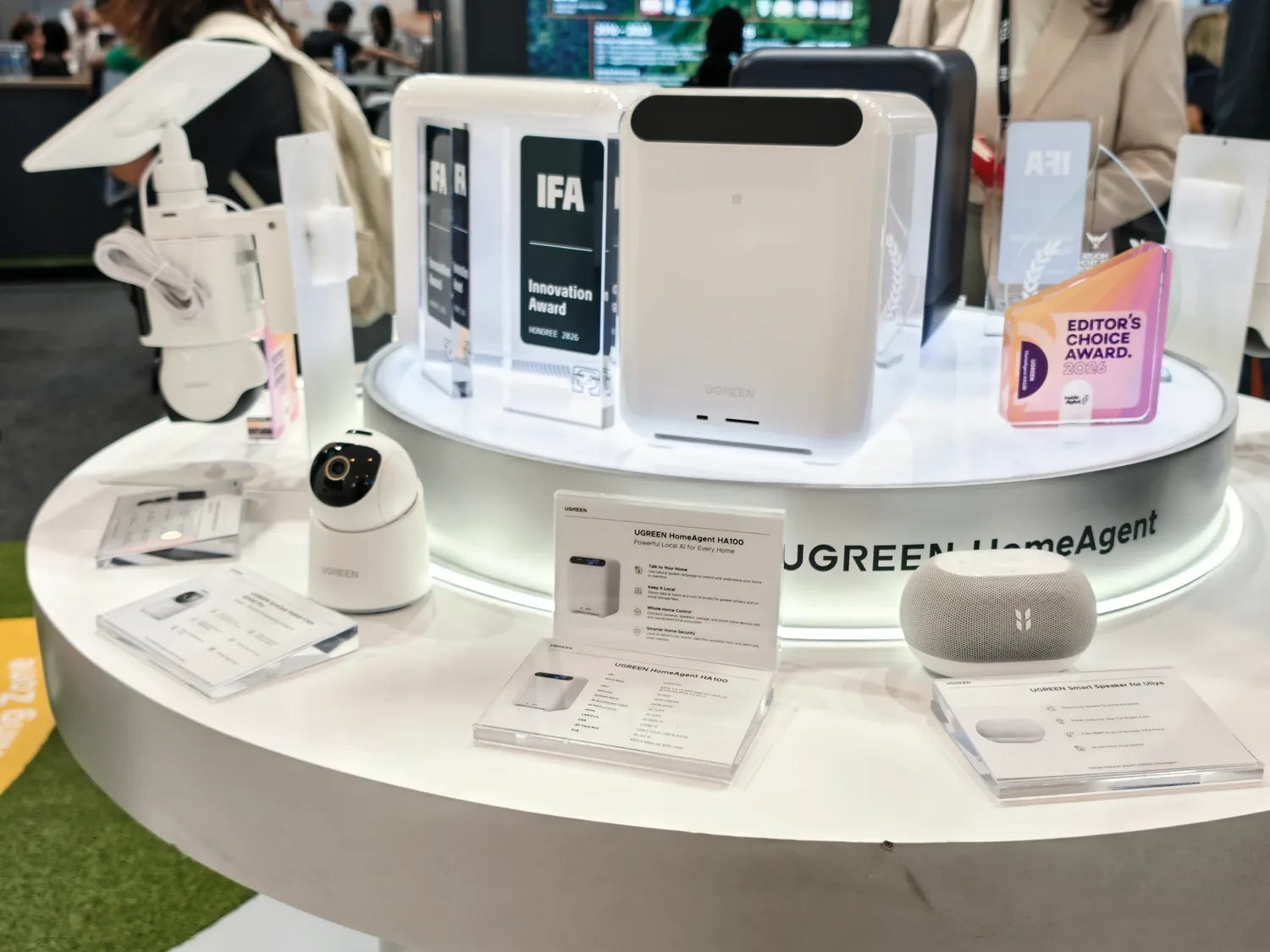
- UGREEN HomeAgent series (HA100, HA100 Pro, MasterAgent MA100): available since early September, integrating NAS, Matter controller, security hub, and AI server; MA100 features NVIDIA Jetson Thor T5000 chip
- Anker MindBase: launched simultaneously, with 26 TOPS AI compute, Matter 1.5 support, and 48 TB expandable local storage
- SwitchBot AI Hub: matured fully after February’s OpenClaw update, equipped with 6 TOPS AI chip for local automation and camera management
- Shelly Wall Display: via free firmware update, gain Matter controller functionality to directly connect third-party devices
- LG Homey Portal: 2.8-inch circular touchscreen serving as Homey ecosystem control interface, with computation still relying on Homey Pro or self-hosted servers
Key surprise: Major appliance manufacturers—Midea, Hisense, Haier, and Samsung—pursue a fundamentally different path by embedding AI directly into refrigerators, air conditioners, and TVs, effectively eliminating the traditional centralized hub concept entirely.
Standalone Hub Approach: Unified Entry Point and Data Sovereignty

UGREEN, Anker, and SwitchBot converge on building dedicated hardware nodes, yet with distinct positions. UGREEN’s first smart home expansion from NAS introduces the HomeAgent line, functioning simultaneously as network-attached storage, smart home controller, security hub, and AI inference engine, supporting Wi-Fi, Thread, Zigbee, and Matter protocols.
Anker MindBase prioritizes security use cases initially: upon anomaly detection, it performs local risk assessment and triggers responses—such as activating lights or recording video—without cloud dependency. Its strategic intent extends to unifying Anker’s previously fragmented ecosystems: Eufy (cleaning/security), Solix (residential energy), audio-visual, and charging solutions.
SwitchBot adopts a lighter-weight approach, with its 6 TOPS AI Hub emphasizing video-language model applications. Cameras provide contextual understanding—“who returned home,” “where did the cat go,” “did the elderly person fall”—enabling intelligent automation. The device supports Home Assistant, Frigate, and RTSP cameras, while enabling cross-platform control across Apple Home, Google Home, and Home Assistant.
Distributed Intelligence: Appliances as Endpoints

Contrary to the hub-centric models, appliance makers Midea, Hisense, Haier, and Samsung adopt a decentralized strategy: each high-end product integrates AI modules and operates as an independent interface and decision-making node. refrigerators identify food items, air conditioners recognize users, cameras detect anomalies autonomously, and washing machines and wall displays vie to成为 hub for interaction.
The core technical分歧 lies in whether a single hardware coordinator remains necessary. These manufacturers argue that when appliances possess sufficient local compute and sensing capability, centralized gateways introduce latency and single-point failure. For instance, a refrigerator detecting expiring ingredients can trigger alerts and adjust parameters directly, bypassing cloud round-trips.
Supporting cases include Shelly Wall Display—upgraded wall fixture gaining Matter device status—and LG Homey Portal, which explicitly decouples “AI computation” from “control interface”.
Product Comparison: Key AI Hub Specifications
| Feature | UGREEN MA100 | Anker MindBase | SwitchBot AI Hub |
|---|---|---|---|
| AI Chip | NVIDIA Jetson Thor T5000 | 26 TOPS | 6 TOPS |
| Supported Protocols | Wi-Fi/Thread/Zigbee/Matter | Wi-Fi/Bluetooth/Thread/Zigbee/Matter | Wi-Fi/Thread/Zigbee (Matter-related) |
| Local Storage | No expandability specified | Up to 48 TB | Capacity not disclosed |
| Primary Use Case | Video analysis + natural language search + automation | Security + photo/video management | Video event understanding + cross-ecosystem control |
| Differentiator | NAS storage integration | Unified Anker ecosystem | OpenOpenClaw + messaging platform integration |
##落地建议
Suitable for early adopters: Users already invested in Anker/Eufy/SwitchBot ecosystems, prioritizing local privacy processing, and possessing NAS experience should consider immediate purchase. Home Assistant/Frigate users will especially value SwitchBot’s open integration.
Recommended to wait: Households relying heavily on non-Matter devices (e.g., legacy Z-Wave systems) should verify compatibility; scenarios demanding extreme latency sensitivity (such as fall detection) should await independent real-world validation.
In Conclusion
The current smart home hardware divergence reflects differing views on where AI processing should occur—near data sources or near user interfaces. As connectivity standards (Matter/Thread/Zigbee) mature, the deployment strategy for computational resources is emerging as the new frontier for ecosystem lock-in.