
Ringg Completes Series A Extension Funding, Accelerating Transition from Voice Tool to Enterprise Task Automation Platform
- Date: August 25, 2026 (first reported by TechCrunch)
- Amount: $10 million (Series A extension)
- Total funding raised: Series A totals $15.5 million (previous Series A $5.5M + extension $10M)
- Lead investor: Peak XV Partners
- Current headcount: 40 employees (15 added in the past 3 months)
- Business momentum: 20 million monthly call attempts processed, covering 1,200 healthcare institutions
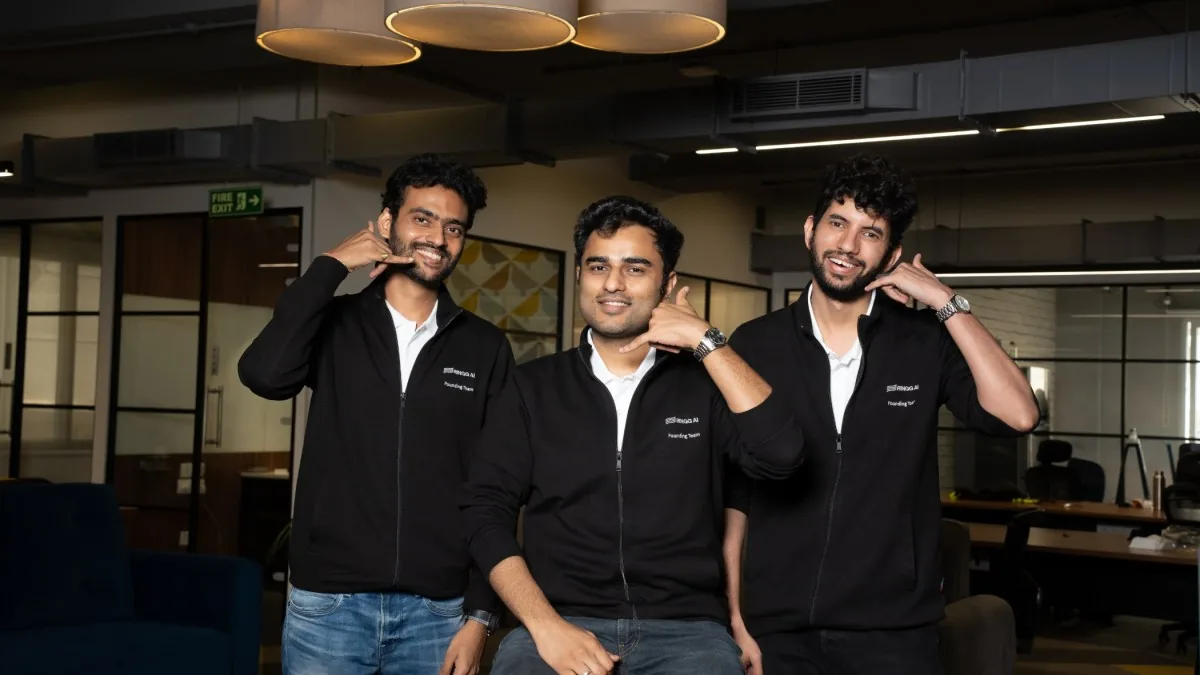
On August 25, 2026, Indian voice AI startup Ringg announced the completion of a $10 million Series A extension round led by Peak XV Partners. This round brings its total Series A funding to $15.5 million. Ringg, formerly the speech synthesis company DesiVocal, completed a rebrand and strategic pivot in 2024—shifting from building its own TTS models to deploying voice intelligent agents for enterprises.
Strategic Upgrade: From High-Frequency, Low-Complexity Workloads to High-Value Enterprise Processes

Ringg’s early clients included Indian fintech platform Cred. The partnership roster has since expanded to prominent domestic digital companies such as Flipkart, Practo, Groww, and PolicyBazaar. Co-founder Siddharth Tripathi told TechCrunch that after initially focusing on outbound calling, lead qualification, and loan collections—high-frequency, low-complexity use cases—the company realized these scenarios fell into a price competition trap with limited customer stickiness.
This insight drove a business transformation. Ringg now focuses on three categories of complex enterprise processes:
- Medical appointment scheduling and post-operative follow-up (practiced on the Practo platform, covering 1,200 clinics)
- E-commerce abandoned cart recovery (reaching cart-abandoning users via phone/WhatsApp)
- KYC (Know Your Customer) verification and user onboarding for financial apps
Tripathi emphasized that Ringg no longer positions itself simply as a “voice agent” but aims to become a “task-oriented agent platform capable of achieving specific outcomes”—voice remains the core channel (accounting for over 70%), but the company has expanded into chat and WhatsApp channels, and provides browser-based support request automation for clients such as Shell.
Technology Path: Building a Dynamic Orchestration Layer Under Self-Built Model Constraints
Ringg’s technology strategy reflects a pragmatic, iterative approach. The startup initially attempted to build its own voice generation models, but prohibitive training costs forced a restructure upward: building a voice AI orchestration layer tailored to enterprise scenarios. The current technical architecture uses a unified dispatching interface to dynamically call different speech recognition (ASR) and text-to-speech (TTS) models by task type, avoiding redundant development.
Rishen Kapoor (Peak XV principals) noted that Ringg’s technical depth is directly reflected in its ability to handle complex enterprise processes. “They can complete high-value tasks end-to-end: merchant onboarding, L1/L2-level technical support—ensuring both quality and consistency,” he added.
The Indian voice AI ecosystem exhibits a highly stratified competitive landscape: at the model layer, there are Deepgram, ElevenLabs, Cartesia, and domestic players Sarvam and Smallest.ai; at the orchestration layer, Ringg faces competition from peers like Bolna and Blue Machines; in vertical domains, players like Gnani and Arrowhead specialize in financial scenarios. Peak XV observed that those who can ultimately build defensible moats will be the ones who command customer relationships and end-to-end task fulfillment capabilities.
Voice AI Business Scenario Comparison (Ringg Business Categories)
| Scenario Category | Typical Applications | Characteristics | Customer Stickiness |
|---|---|---|---|
| Initial Direction | Outbound notifications, lead screening, collections | High-frequency, standardized, quantifiable | Low (price-sensitive) |
| Expanded Direction | Medical appointments, cart recovery, KYC verification | Multi-turn interaction, context-dependent, requires error recovery | High (deeply embedded in workflows) |
Deployment Recommendations: Target Customer Fit Determines Adoption Priority
- Suitable for immediate deployment: Outbound-facing enterprises in the Indian domestic and Middle East/U.S. indirect service markets; mid-size digital companies looking to reduce frontline customer service costs but without end-to-end automation capabilities; companies with existing voice data assets (call recordings/user interaction logs).
- Recommend waiting: Enterprises pursuing ultra-low latency, real-time music synthesis, and other cutting-edge voice capabilities; financial/government clients requiring strict on-premises deployment (not currently supported); those with strong needs for multilingual support beyond English (e.g., Hindi, Tamil)—the source material does not specify language coverage details.
Talent and Scale Expansion Signals
Ringg is currently recruiting for two key roles: forward-deployed engineers with technical backgrounds (requiring proficiency in both coding and product management) and model cost optimization researchers (focused on compressing voice model inference costs). The pace of adding 15 employees over the past three months, combined with the $10 million in funding secured, signals the company’s confidence in business growth.
Final Thoughts
Ringg’s case reveals the pragmatic trajectory of India’s voice AI industry evolution—when general-purpose large models have not yet fully addressed the long-tail needs of enterprise scenarios, the path of entering through the “orchestration layer” and using task completion rate as the north star metric may be more effective at building real commercial value than pure model competition. Voice interaction will ultimately evolve from “replacing phone calls” to “replacing human processes,” and orchestration capability will be the decisive factor.