
Launch & Upgrade: Global AI Device Lineup and Qira Tianxi Update
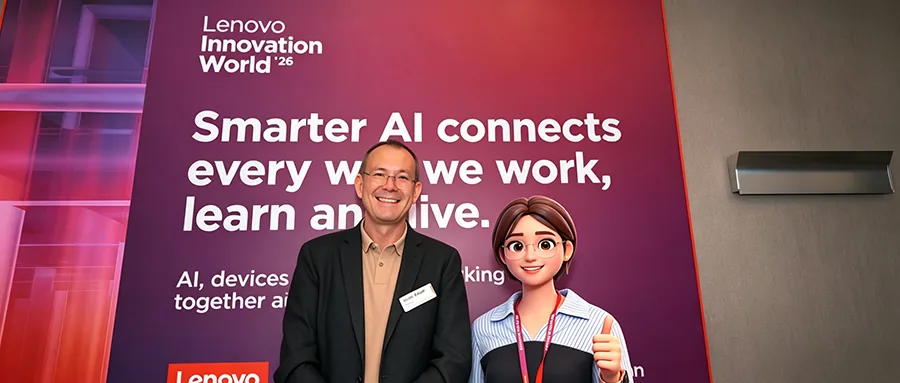
On September 8, 2026, at the Lenovo Innovation World event during IFA Berlin, Lenovo unveiled a suite of AI-enabled devices and intelligent agent upgrades:
- First globally available Yoga notebooks with NVIDIA RTX Spark Super Chip, supporting local inference of billion-parameter models within a 1.6kg chassis
- Two AI concept machines—Project Swan and Project AeroBlade: Currently in final POC evaluation; at least one will enter mass production soon
- Personal intelligent agent Qira (Tianxi in China) upgraded: Enables cross-device experience across PCs, tablets, phones, and watches; runs on 16GB RAM PCs, compatible with Android 17 phones
- No open model weights: Qira is pre-integrated as a system-level AI—no public model licensing or fine-tuning enabled
Hardware Push: Billion-parameter Model in a 1.6kg Chassis
The Yoga Pro series serves as the flagship这一 launch, leveraging NVIDIA Spark’s unified memory architecture for efficient local large-model inference—optimized for creators, professionals, and developers. This represents a meaningful shift from cloud-edge collaboration toward 端侧主力 (client-side first) AI processing.
Lenovo Executive Vice President and IDG President Luca Rossi stated that concept machine量产 criteria include thickness under 20mm, acceptable weight, flat surfaces, and reliable three-to-five-year lifespan—no compromise on user experience for raw specs.
A key twist: Despite ongoing memory scarcity and elevated prices (expected to persist for 3–4 quarters), Lenovo promises lower entry barriers—16GB RAM suffices for Qira; Android 17 devices are supported. This contrasts with competitors requiring 32GB+ RAM, widening the installed base.
| Product Line | Core Chip | Local Model Size | Minimum RAM | Target Users |
|---|---|---|---|---|
| Yoga Pro | NVIDIA RTX Spark | Billion-parameter | 16GB | Creators, professionals, developers |
| Motorola Phones | - | - | Android 17 | Multi-device users |
| Generic PCs | - | - | 16GB | Cost-conscious enterprises |
Qira’s Differentiation: System-Level AI, Not a ChatGPT Clone
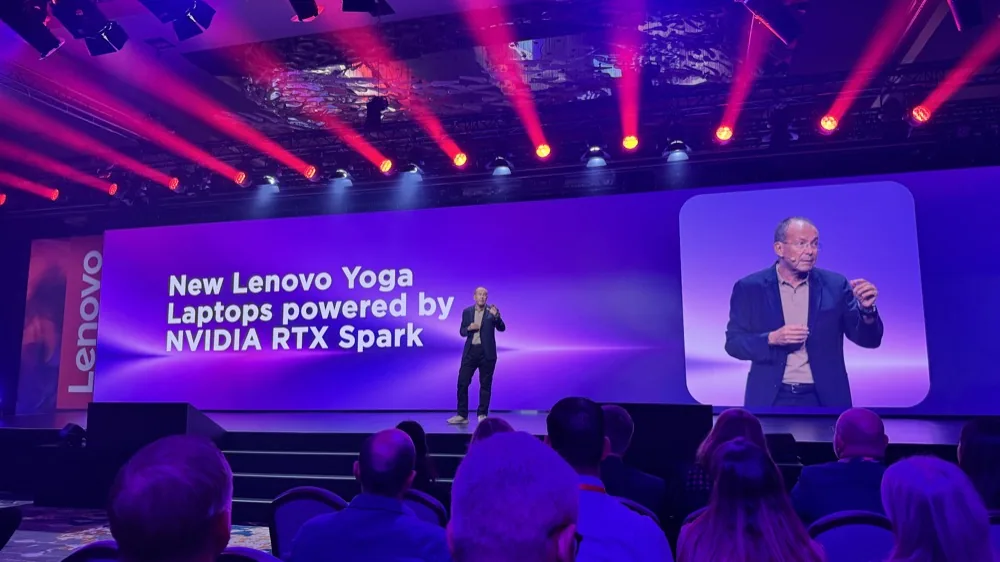
Lenovo explicitly charts a differentiated path: Qira does not compete with ChatGPT-like endpoints, but positions itself as system-level AI—a pervasive intelligence woven into the OS.
Three core distinctions:
- Context awareness: Qira detects whether the user is in Word or Excel, knows if the same file was edited on a tablet ten hours ago, enabling task continuity
- Proactive suggestions: Moves beyond QA chatbots; alerts users during workflow (e.g., suggest save or collaboration after repeated edits)
- Local-first execution: Sensitive data never leaves the device, encrypted with user-controlled keys
“The cloud has no context,” Rossi explained—Qira’s value lies in bridging this gap: handling mission-critical or low-latency tasks locally, turning AI into an observer and advisor rather than an interrupter.
Cross-Device Compatibility: Open in Theory, Integrated in Practice
Qira’s multi-platform strategy shows pragmatism:
- Dual-path rollout: Qira for global markets; Tianxi for China, enriched with local ecosystem features
- Third-party device support: Cross-ecosystem connectivity is technically feasible but requires partner cooperation (“we manage our devices; we can’t control others”)
- Innovation logic: Deepest integration (PC+tablet+phone+watch) is achievable only when the OEM controls both hardware and software stack
Rossi stressed that Lenovo doesn’t seek to lock users into its ecosystem: “We simply know our hardware best—performance and integration follow naturally.”
Recommendations & Market Outlook

Users who should try now:
- Enterprises with high cloud token bills ($100s–$1000s/month): Local AI delivers immediate ROI
- Light content creators needing fast image/video processing with strong privacy guarantees
- Multi-device Lenovo users: Maximum synergy with Yoga, ThinkPad, and Motorola devices
Users advised to wait:
- Budget-sensitive buyers: Memory prices likely stay elevated for another 3–6 months; hardware cost normalization expected in 2028–2029
- Cloud-only dependency users: Qira complements—not replaces—cloud models at this stage
In Conclusion
IDG contributes over 60% of Lenovo’s revenue and now holds 25.1% AI PC market share—the global leader. As cloud inference costs increasingly alarm enterprises, end-side AI’s economics are shifting from theory to urgency. That, more than any chip spec, may mark the true beginning of AI PC’s ‘ChatGPT moment’.