
Key Facts
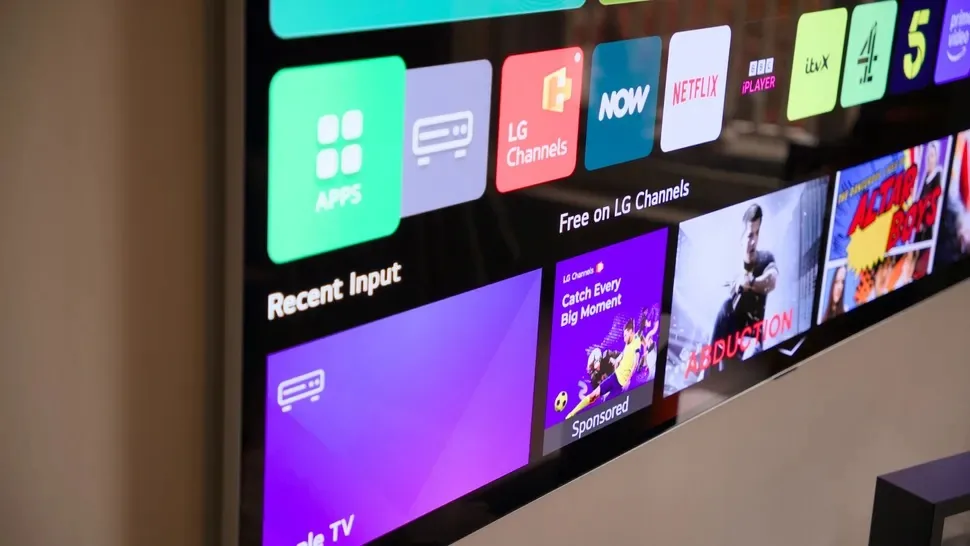
LG Electronics issued an official statement on September 12, Beijing time, reiterating its position on allegations involving smart TV audio recording and data transmission. The statement responded to testing videos and related claims from Gamers Nexus and other security researchers, explicitly denying that its TVs “continuously record user conversations in standby mode.” Key points include:
- Parties behind the allegations: Gamers Nexus, Level1Techs, and independent security researchers
- Core clarifications:
- TVs do not continuously record or transmit ambient conversations
- Detection of wake words such as “Hey LG” occurs entirely on-device
- If no wake word is detected, the relevant audio is immediately deleted and not uploaded
- Wake-word monitoring in standby is enabled only when users manually turn on far-field voice recognition
Contested Evidence and LG’s Response
Gamers Nexus previously published a two-hour YouTube video making several allegations, including continuous ambient-audio capture while TVs were offline or in standby, discovery of LAN devices such as phones and printers, and storage of audio logs for later transmission. The testing was conducted by security researchers MrBruh and uturn using packet capture and firmware analysis.
LG addressed the central claims as follows:
- Voice activation conditions: The TV processes voice data only when a user holds the remote’s voice button, or when far-field voice recognition has been enabled and a wake word such as “Hey LG” is detected.
- Standby behavior: When a TV appears to be off but remains in standby, it does not listen for a wake word unless the user has previously enabled far-field voice recognition. If no wake word is detected, the relevant audio is processed locally and deleted immediately.
- LAN scanning: LG acknowledges that its TVs can detect devices on the same local network. The company says this is a common capability in smart TVs and smart-home products, used for device connections, content sharing, and smart-home functions.
One notable gap: LG did not address the video’s specific allegation that voice transcripts were stored in plain text, leaving that technical question open to further verification.
User-Controlled Features
LG says the relevant features require separate, explicit user authorization and can be disabled through the TV settings:
- Automatic Content Recognition (ACR): An optional feature for personalized recommendations, services, and advertising. LG says ACR-collected data is not used for advertising if a user does not agree to the applicable optional terms.
- Voice recognition: Far-field voice recognition must be enabled manually. Once enabled, the device listens locally for the wake word; audio associated with wake-word detection is not uploaded when no wake word is found.
- Interest-based advertising: LG says this feature requires explicit user authorization.
The company also says users can manage privacy and consent options directly in TV settings.
Practical Recommendations
- Who may proceed: Users who have enabled voice features and are comfortable relying on the vendor’s statement can continue using them as needed. Privacy-conscious users can disable ACR and far-field voice recognition in settings.
- Who may want to wait: Users concerned about data-storage security may wish to see whether LG provides further technical detail on allegations such as plain-text storage. Enterprises deploying TVs in public settings may also consider an independent security audit.
Final Note
Balancing AIoT functionality with privacy remains an industry-wide challenge. LG’s response reflects a common consumer-electronics approach: acknowledging the underlying capabilities while emphasizing user control. In future product iterations, transparent default settings and revocable permissions may become a key dividing line for user trust.