
Key Facts at a Glance
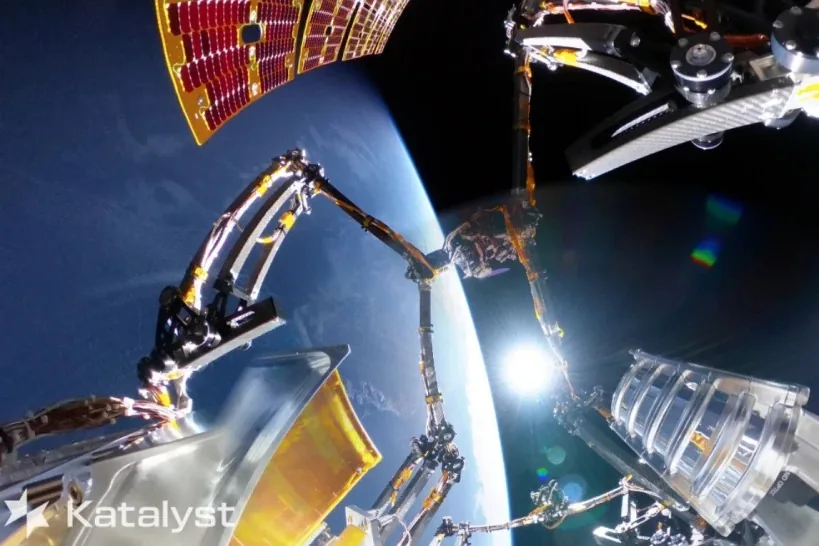
- Mission Name: Catalyst Space’s LINK robotic spacecraft rescue mission
- Launch Date: July 3, 2026 (Marshall Islands)
- Original Objective: Rendezvous with NASA’s Swift Observatory, capture it, and boost its orbit to extend scientific operations
- Mission End Date: September 25, 2026
- Final Status: Deorbited and reentered Earth’s atmosphere; total cost: $30 million (≈202 million CNY)
- Orbital Duration: 85 days
- Rescue termination Date: August 19, 2026 (formally abandoned due to insufficient fuel)
Failure Sequence: Early Success to Complete Loss of Control
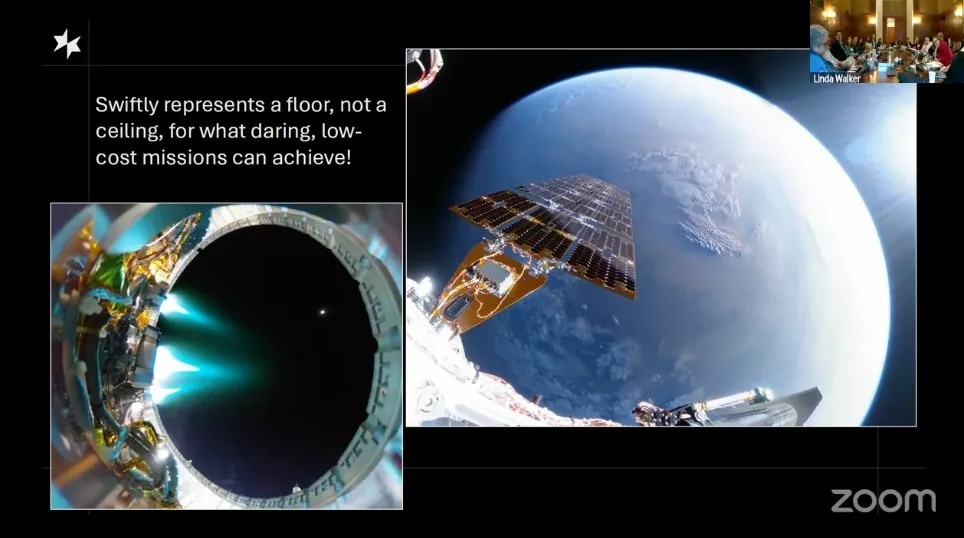
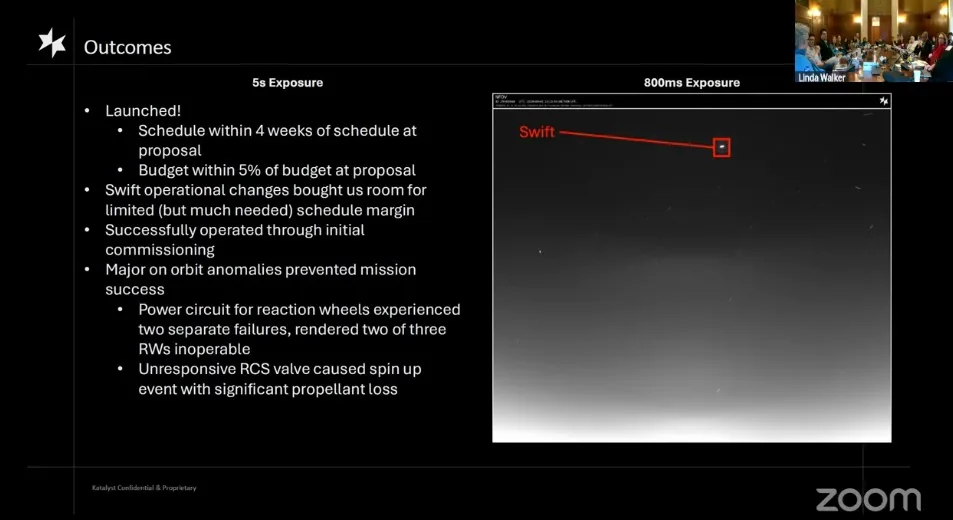
LINK initially performed well after launch and passed its early orbit phase. During system checkout, however, two of three reaction wheels failed—devices critical for precise spacecraft attitude control.
A subsequent reaction control valve malfunction triggered uncontrolled rotation at up to 9 degrees per second, causing communications loss. Engineers recovered partial attitude control using thrusters and the remaining functional reaction wheel, but this severely exceeded propellant consumption forecasts.
After joint assessment, NASA and Catalyst Space concluded LINK lacked sufficient fuel to safely perform capture and orbit-raising maneuvers. Though teams continued testing LINK’s three mechanical arms and approached within 12–15 km of Swift for imaging between August 19 and reentry, the mission was functionally terminated once fuel reserves crossed safety thresholds.
Critical Comparison: Failed Mission vs. Overdue Observatory
| Object | Launch | Design Life | Actual Service | Key Limitation |
|---|---|---|---|---|
| Swift Observatory | 2004 | 2 years | >20 years (excluding current incident) | No onboard propulsion, orbit decaying |
| LINK Spacecraft | July 2026 | ~3 months total | 85 days (including checkout attempts) | Attitude control hardware failures |
Swift remains NASA’s primary gamma-ray burst observatory, distinguished by rapid repointing capability: it can slew to an external trigger within tens of seconds, enabling global follow-up observations. Having far outlived its warranty, it now faces accelerated orbital decay due to increased atmospheric drag from heightened solar activity in 2026.
Practical Implications
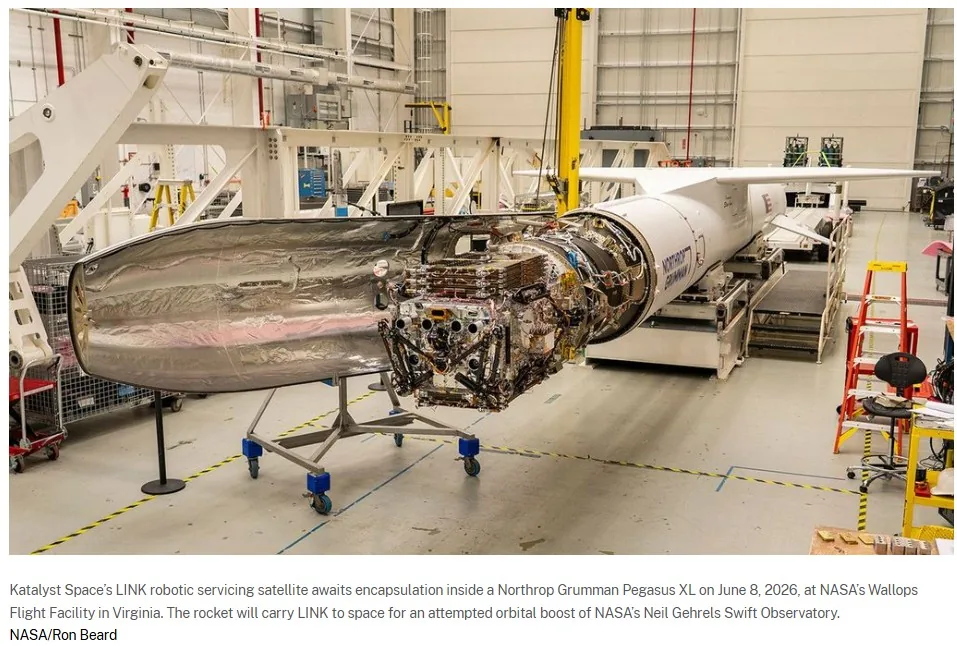
- Suitable for: Commercial operators with foundational on-orbit servicing experience; LINK’s failure highlights the need for redundant reaction wheels and better valve fault mitigation.
- Caution for practitioners: Commercial satellite repair services remain high-risk; aging science missions should prioritize built-in redundancy or preserved fuel margins.
Final Thoughts
Though LINK fell short, its 85 days of orbital operations delivered actionable failure data. In-orbit servicing stands at a pivotal inflection—from government-led prototypes toward commercial validation—one high-stakes test cannot define an emerging capability.