
Overview of the Core Announcement
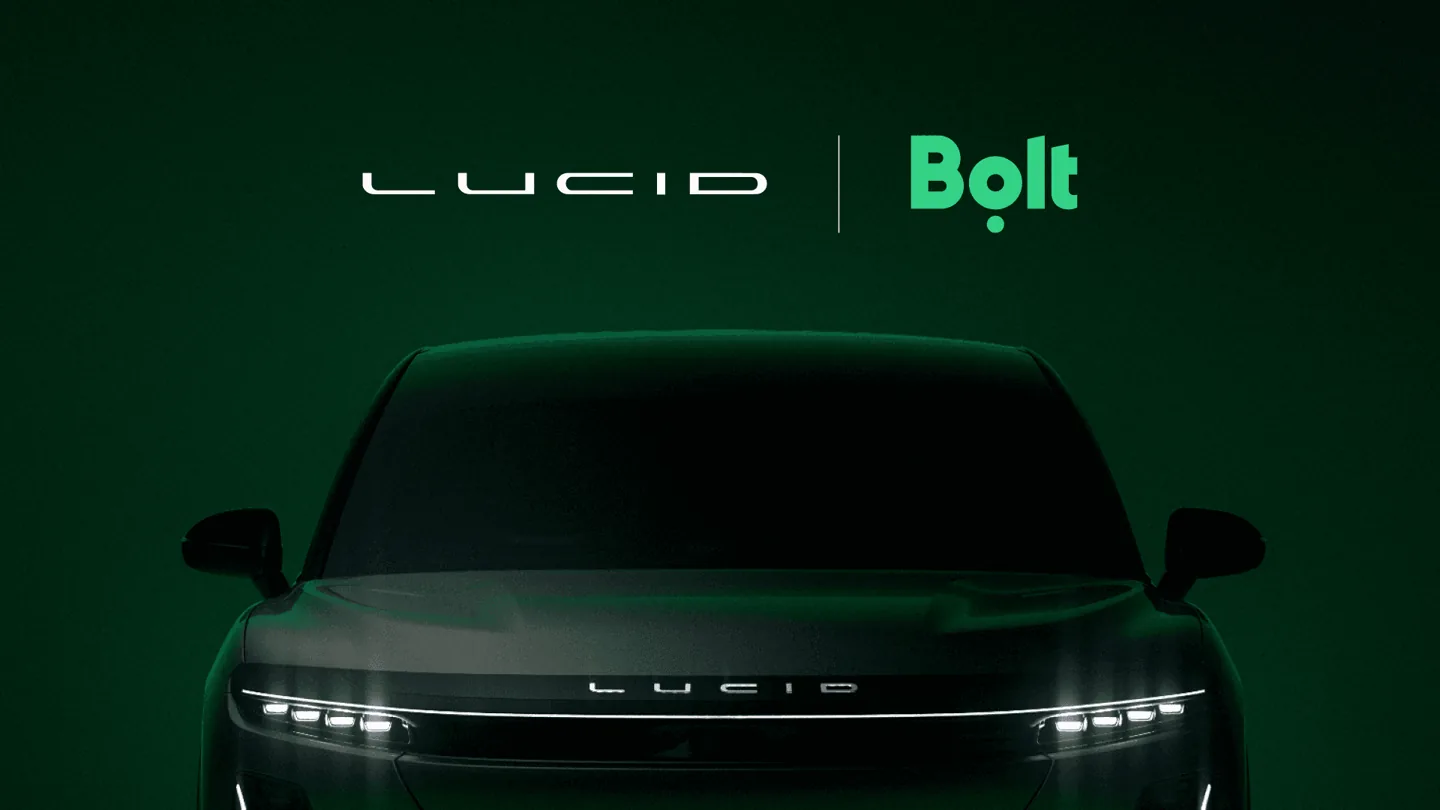
On September 17, 2026, U.S. electric vehicle maker Lucid and Europe’s largest ride-hailing platform Bolt jointly announced a strategic partnership to deploy at least 25,000 Robotaxi vehicles across multiple European cities and countries. This collaboration marks a pivotal step toward large-scale commercial operation of L4-level autonomous driving technology.
Key hard facts:
- Announcement date: September 17, 2026
- Vehicle platform: Lucid’s upcoming mid-size EV platform
- Autonomy level: SAE Level 4, based on NVIDIA Hyperion development platform and reference architecture
- Deployment target: ≥25,000 units across multiple European countries
- Ownership & operation: Bolt will own and operate the entire Lucid Robotaxi fleet
- Scope: Multi-city rollout in multiple European markets
Technical and Operational Structure
The autonomous system is built on NVIDIA’s Hyperion platform—a complete reference architecture integrating sensors (LiDAR/radar/cameras), computing hardware (Orin chips), and supporting software stack for L4 development.
Responsibilities are clearly divided:
- Lucid brings vehicle engineering and mid-size EV platform capabilities, ensuring sufficient packaging space, thermal management, and electrical architecture to support autonomous hardware integration and production scalability.
- Bolt owns full operational responsibility: defining vehicle functional requirements, safety specifications, and passenger experience criteria; building fleet management operating systems and urban infrastructure; and establishing city-level partnerships with municipal authorities.
A notable structural choice: Bolt will own and operate the entire fleet, rather than leasing vehicles from Lucid or operating under a joint venture. This enables unified software updates, centralized data governance, and faster iteration—but entails substantial capital expenditure increases on Bolt’s balance sheet.
Market Context and Unexpected Scale
An unexpected scale disparity stands out: 25,000 vehicles would exceed by 3–4× the total Robotaxi deployments ever publicly reported globally. As of 2025, Waymo and Cruise had deployed around 6,000–7,000 units combined before suspending operations; Mobileye’s European pilot remained well below 1,000 units.
NVIDIA Hyperion’s role is also noteworthy: prior deployments using Hyperion have remained prototypes or small pilot fleets (typically <100 vehicles). Using it for a >20,000-unit commercial rollout represents a significant scaling leap—and a test of Hyperion’s production-readiness for long-term durability and safety validation.
Practical Implications for Readers
- Who should try it: European residents in major cities (e.g., Berlin, Paris, Stockholm) seeking low-cost, zero-emission mobility should monitor the rollout timeline (expected 2027–2028). Early adopters in pilot cities may gain priority access.
- Who should wait: Users outside Bolt’s known service footprint—or those awaiting detailed vehicle specs (range, charging speed, interior layout)—should await Lucid’s product launch event scheduled for Q4 2026, as platform details remain unconfirmed.
In closing
This partnership shifts the industry model from OEM-to-customer vehicle sales to long-term asset-light service economics. By choosing fleet ownership over traditional wholesale, Lucid positions itself for recurring revenue via usage-based pricing, signaling a broader trend toward mobility-as-a-service integration.