
Moonshot AI Targets $2B Annual Revenue as K3 Model Generates 30B Tokens Daily
Key Facts and Timing
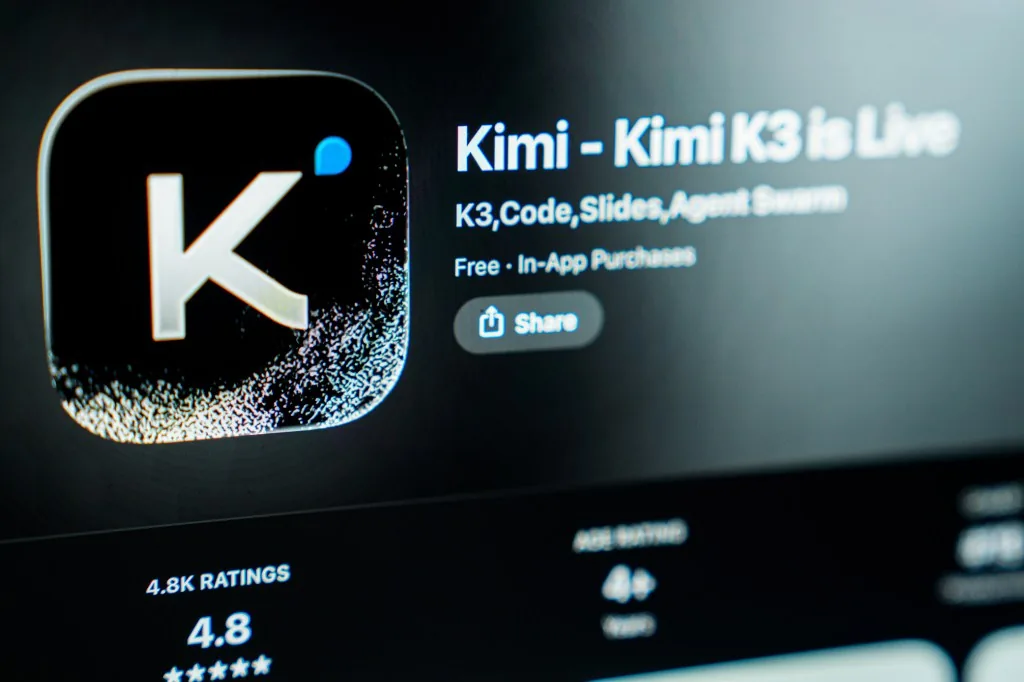
Moonshot AI has set a 2026 annualized revenue target of $2 billion, doubling its August revenue run rate. This ambitious goal is primarily fueled by its K3 model, released this summer. Although K3 usage has declined slightly in recent months, OpenRouter data shows 30 billion tokens generated daily by K3 models on its platform.
Key hard facts:
- Release time: Summer 2026 (no specific date disclosed)
- Model type: Open-weight (weights freely available)
- Current daily token output: 30 billion (per OpenRouter monitoring)
- 2026 revenue target: $2 billion (annualized)
- August 2026 revenue base: $1 billion (annualized run rate)
Market Position and Competitive Landscape

Moonshot’s revenue projection remains far below OpenAI ($40 billion) and Anthropic ($65 billion) based on recent reports. The gap stems from fundamental business-model differences: Moonshot’s open-weight approach yields significantly lower margins than closed-weight competitors, who monetize via APIs, enterprise contracts, and proprietary ecosystems.
However, 30 billion tokens/day demonstrates substantial real-world adoption. Even with lower per-token revenue, open-weight models can achieve commercial scale when leveraging widespread deployment, private deployment services, and community contributions.
Business Model Comparison
| Dimension | Moonshot AI (K3) | OpenAI / Anthropic |
|---|---|---|
| Model weights | Open-weight | Proprietary (closed) |
| 2026 projected revenue | $2 billion | $40 billion / $65 billion |
| Gross margin | Lower (reliant on deployment/services) | Higher (API licensing primary) |
| Revenue drivers | Private deployment, fine-tuning, API usage | API consumption, enterprise contracts, plugin ecosystem |
Training Data Controversy

Moonshot’s model development practices face mounting scrutiny. Earlier this week, Anthropic alleged the company ran a long-term model distillation campaign, routing approximately 300,000 requests from Kimi (Moonshot’s K3-powered product) to Claude Opus, with responses collected and used for training.
More than 23 million responses were allegedly harvested, raising serious questions about data provenance and training合规ity. In machine learning, model distillation uses high-quality outputs to train a smaller or specialized model. When such outputs come from non-consenting third-party APIs, legal and ethical risks escalate.
Though no legal proceedings have begun, the claim has ignited industry-wide debate: Can open-weight models sustain credibility if their training data sources remain opaque or unauthorized?
##(reader recommendations)
- Good fit if: You require on-premise or air-gapped deployment; your team has ML engineering resources for fine-tuning; or you need high-quality reasoning in Chinese-centric use cases (K3 shows strength in this area).
- Wait if: Your organization operates under strict data governance (e.g., listed companies, regulated industries); or you expect Kimi to reliably deploy Moonshot’s own models without rerouting to third-party backends.
The Bottom Line

Open-weight models are maturing beyond Proof-of-Concept toward real revenue—but data provenance is now the critical bottleneck. Companies that can balance openness with transparent, lawful training data practices will dominate the next phase of Model 2.0 era.