
A product-first AI rollout
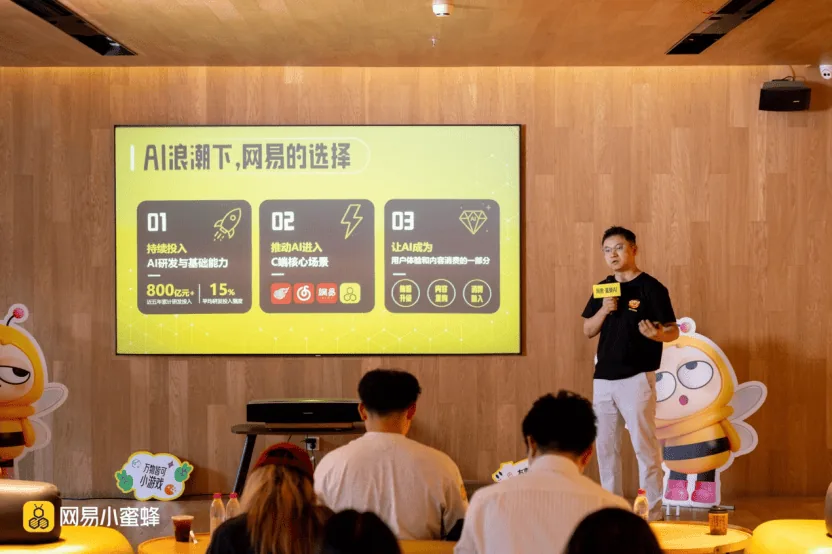
NetEase Media introduced “Bee AI” on August 18 at a media briefing, presenting it as a unified AI capability layer built for the artificial intelligence era. Rather than positioning it as a standalone general-purpose model, the company emphasized product integration: Bee AI has already been deployed in NetEase Xiao Mifeng, a youth-oriented community app focused on real-life sharing and interest-based social interaction.
According to NetEase Media vice president Li Miao, the company wants AI to be something users can experience directly inside real scenarios, not just a technical concept. The first implementation covers three directions: information understanding and task assistance, personalized interaction and ongoing service, and generative creation with interactive expression.
Making AI easier to use
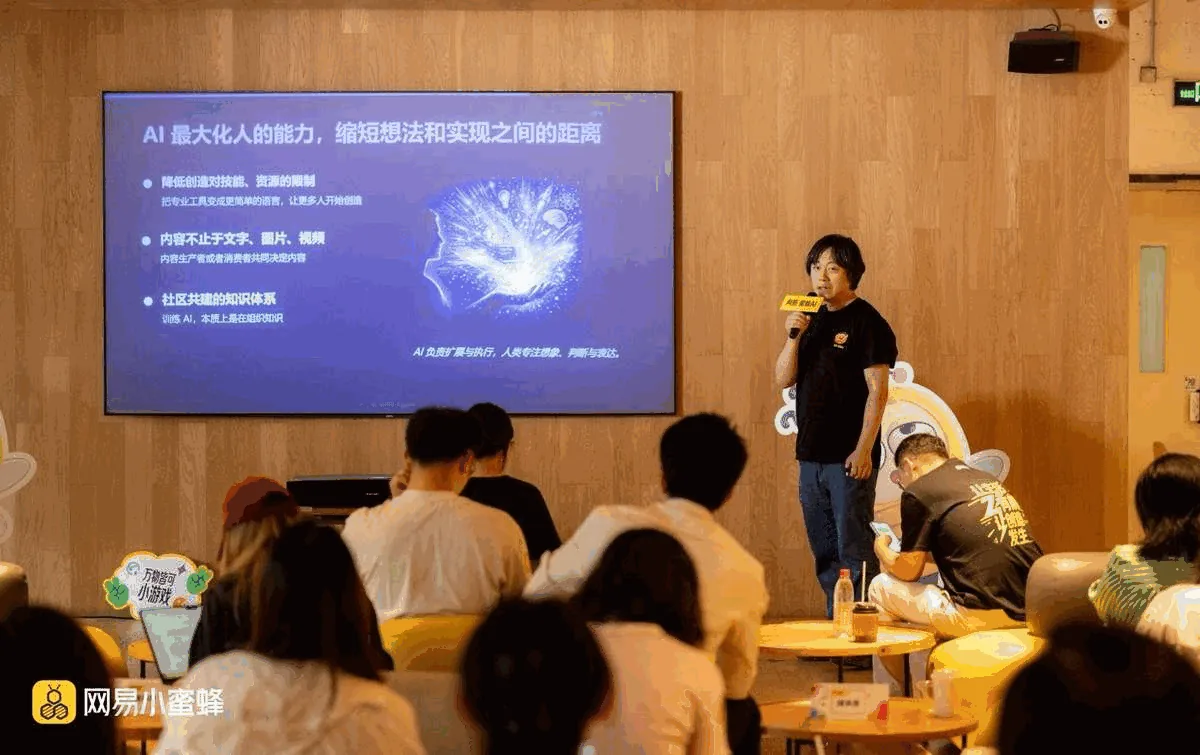
Zhang Zhimin, vice president of NetEase Media and head of Bee AI, framed the core problem as usability. AI may now be capable of many tasks, but users still often spend time rewriting prompts and adding context before getting useful results. Bee AI is designed to shorten the distance between a user’s intention and a completed action.
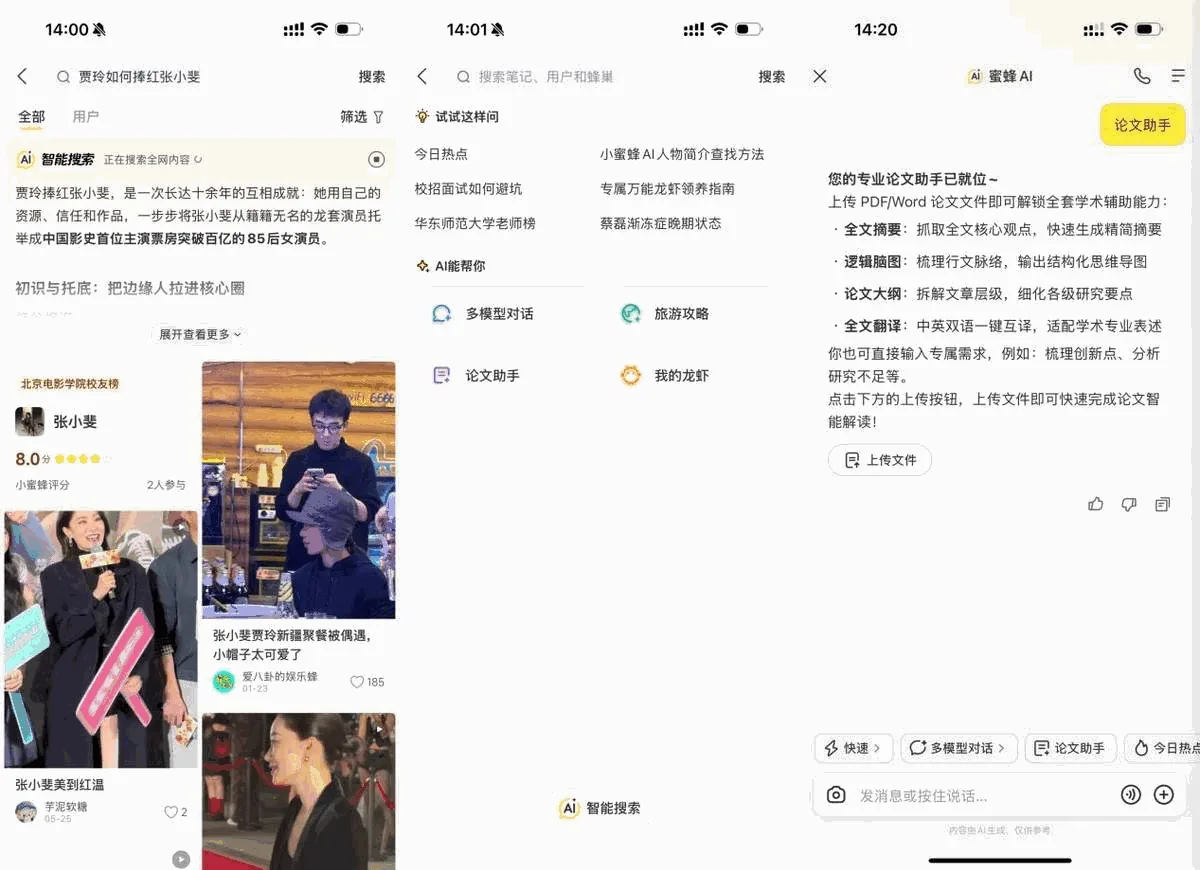
Inside NetEase Xiao Mifeng, AI Search can summarize scattered information from trending topics, daily-life knowledge and complex questions, present results in a structured way, keep sources visible and support follow-up questions. The AI Assistant supports text, voice, images and calls, and can handle tasks such as paper or document analysis, trend discovery and travel planning. In a job-seeking scenario demonstrated at the event, with user authorization, AI could use information such as school, major, experience and interests to help filter relevant positions and improve application materials.
From assistant to companion-like interaction
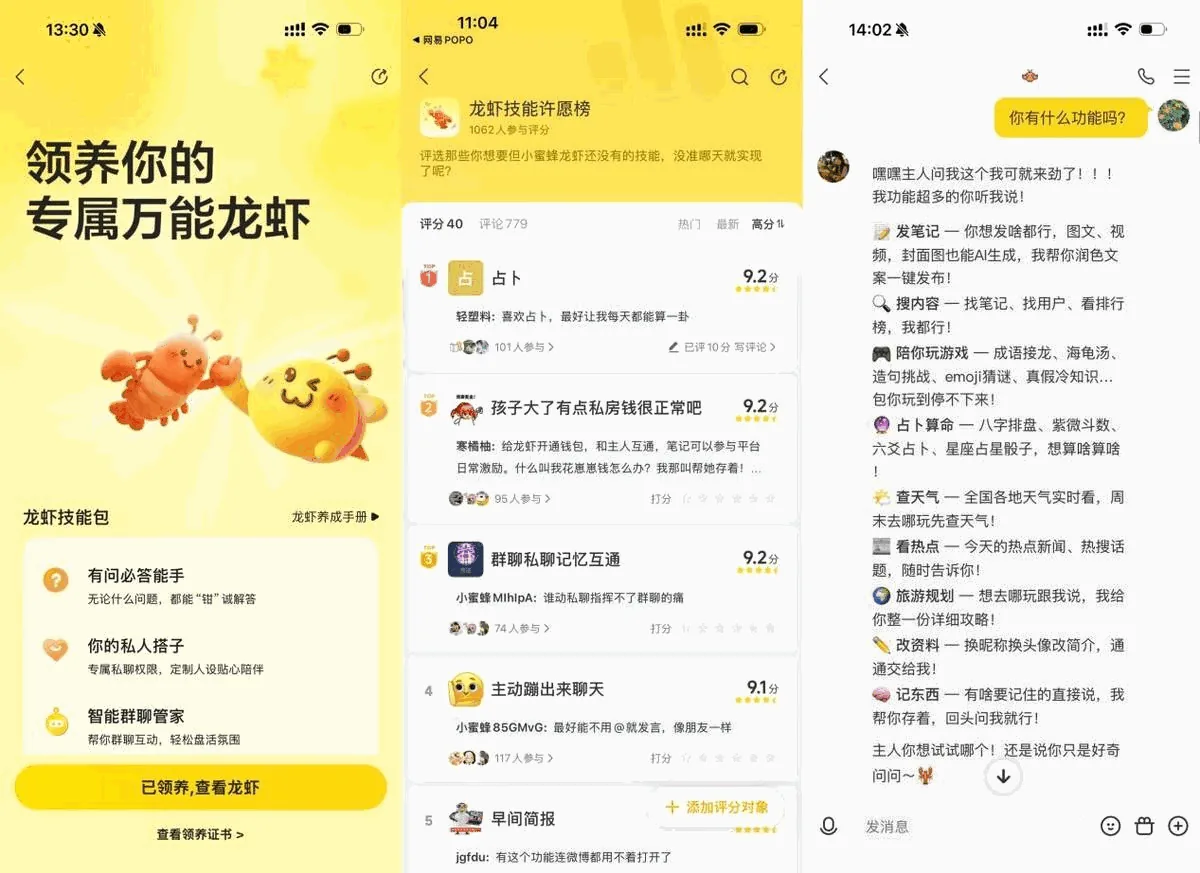
A key feature is the personal “万能龙虾” companion, which can answer questions, chat, assist in group conversations, guide users through the community, record daily life and organize information. NetEase said users who have adopted the companion show positive changes in time spent, active days and instant messaging volume. Over the past three months, interactions grew by nearly 90%; two-way interaction between users and AI accounted for 40% of contribution, reaching up to 70% in some cases.
Zhang stressed that the companion is not meant to replace human social interaction or make decisions on behalf of users. Users can adjust how it interacts and submit feature requests through a “skill wish list.” In other words, the intended role is assistance and execution, while judgment remains with the user.
Interactive content as a new creative format
Bee AI is also being used to lower the barrier to creating interactive content. Users can upload photos or enter natural-language instructions, generate and preview interactive works, then publish them for others to play and share. Unlike static text, images or video, interactive content lets users click, drag or input actions that affect scenes, plots or outcomes.
Examples mentioned at the briefing included a workplace-themed interactive experience and user-created works such as “Welcome to the Internet in 2008” and “Free Piano Simulation.” NetEase said creation volume, play time and interaction time for such works have significantly exceeded traditional text-image and video formats within the product. Li Miao described the loop as creation, trial play, sharing and secondary creation.
Community knowledge and the next phase
The company also addressed reliability. Zhang noted that fluent AI answers are not automatically accurate, and that “training” AI is, in a broader sense, about organizing knowledge through retrieval, selection, structuring and updates. NetEase Xiao Mifeng’s community knowledge, such as exam interview experiences, job-hunting advice, campus life and interest-based expertise, is being incorporated into the AI workflow after organization and filtering, with user feedback used to correct outdated or inaccurate content.
The broader significance of Bee AI lies less in model scale and more in productization. As base model capabilities become more comparable, differentiation for content platforms may come from real usage scenarios, trusted community knowledge and fast feedback loops. NetEase Media plans to keep refining Bee AI through NetEase Xiao Mifeng and extend it to more content products. Its long-term value will depend on whether it can remain useful, trustworthy and clearly bounded while becoming more personalized.