
Core Announcement: Industry’s First L4-Level Ten-Kilo GPU Cluster Operational
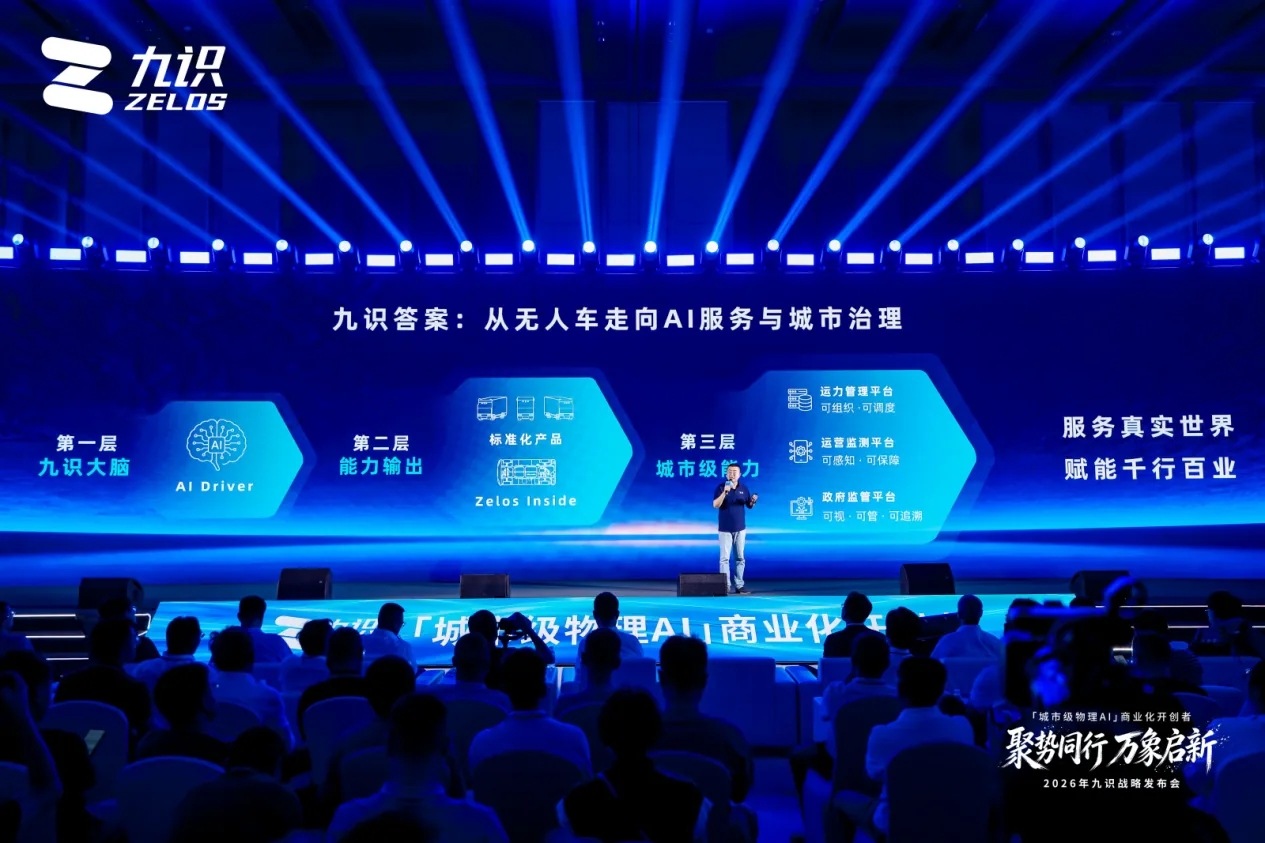
On September 17, NineLights CTO Zhuang Li confirmed the company has built the industry’s first L4-level ten-kilo GPU cluster, with total computational capacity approaching 15,000 accelerators. This cluster underpins the APEX multimodal foundation model’s transition from百亿 (hundreds of millions) to 千亿 (billions) of parameters. The infrastructure supports NineLights’ “city-level physical AI” strategy announced on September 10 and is exclusively for internal use—not offered externally or open for public access.
- Launch date: September 17, 2026 (CEO Kong Qi announced strategic shift on September 10)
- Compute scale: ~15,000 AI accelerators (a “ten-kilo cluster” denotes over 10,000 parallel processing cards)
- Model status: APEX multimodal foundation model scaling from hundreds of millions to billions of parameters
- Data source: 30,000 operational vehicles, 270 million km accumulated L4 autonomous driving distance
- Deployment scope: Internal-only; no external partnerships or licensing
Technical Architecture: Fueling Model Evolution via Vehicle-Cloud Synergy
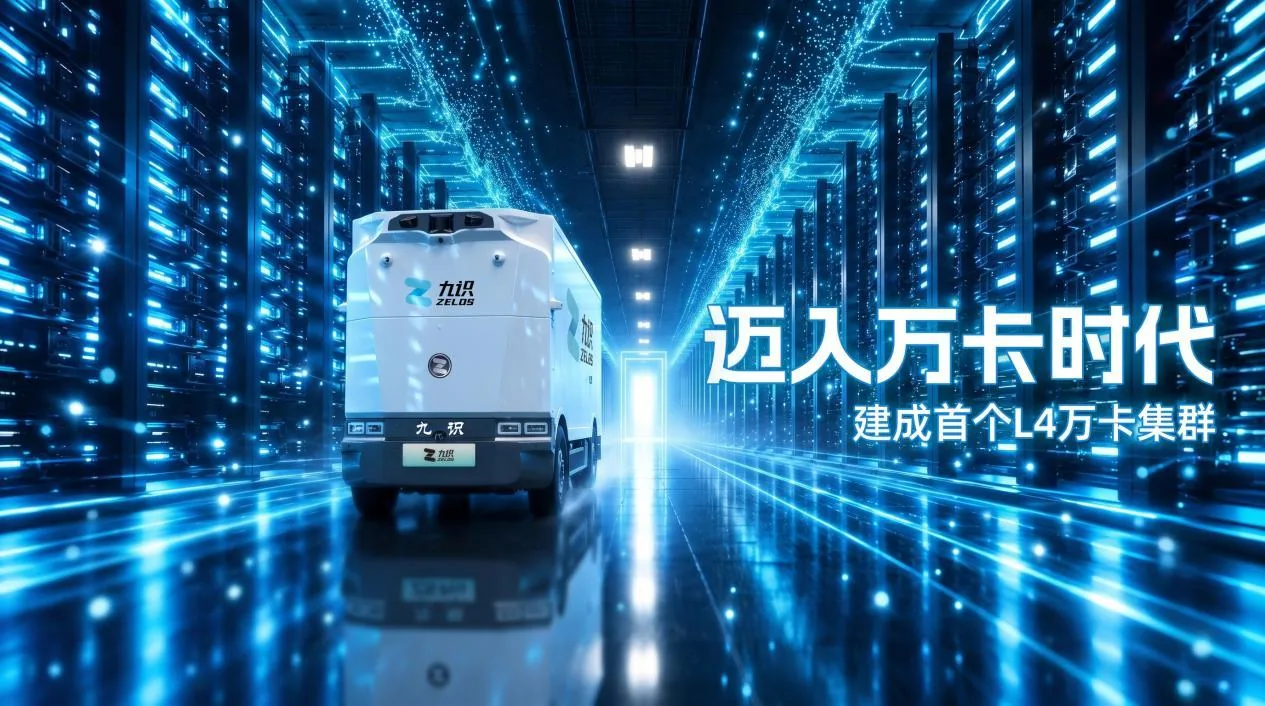
The ten-kilo cluster functions as an “AI super-factory”—分解 large-scale model training into parallelizable tasks. NineLights’ innovation lies not in raw compute volume but in designing a closed-loop system anchored to real-world physical scenarios: each operational vehicle continuously feeds high-value edge-case data (e.g., unmarked rural roads, temporary construction zones, chaotic mixed traffic) into the APEX base model; upgraded models stream back to cloud and车端 (onboard) components via knowledge distillation, deployed hierarchically:
- Onboard VLA model: Covers routines above 30 km/h with low-latency responses
- Cloud VLA enhancement model: Augments local reasoning in complex 5–30 km/h scenarios
- Safety-agent Agent: Makes高级 (senior-level) decisions—rerouting, parking—at 0–5 km/h to rescue extreme situations
Counterintuitive insight: While载人 Robotaxi is conventionally deemed higher-barrier than cargo autonomous vehicles, NineLights argues city logistics face greater AI challenges due to unpredictable long-tail conditions, explaining their urgency for万卡-level compute. Their 270 million km of real-world L4运营 mileage significantly exceeds most publicly disclosed figures, forming the core training fuel.
APEX Model Advancements Across Four Dimensions
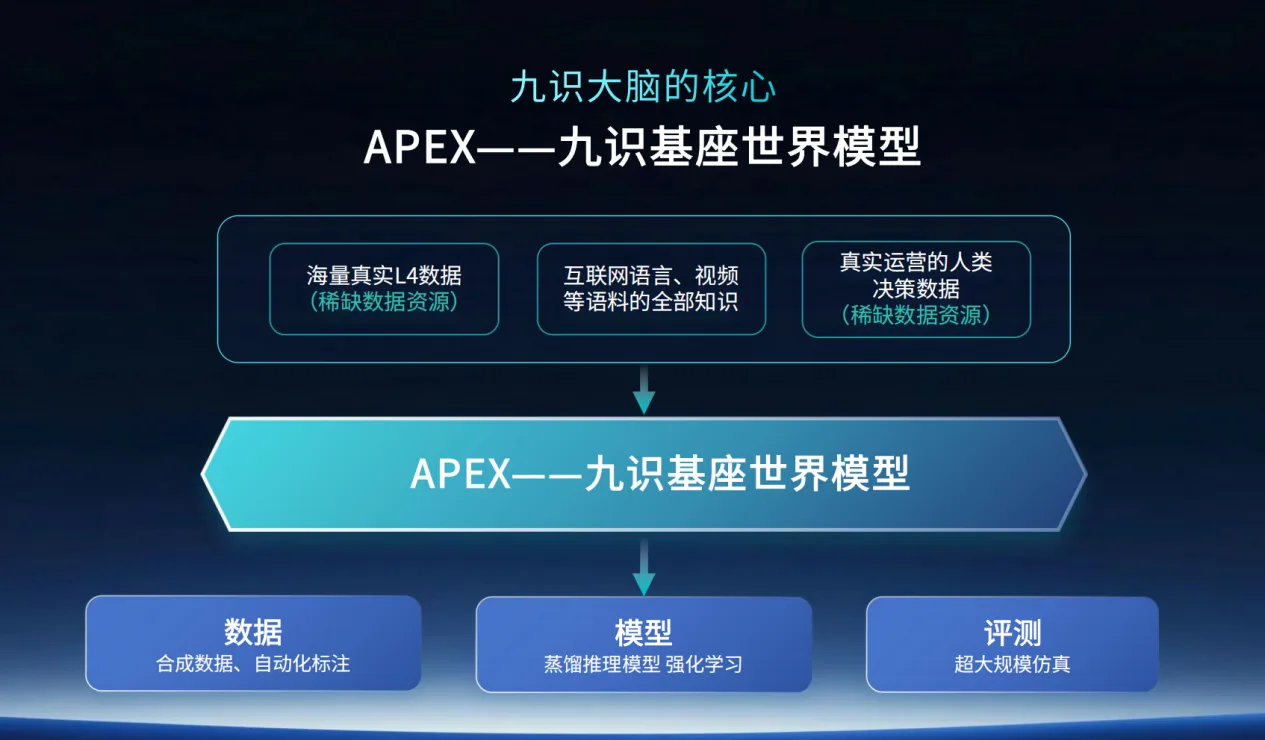
APEX merges three data types (L4 driving logs + internet video/text + human driving decisions), delivering leap in:
| Capability Domain | Enhancement |
|---|---|
| Scenario reasoning | Long-horizon博弈 (game-theoretic) prediction improves ride smoothness and safety |
| Knowledge fusion | Unified grasp of traffic signals, officer gestures, local rules enables no-map L4 deployment across cities |
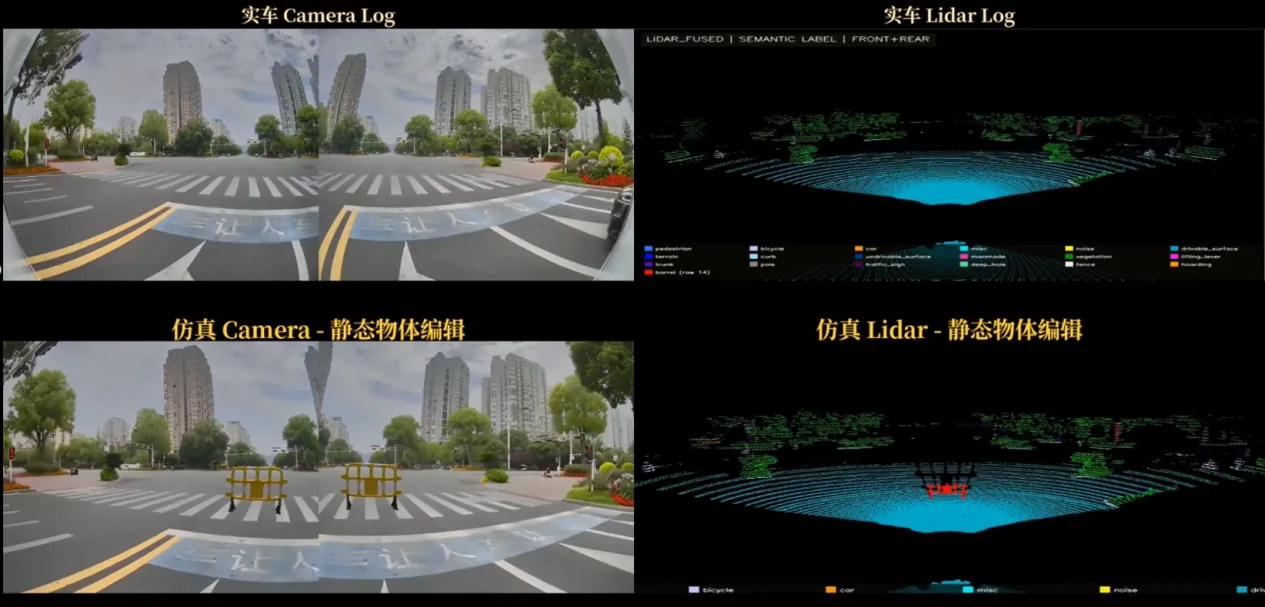
| Simulation fidelity | Million-workload parallel simulation enables safe extremeScenario validation in cloud |
| Deployment efficiency | End-to-end distillation with unified weights; single base adapts to multiple RoboVan models |
Notably, NineLights’ VLA avoids language-translation bottlenecks (observe→describe→act). Instead, it generates compact “intentions”—same abstraction level as human spontaneous decisions like braking upon seeing ahead traffic—accelerating response versus verbal inference.
Action Recommendations
- Adopt NineLights if: Your logistics operation faces complex, variable scenarios (urban mid-range delivery, campus shuttles, high-adverse-weather zones); or you seek city management augmentation via fleet-based sensing
- Delay consideration if: You require fully custom onboard models; demand ultra-low inference latency at万卡-scale; or lack continuous real-world data loops (pure simulation-driven teams)
Final Note
Autonomous driving enters its下半场 (second half), where data scarcity—not algorithmic novelty—dominates competitive advantage. With 30,000 vehicles constantly harvesting raw physical-world data, scale transforms from endpoint to fuel source. NineLights’ execution confirms city logistics’ AI difficulty has risen, demanding deeper physical-world modeling capability than earlier paradigms assumed.