
Core Event Snapshot
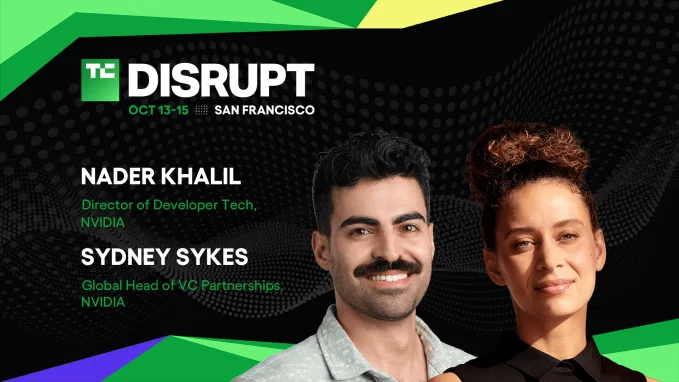
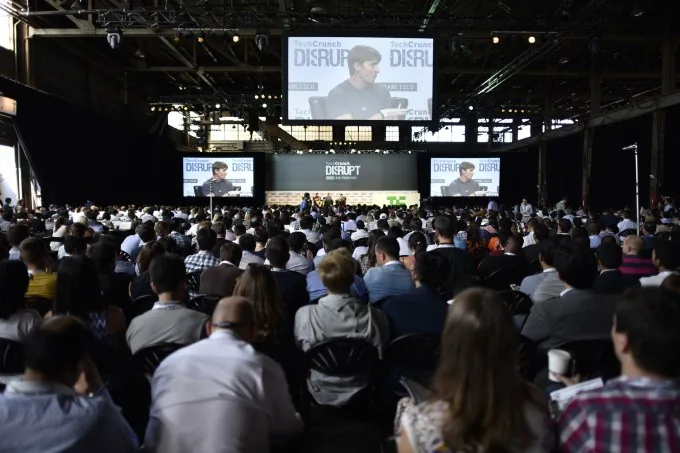
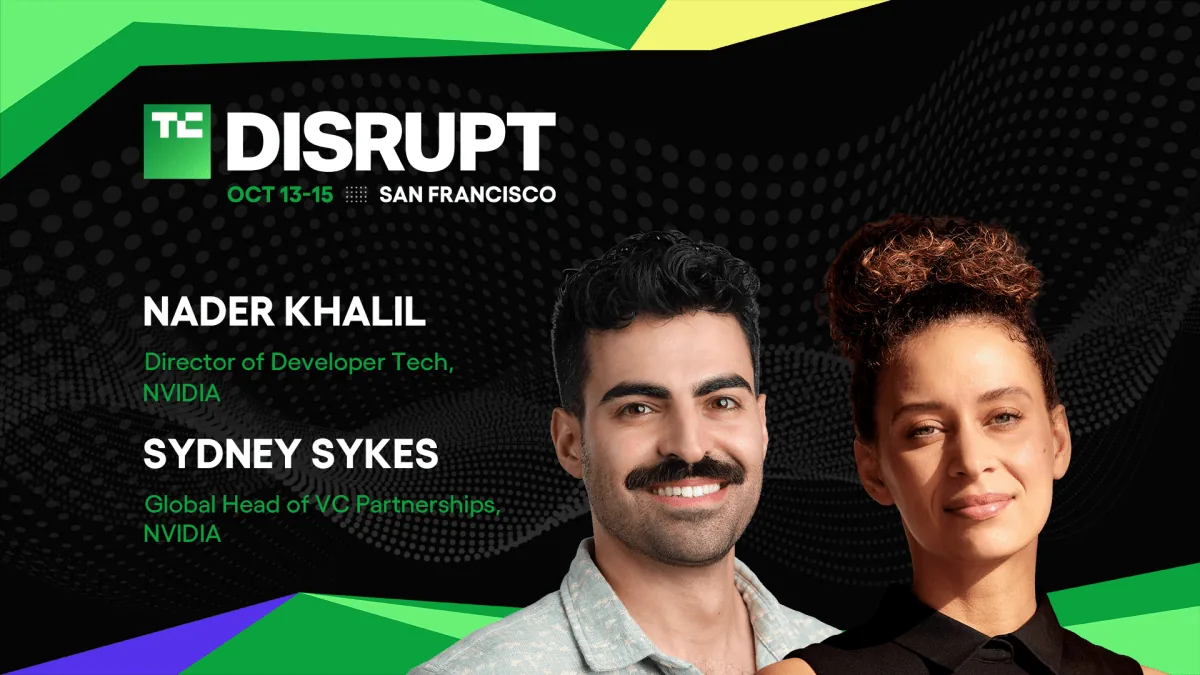
On September 18, 2026, NVIDIA announced senior executives will host a session on the Builders Stage at TechCrunch Disrupt 2026, addressing the most critical strategic question facing AI startups today.
- Event dates: October 13–15, 2026, San Francisco
- Speakers: Nader Khalil, Director of Developer Tech at NVIDIA; Sydney Sykes, Global Head of VC Partnerships at NVIDIA
- Session title: “The Open vs. Closed AI Debate Is Just Getting Started”
- Early-bird discount: Up to $200 off registration before September 25, 11:59 p.m. PT
- Target audience: Founders, developers, investors, line-of-business leaders making technical strategy decisions
This conversation moves beyond philosophical open-source debates to focus on five operational realities for startups: cost, infrastructure, margins, differentiation, speed, and control.
The Real-World Strategic Dilemma

Nader Khalil brings infrastructure and development expertise: Prior to joining NVIDIA, he co-founded Brev.dev—an AI infrastructure company acquired by NVIDIA in July 2024. Brev.dev’s core value was enabling developers to deploy AI across public cloud, private cloud, and on-premises without vendor lock-in, prioritizing portability and control.
Sydney Sykes represents the venture capital perspective: As NVIDIA’s Global Head of VC Partnerships, Sykes evaluates how startups build investability, scalability, and sustainable advantage through their technical choices.
Together, they offer a dual lens—one whose founding experience centered on infrastructure flexibility, the other focused on business viability.
A surprising nuance emerges: NVIDIA explicitly rejects the open-vs-closed binary. CEO Jensen Huang stated at GTC this year that the future is not “open_vs_closed,” but “open_and_closed.” Yet the practical challenge remains: companies must still make concrete decisions about which approach defines their architecture.
Open models are advancing rapidly. NVIDIA reports that 145 papers accepted at ICML 2026 cited its Nemotron open models and datasets, with applications spanning robotics, autonomous vehicles, and biomedical research. Proprietary frontier models, meanwhile, continue advancing capabilities.
Key Decision Trade-offs
Startups must weigh these practical considerations:
- When two models deliver similar outputs, does lower cost become the deciding factor?
- Is data sovereignty worth higher infrastructure investment?
- Does owning more of the stack create defensibility—or just maintenance burden?
- With model update cycles shortening to months, how tightly should products integrate with any single model?
NVIDIA’s own product strategy reflects this hybrid reality: The Nemotron 3 Super, launched in March 2026, is a 120-billion-parameter open model designed for agentic workloads. Early adopters are combining it with proprietary models, treating them as complementary rather than mutually exclusive.
| Decision factor | Open Model Advantage | Proprietary Model Advantage |
|---|---|---|
| Development speed | Customizable, tunable, deployable locally | API integration ready, zero operational overhead |
| Control | Data sovereignty, model transparency, deployment freedom | Product teams free from infrastructure management |
| Cost structure | No per-call fees, economical at scale | Low upfront, pay-as-you-go |
| Differentiation potential | Requires building product-layer moat | Relies on data depth, workflow, domain specificity |
Who Should Decide Now? Who Should Wait?
Ready to commit if:
- Your startup has proprietary data or vertical expertise, enabling “model + data + domain” composite defensibility using open models
- Data residency or regulatory compliance demands local deployment (healthcare, finance)
- Your team has GPU optimization and inference engineering capability
Wait and observe if:
- You’re in MVP validation phase; use proprietary APIs to quickly test assumptions
- You lack infrastructure ops resources; monitor model iteration velocity before committing
- Your use case has neither strict cost nor control requirements, making API simplicity optimal
The Bottom Line
AI entrepreneurship has shifted from “can we use large models?” to “how do we systemically leverage them?” The model selection is no longer an engineering detail—it’s a strategic axis embedded in the entire business model. Models aren’t the moat, but how you deploy them determines whether you can build one.
As NVIDIA demonstrates, the real competitive advantage lies not in the open or closed label, but in forming irreversible coupling between model capability, proprietary data, and industry-specific knowledge.