
NVIDIA Open-Sources SoL-Pi: AI-Driven Workflow Optimization
In September 2026, NVIDIA open-sourced SoL-Pi (Speed-up and Optimization of Learning - Pi), an efficient harness for AI Agent workflows. The system improves cost-efficiency not by enhancing model capabilities, but by optimizing structural workflow patterns. Key facts:
- Release date: September 2026 (announced)
- Availability: Fully open-source, project page: https://nvlabs.github.io/SoL-Pi/
- Technical basis: Built upon the open-source Pi project
- Core approach: AI autonomously proposes and filters optimizations
Architecture: From 152 Ideas to 4 Winning Mechanisms

SoL-Pi’s breakthrough is its “Automatic Research Loop”. Traditional RSI (AI Self-Improvement) approaches rely on online trial-and-error, with over 90% attempts failing—costly and inefficient. NVIDIA adopted a “shared flash copy” model: maintain a minimal working template; each experiment spawns a copy for modification; temporary code is discarded after experiment completion, preventing main library bloat.
The process collected 152 optimization ideas proposed by AI, subjected them to automated sandbox screening, and only 4 surviving mechanisms now form the core:
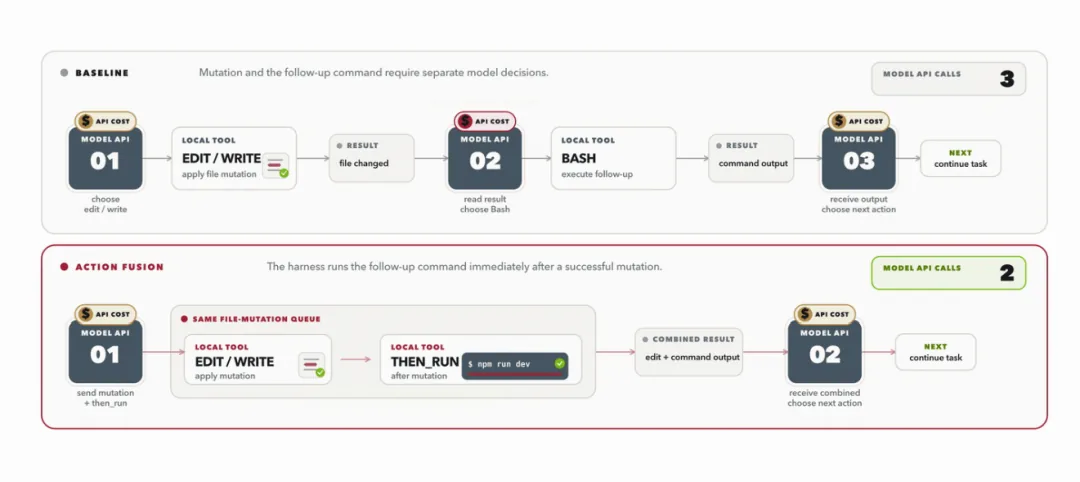
- Action merging: Combine “code modification + test execution” into a single step, eliminating one AI reasoning pause
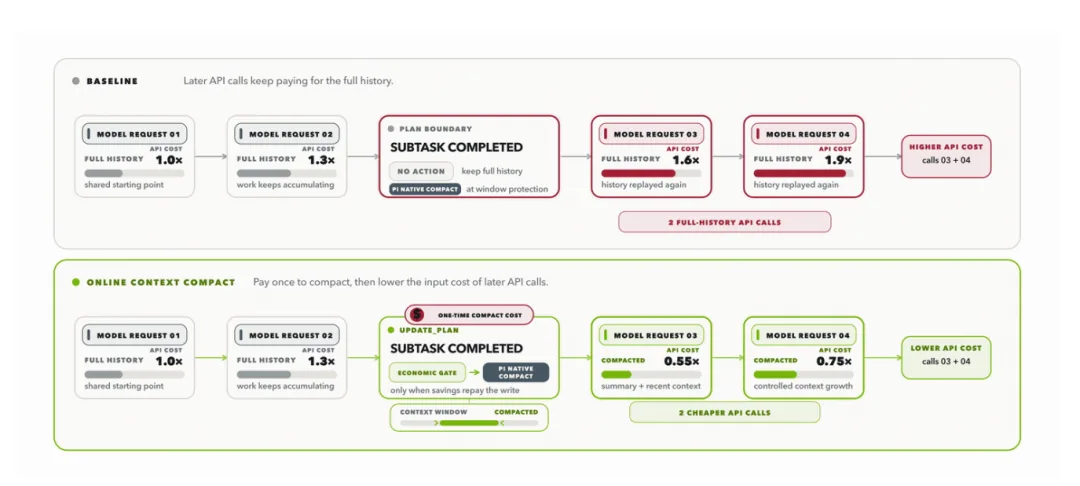
- Concise summarization: Split large tasks into independent sub-tasks; compress history to摘要 after each sub-task, retaining only key conclusions; lighter context, raw logs recalled only when needed
- Local result storage: Store complete tool outputs (e.g., hundreds of log lines) locally; context contains only “summary + index”; retrieve specific segments on demand
- Hierarchical diagnostics: Use low-cost smaller models to summarize error logs into diagnosis reports with original-text anchors; main models read summaries first, original logs only for verification
These mechanisms target four fundamental AI workflow pain points: linear memory accumulation, tool output redundancy, fragmented decision branching, and over-engineered debugging.
Validation Results: Real-World Efficiency Gains
NVIDIA created 535 validation environments:
- 495 real-world bug repros: Extracted actual open-source repository states pre-fix, hiding human solutions
- 40 blind-box tasks: Sandbox environments without scripts; AI must freely explore to trigger validators
Comparing Harnesses:
| Baseline | Token Reduction vs Pi | Max Reduction vs Native Framework | API Cost Reduction | Hourly Savings |
|---|---|---|---|---|
| SoL-Pi | 45%–49% | 64% | 50%–54% | $8.75–13.5 |
Counterintuitive finding: SoL-Pi achieves upstream 64% token reduction against model-native frameworks, not just Pi—proving framework optimization outperforms baseline model capabilities.
Adoption Guidance
- Deploy now if: Your multi-Agent workflows consume 100K+ tokens per task; you regularly debug using extensive logs and automated tests
- Wait if: Your use case involves single-Agent chains of ≤2 steps; real-time latency is critical and action-merging timing variations cause issues
Closing Thoughts
SoL-Pi embodies the “Efficiency for efficiency” principle: efficiency begets more efficiency. When AI optimizes its own tools rather than merely waiting for smarter models, saved budgets fund additional experiments—creating a positive feedback loop. At this stage, “breadth matters more than depth”—generating many ideas and letting automation select winners remains the most pragmatic path to enterprise AI cost reduction.