A teen version arrives after mass adoption
OpenAI has launched ChatGPT for Teens, a version of its chatbot designed around younger users who have already been using generative AI for schoolwork, curiosity, and everyday questions. The announcement follows lawsuits and public concern over AI chatbot safety, including cases tied to teen suicides, mental health risks, and the broader school crisis of AI-assisted cheating.
The timing is notable. ChatGPT first reached the public in late 2022 and has since grown to 900 million weekly users, the report notes. Yet safeguards aimed specifically at teenagers are only now being packaged as a distinct default experience. The company says the teen product will apply age-appropriate protections by default, with the goal of reducing exposure to harmful or developmentally inappropriate content.
Study Mode is the education centerpiece

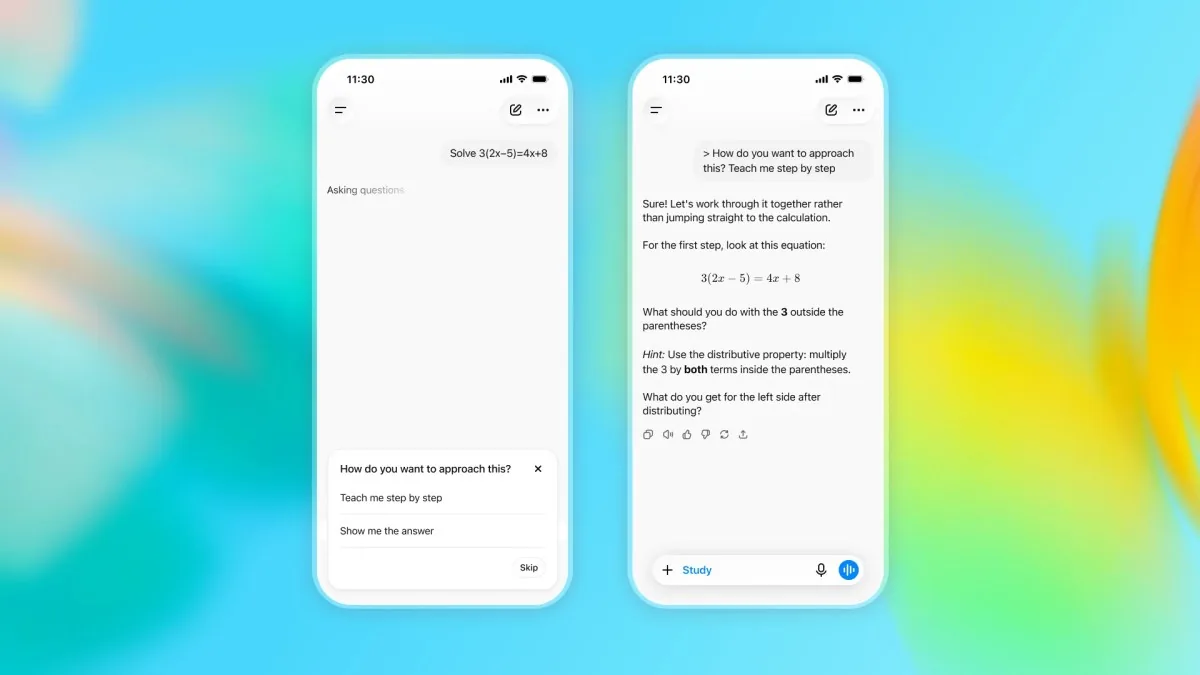
The most visible education feature is Study Mode. Rather than simply handing over answers, it is meant to guide students through material with questions, step-by-step support, and prompts that encourage understanding. In plain terms, Study Mode tries to make the chatbot behave more like a tutor than an answer machine.
OpenAI says ChatGPT for Teens will also show homework reminders when it appears a teen is trying to cheat instead of learn. In those cases, the system will push the user toward Study Mode. The product will support quizzes and learning visualizations, while parents or guardians will be able to decide when Study Mode is enabled by default.
Key elements include:
- Default age-appropriate protections for teen users;
- Study Mode with guiding questions and step-by-step help;
- Homework reminders when the system detects likely answer-seeking behavior;
- Quizzes and learning visualizations to support comprehension;
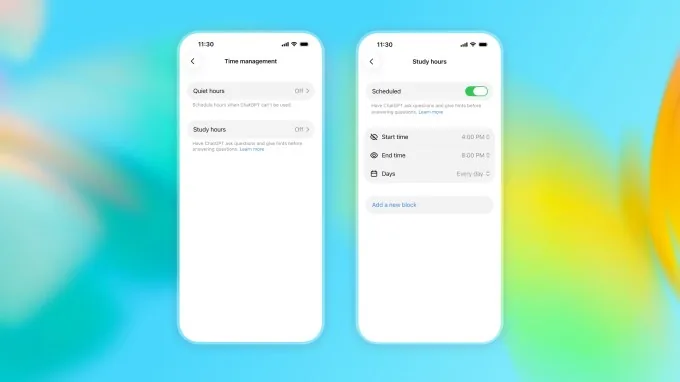
- Parental controls, safety notifications, and Quiet Hours.
Safety controls face a real-world test
OpenAI says the protections are based on its Under-18 Principles in the Model Spec and informed by developmental science and expert guidance. Parents will also be able to use previously introduced family tools to manage settings, receive safety notifications, and set Quiet Hours.
The open question is whether these systems will hold up when teens actively try to avoid them. Teenagers are often skilled at bypassing parental controls and restrictions on digital platforms. Until the teen mode is tested more rigorously in real use, it remains unclear how difficult it will be to work around the new guardrails.
This is a broader problem for AI products. Large language models are systems that generate responses from user prompts, and their open-ended nature makes them harder to moderate than conventional software. A teen safety layer must do more than block obvious harmful content. It must also recognize risky patterns, avoid reinforcing harmful behavior, and separate legitimate academic support from doing the work for the student.
OpenAI’s education push widens
OpenAI also announced a partnership with CodeAI to help teenagers learn what AI is, how it works, how to direct it, how to question it, and how to use it. In classrooms, the company already offers ChatGPT for Teachers, which gives schools institution-managed access to AI and related support.
Together, these moves show OpenAI trying to make ChatGPT more acceptable to families, schools, and institutions. Schools are worried about cheating and weakened independent thinking, but many students and teachers are already operating in an AI-enabled environment. The launch of ChatGPT for Teens effectively acknowledges that the debate has shifted from whether teens will use AI to how the technology should be bounded.
What comes next
ChatGPT for Teens is important because it treats under-18 use as a separate product problem rather than an afterthought. Default protections, parental visibility, and learning-oriented interactions are likely to become baseline expectations for AI tools aimed at young users.
But the launch is not a final answer. Its impact will depend on whether the safeguards reduce harmful exposure, whether parents and schools can meaningfully use the controls, and whether the system can discourage cheating without blocking useful learning support. The next phase of educational AI competition may be less about producing the fastest answer and more about proving that the product can help students while keeping meaningful boundaries in place.