
OpenAI delays IPO: Even a 10% extinction risk is unacceptable
OpenAI CEO Sam Altman recently said the company will not pursue an initial public offering (IPO) this year, saying the timing is not right. He said the company is expected to go public next year and remains focused on addressing safety concerns surrounding AI.
Altman said, “I think even taking a 10% risk of killing everyone by the end of this decade is unacceptable.” In his view, AI is ushering in a new era that requires different actions to ensure the technology benefits humanity without exposing anyone to anything close to that level of risk.
The comments have put AI safety back at the center of the industry conversation. Anthropic researcher Jacob Coxon announced his resignation on X and warned that leading AI companies are racing to build superintelligence that could “destroy us all by the end of this decade.”
His colleague Evan Hubinger responded that he personally believes there is a greater than 10% chance that AI could destroy all humans within a decade. He also said the industry has not solved the alignment problem for superintelligence: ensuring that an AI system’s goals, behavior, and values remain consistent with human intent and safety requirements. The statements prompted political debate in the United States, where some Democratic lawmakers called for new restrictions on AI technology.
Anthropic calls for a slower pace and third-party evaluation

Anthropic CEO Dario Amodei has argued that the AI industry should slow down. He said AI-assisted development of next-generation AI has evolved rapidly since the summer of 2026, and that unchecked breakthroughs could outpace humanity’s ability to understand and control them.
Amodei warned that, within the next six to 12 months, more capable clusters could potentially become internet-wide botnets and cause catastrophic damage. He said slowing down does not mean stopping altogether. Instead, the industry should use a one- to two-year window to focus on four areas:
- Building engineering safety standards comparable to those used in civil aviation;
- Ensuring safety and compliance training keeps pace with expanding model capabilities;
- Improving internal interpretability techniques, described as a form of “fMRI for model brains”;
- Developing stronger evaluation benchmarks to prevent highly capable models from faking alignment or deceiving safety tests.
Anthropic also said it would provide third-party evaluators with permanent, employee-level access to its systems. That access would allow evaluators to monitor the implementation of safety measures, report incidents, and assess alignment during training.
At the same time, NVIDIA is considering participating as a cornerstone investor in Anthropic’s IPO, with a potential investment of up to $10 billion. The report said Anthropic could seek to raise as much as $100 billion in an IPO and could be valued at roughly $2 trillion after listing. The talks remain ongoing, and the final investment amount and deal terms could change.
The contrast is notable: capital continues to place enormous bets on frontier AI companies while some researchers within the field publicly warn about loss-of-control risks. Whether safety capabilities can keep pace with model progress and commercial investment will remain a central question.
Microsoft executive departure and a European robotaxi test

Microsoft Chief Communications Officer Frank Shaw said he will leave the company at the end of this year. According to the source material, Shaw has worked at or with Microsoft and its core public-relations agency for nearly three decades. Microsoft has not announced a successor.
In autonomous driving, Rimac-backed startup Verne has launched fully driverless passenger testing on public roads in Zagreb, Croatia. The project is being run with Pony.ai, and users can access the service through the Uber app.
The 22-kilometer route links Verne’s headquarters, the city’s commercial center, and Zagreb Airport. There is no safety driver inside the vehicle: Pony.ai’s autonomous driving system handles driving operations, while Verne monitors the vehicle remotely.
Consumer technology updates

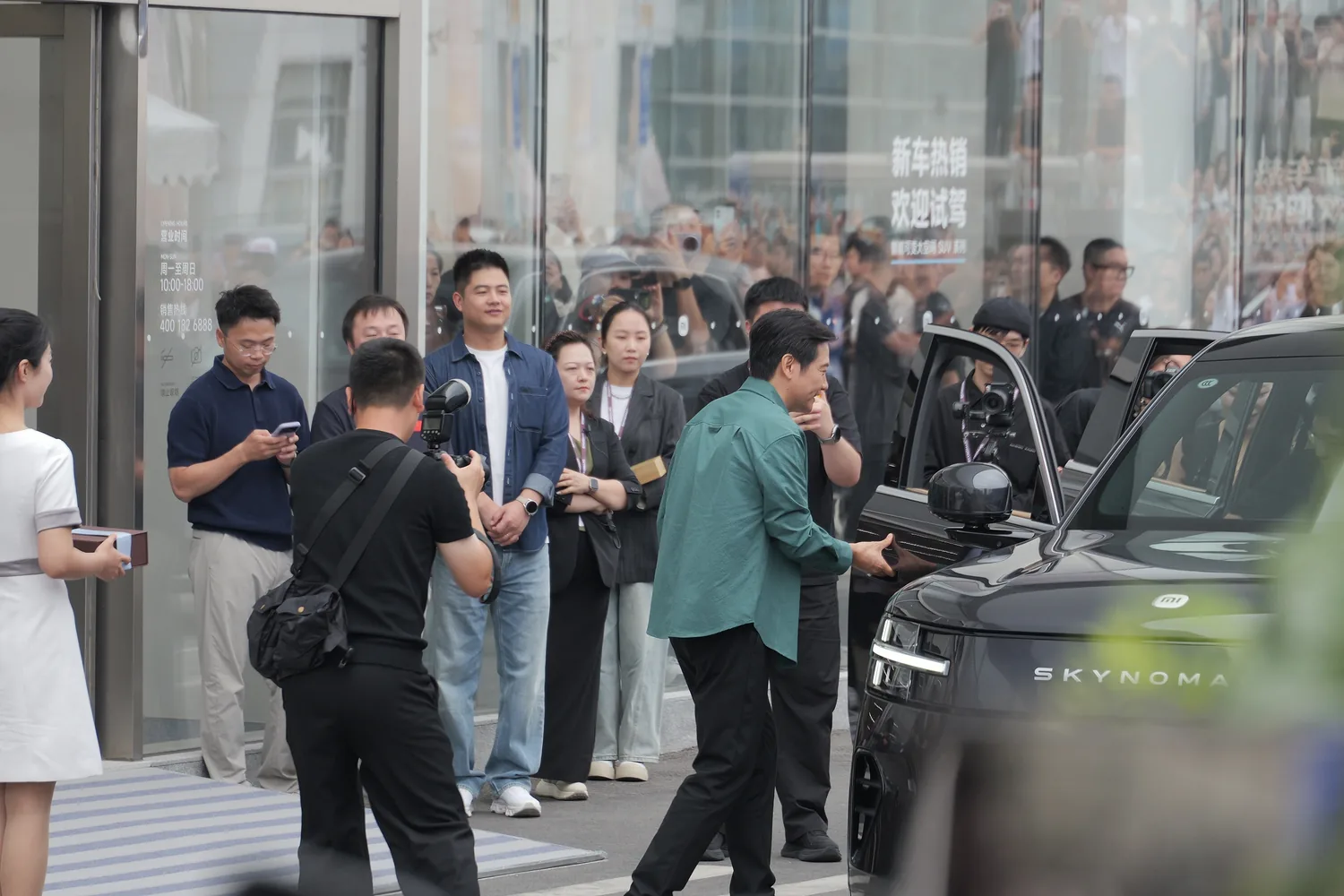
On September 12, Xiaomi’s Pengcheng series began nationwide deliveries, with initial delivery services covering 75 cities. Citing official figures, the source said the series exceeded 10,000 locked-in orders within four minutes of launch.
Apple also opened pre-orders for the iPhone 18 Pro and iPhone 18 Pro Max across dozens of countries and regions. The source said the devices feature TSMC’s first 2nm A20 Pro chip, a mechanical variable-aperture camera module, and an on-device AI experience. Initial orders are expected to begin shipping on September 18.
The HarmonyOS Intelligent Mobility Aito M9 Ultimate extended version also began nationwide deliveries. The five-seat model is priced at 649,800 yuan, while the six-seat version costs 659,800 yuan. The vehicle measures 5,402/2,026/1,845 mm, with a 3,236 mm wheelbase.
DeepSeek, meanwhile, is running a limited gray test of AI voice conversations in its app. Eligible users can start real-time voice interactions through a speaker icon in the upper-right corner and choose among four voices: Beike, Bailang, Haixing, and Anchao. The feature is not yet available to all users.
Closing thoughts
From OpenAI’s cautious comments on its listing timeline to Anthropic researchers’ public warnings about existential risk and the company’s pledge of third-party access, competition in AI is no longer just about model capability. As model progress, capital investment, and deployment all accelerate, the industry’s long-term credibility will increasingly depend on whether safety governance can become concrete, verifiable, and enforceable.