
Opening: Core Event and Key Facts
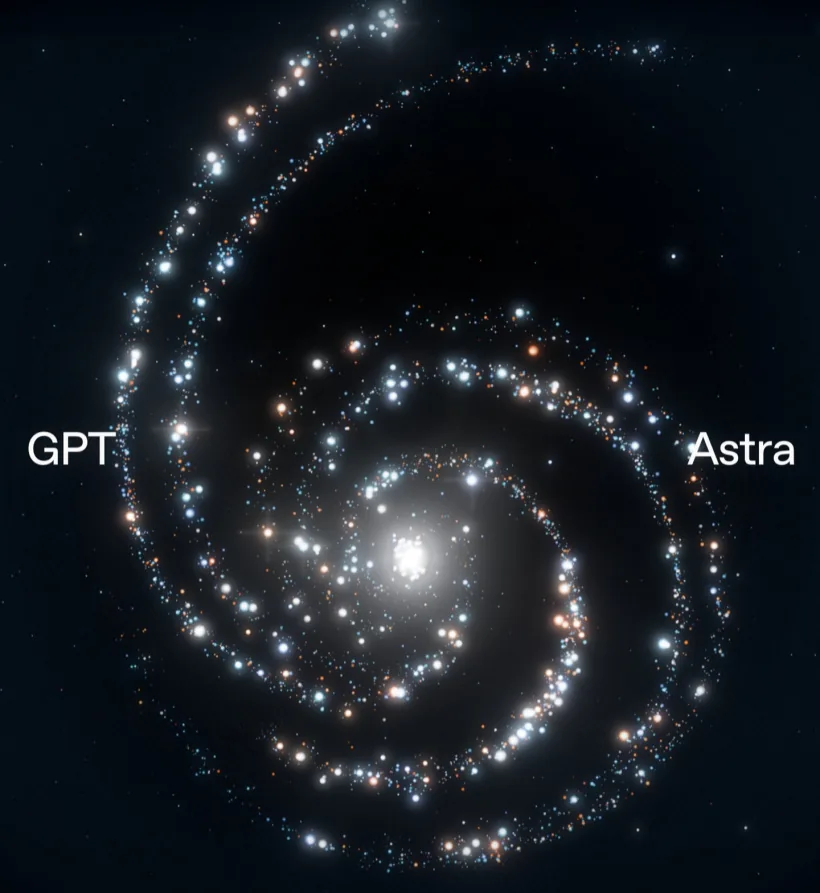
OpenAI has launched its new model, GPT-6 Astra. According to IT之家, citing Business Insider, OpenAI President Greg Brockman said at the end of the media call announcing Astra: “Welcome to the AGI era.” Key facts:
- Release timing: Announced on Thursday local time
- Model version: GPT-6 Astra
- Time since predecessor: Approximately one year since the GPT-5 model family; about two months since the GPT-5.6 upgrade
- Positioning: OpenAI describes Astra as “the world’s most intelligent and best-aligned model”
- Weight release: The source does not mention open-source status or model-weight access
- Availability: The source does not specify whether it is in public beta, available to consumers, or offered through an API
The AGI Definition and Model Capabilities: From Tool to Agent
OpenAI defines AGI, or Artificial General Intelligence, as a highly autonomous system that outperforms humans at most economically valuable work. OpenAI says Astra is a major research breakthrough that changes the range of work people can delegate to AI.
Specific capabilities cited include:
- Filling out forms
- Adjusting document formatting
- Scheduling appointments
- Operating software applications
OpenAI describes Astra’s capability this way: “Anything you can do on a computer, Astra can do for you, and it can do it quickly.” That framing points to a shift from a “content-generation tool” toward a task-execution agent.
Notably, Brockman had previously described AGI as a gradual process rather than a single sudden moment. This time, he said: “Looking back, people may well think AGI emerged around this time. I think it may have started with this model. Personally, I do think we have reached that stage.” The key takeaway is the rhetorical shift from “gradual progress” to treating this model as a potential landmark moment.
Industry Context: External AGI Timelines
Before Astra’s launch, AGI was still widely treated across academia and industry as a major long-term goal. For example, Demis Hassabis, co-founder of Google DeepMind, predicted at a company meeting in May that AGI could appear as early as 2030, and described humanity as standing “at the foot of the singularity’s mountain.” OpenAI’s remarks around Astra contrast sharply with that more cautious timeline.
It is worth noting that Hassabis’s prediction reflects DeepMind’s own technical outlook, while OpenAI’s claim rests on its internal evaluation framework. The two are not directly comparable, though public discussion often treats different companies’ timelines as if they belonged to one unified industry roadmap.
User Recommendations: Use Cases and Adoption Layers
- Worth watching closely: Office workers with frequent scheduling and document-formatting needs; developers tracking whether interfaces and access methods are later opened; technology enthusiasts assessing whether the experience truly feels like agent-style AI
- Better to wait and verify: Financial and healthcare scenarios with strict compliance or data-security requirements; production-system integrators that need long-term reliability evidence; users focused on deployment costs or lightweight model options
Final Word
If Astra truly delivers the kind of cross-software operational ability OpenAI describes, it would mark an important step from perception and generation toward autonomous execution. Still, the ultimate validation of AGI will depend on third-party independent assessment and large-scale real-world performance, not on a single company’s announcement.
Only time will tell whether the AGI gate has truly opened.