Chip Launch: Key Facts, Specs, and Availability Timeline
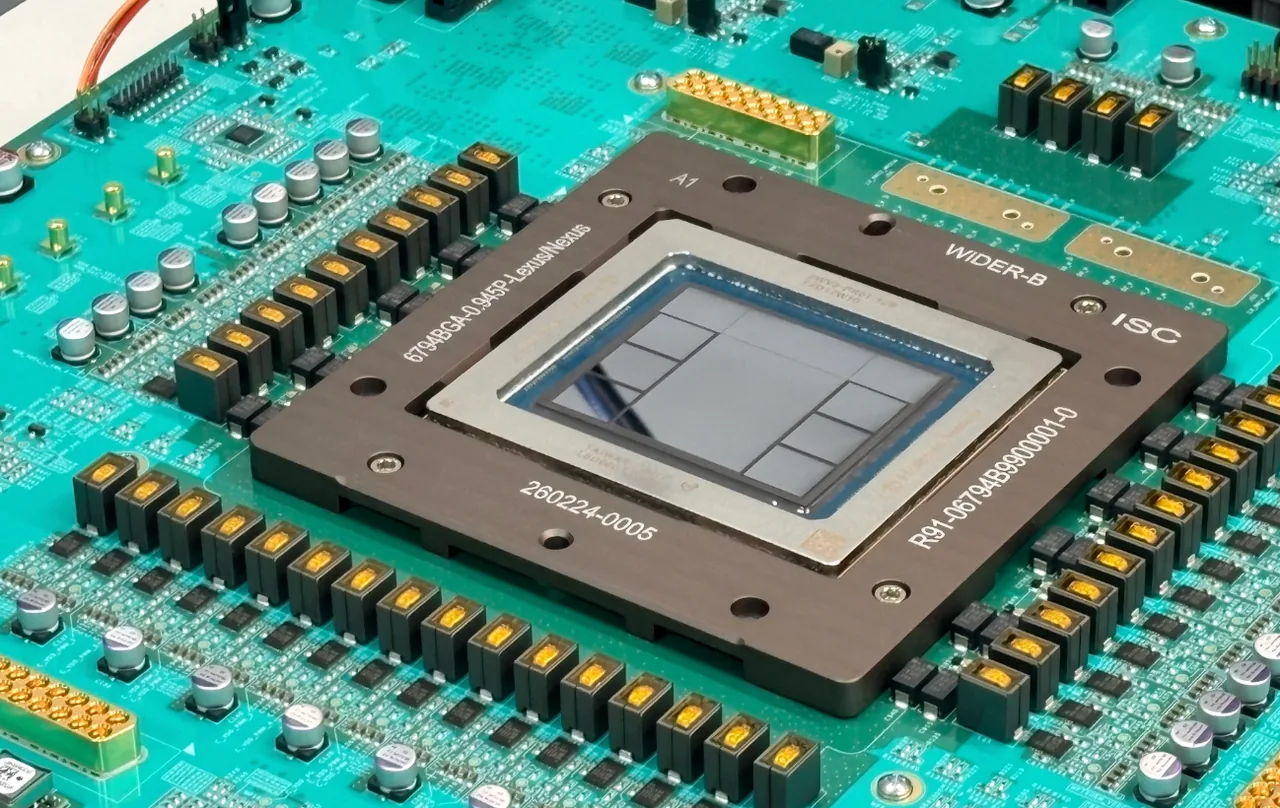
On August 25, 2026, OpenAI disclosed the first publicly witnessed benchmark results for Jalapeño, its first custom inference chip, at the Hot Chips conference. Key facts include:
- Announcement date: August 25, 2026, at Hot Chips
- Partners: OpenAI led the architecture design; Broadcom participated in implementation, networking, and connectivity; Celestica handled board and rack integration
- Rated power: 700W
- Memory: HBM4 with approximately 15.4TB/s bandwidth per package
- Compute specification: 13.4 PFLOPS theoretical MXFP4 performance for the B0 version
- Chip versions: A0 engineering chips were used for the current benchmark results; the improved B0 version has entered manufacturing on TSMC’s N3P process
- Deployment plan: Extremely small-scale deployment is planned for late 2026, with broader rollout expected in 2027
- Tested models: GPT-OSS 120B, DeepSeek R1 670B, and Kimi K2.5 1T
Benchmark Results: Strong Efficiency and Low-Latency Performance
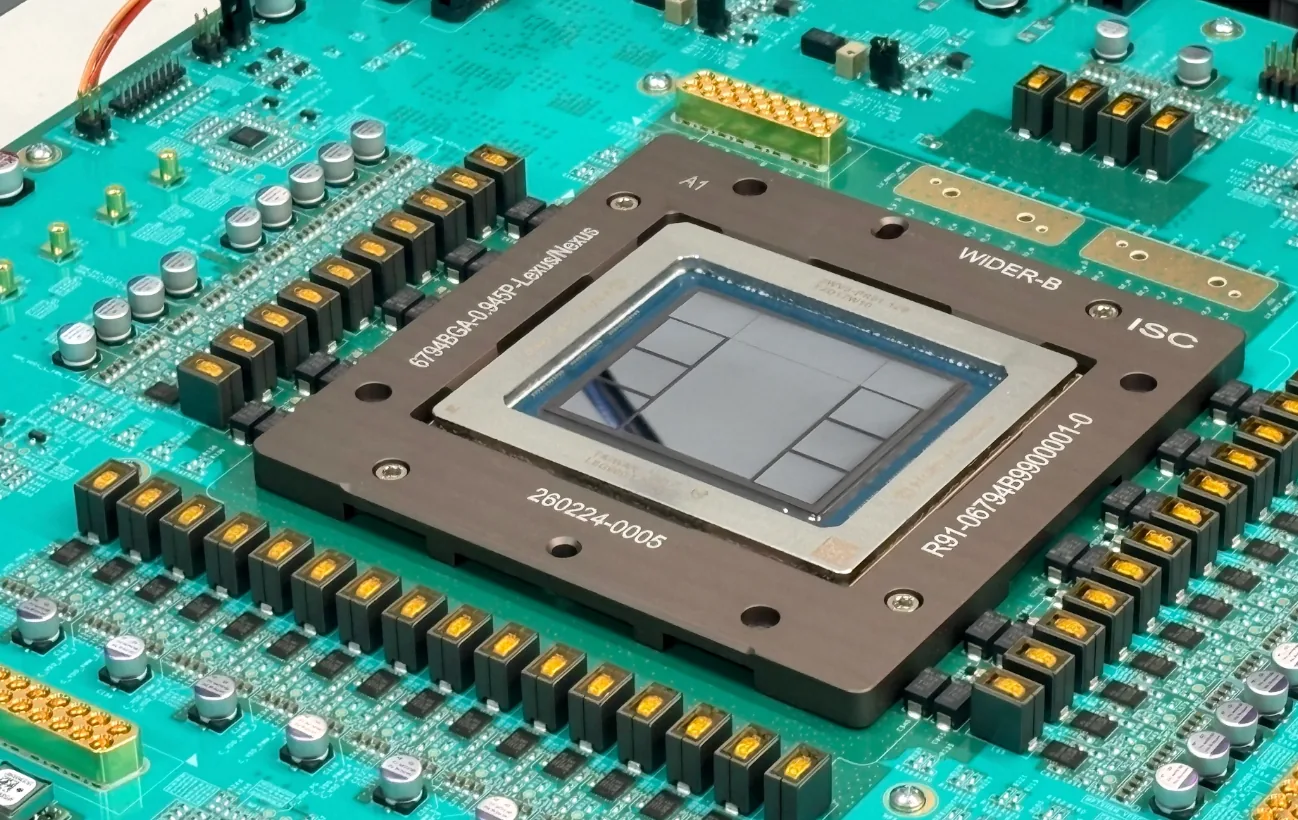
In SemiAnalysis’s InferenceX benchmark against NVIDIA’s Blackwell-based GB300 system, Jalapeño delivered the following results:
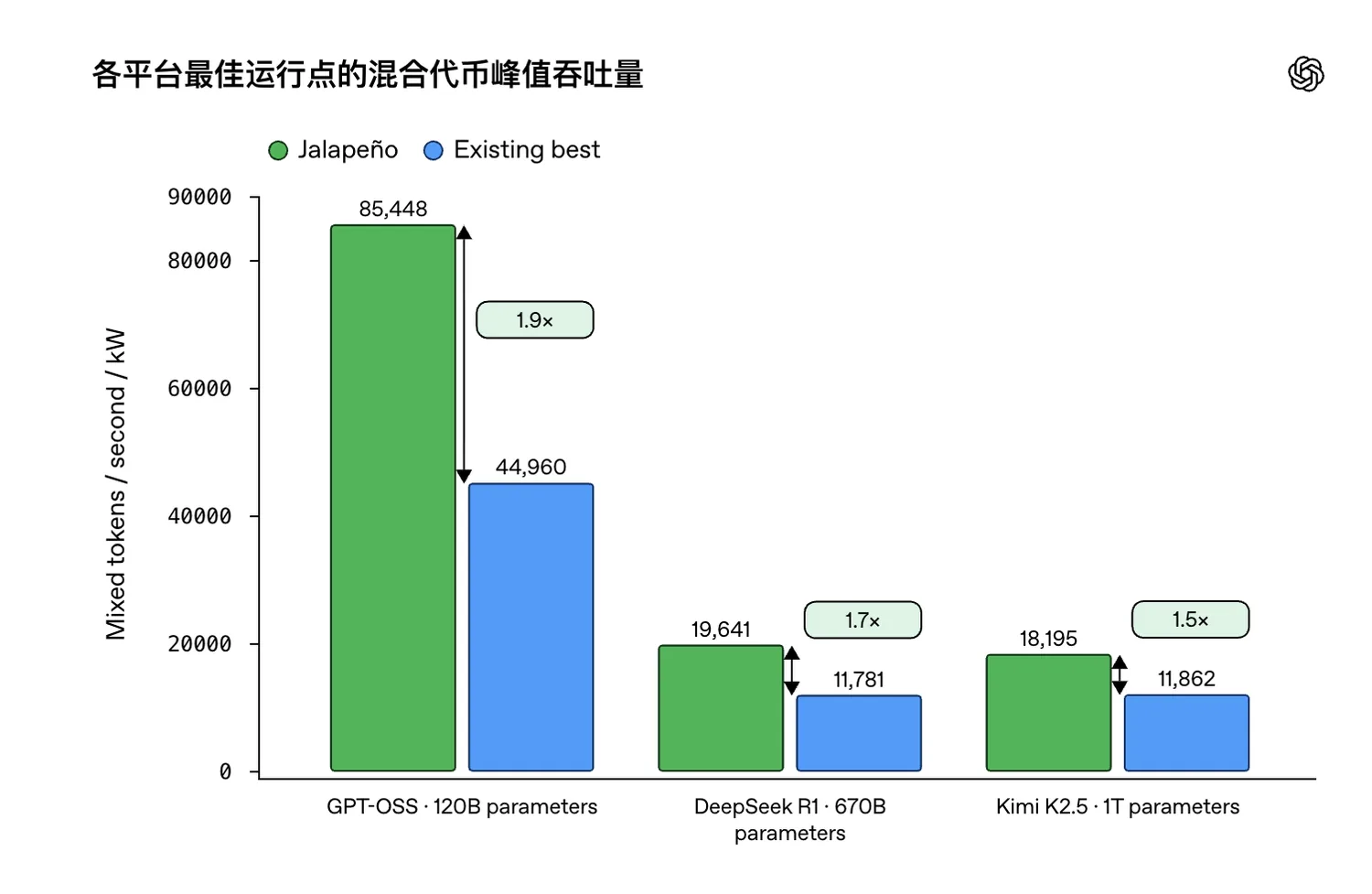
- Throughput per kilowatt: 1.5x to 1.9x higher than NVIDIA’s system across the three models
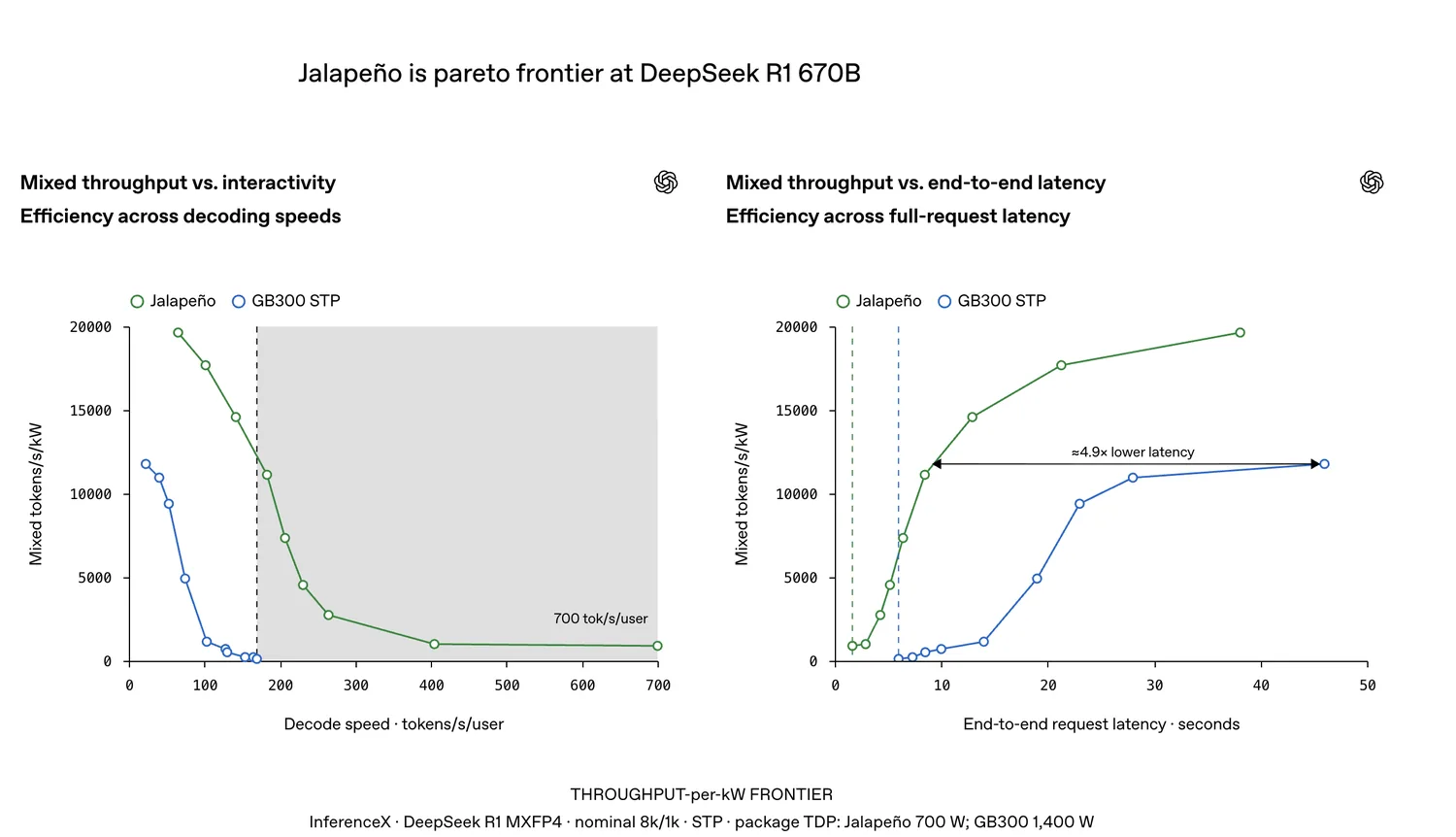
- Low-latency performance: On DeepSeek R1, single-user generation speed reached about 700 token/s, compared with about 169 token/s on NVIDIA GB300, or 4.9x faster, reducing wait time by roughly three quarters
- Single-user peak generation speed on GPT-OSS 120B: 1459 token/s for Jalapeño versus 535 token/s for NVIDIA
- Minimum latency on Kimi K2.5: 1.56 seconds versus 5.31 seconds on NVIDIA GB300
The most striking comparison came under a fixed service-quality condition. At 100 token/s per user, Jalapeño delivered more than 9x the throughput of NVIDIA GB300 on Kimi K2.5, suggesting far higher user capacity at the same response-speed target.
Architecture Philosophy: Keep Data Local and Align Hardware With Model Traffic
Jalapeño’s core design goal is to reduce data movement — a familiar bottleneck in AI hardware, where computation is relatively cheap but moving data is expensive. Its key architectural choices include:
- Compute-memory partitioning: Compute cores are paired with corresponding HBM4 memory slices, creating low-latency direct paths and reducing repeated access to shared memory resources
- Unified accelerator design: Both prefill, which processes user input, and decode, which generates tokens, run on the same accelerator, rather than being split across a separate CPX-style chip as in NVIDIA’s Rubin design. OpenAI’s rationale is that real traffic mixes shift across chat, reasoning, and agent workloads, making fixed hardware partitioning vulnerable to idle capacity
- Bandwidth optimization: The 15.4TB/s single-package memory bandwidth helps keep frequently used data close to the compute units
Jalapeño is also notable for its development speed. OpenAI completed the path from initial design to tape-out in just 9 months, compared with a typical 18–24 month cycle for high-performance ASICs. According to the source material, AI-generated kernels in some GPT-OSS attention and MoE modules were 1.5–1.8x faster than previous expert-written versions, and OpenAI used Codex and GPT-Astra to port and optimize DeepSeek R1 and Kimi K2.5 in roughly two months.
Chip Comparison Table Based on Public Benchmark Data
| Metric | Jalapeño | NVIDIA GB300 | Advantage |
|---|---|---|---|
| DeepSeek R1 single-user generation speed | ~700 token/s | ~169 token/s | 4.9x |
| GPT-OSS 120B throughput per kilowatt | ~85.4K token/s | ~45K token/s | 1.9x |
| GPT-OSS 120B single-user peak | 1459 token/s | 535 token/s | 2.73x |
| Kimi K2.5 minimum latency | 1.56s | 5.31s | 3.4x |
| Kimi K2.5 throughput at 100 token/s/user | 1 unit | ~0.11 unit | >9x |
Recommendations for Adoption
- Adopt early if: You operate large-scale model inference with strict power or cost constraints; need to support multiple model architectures, including third-party models such as DeepSeek and Kimi; and can wait until 2027 for broader availability
- Wait if: Your workloads depend on complex multi-turn conversations, very long contexts, or agent-style routing tasks — OpenAI has not disclosed public numbers for these scenarios. Teams that prioritize immediate ecosystem compatibility may also prefer to keep watching the GB300 ecosystem mature
In Closing
Jalapeño represents a shift from adapting models to general-purpose chips toward designing chips around model behavior. Apple, NVIDIA, and OpenAI disclosed major chip-related updates within a 48-hour window, each emphasizing a different path: edge devices and advanced process technology, general-purpose systems, and vertically specialized inference hardware. The competition over AI compute pricing power is becoming more diverse.