
Core Event Overview

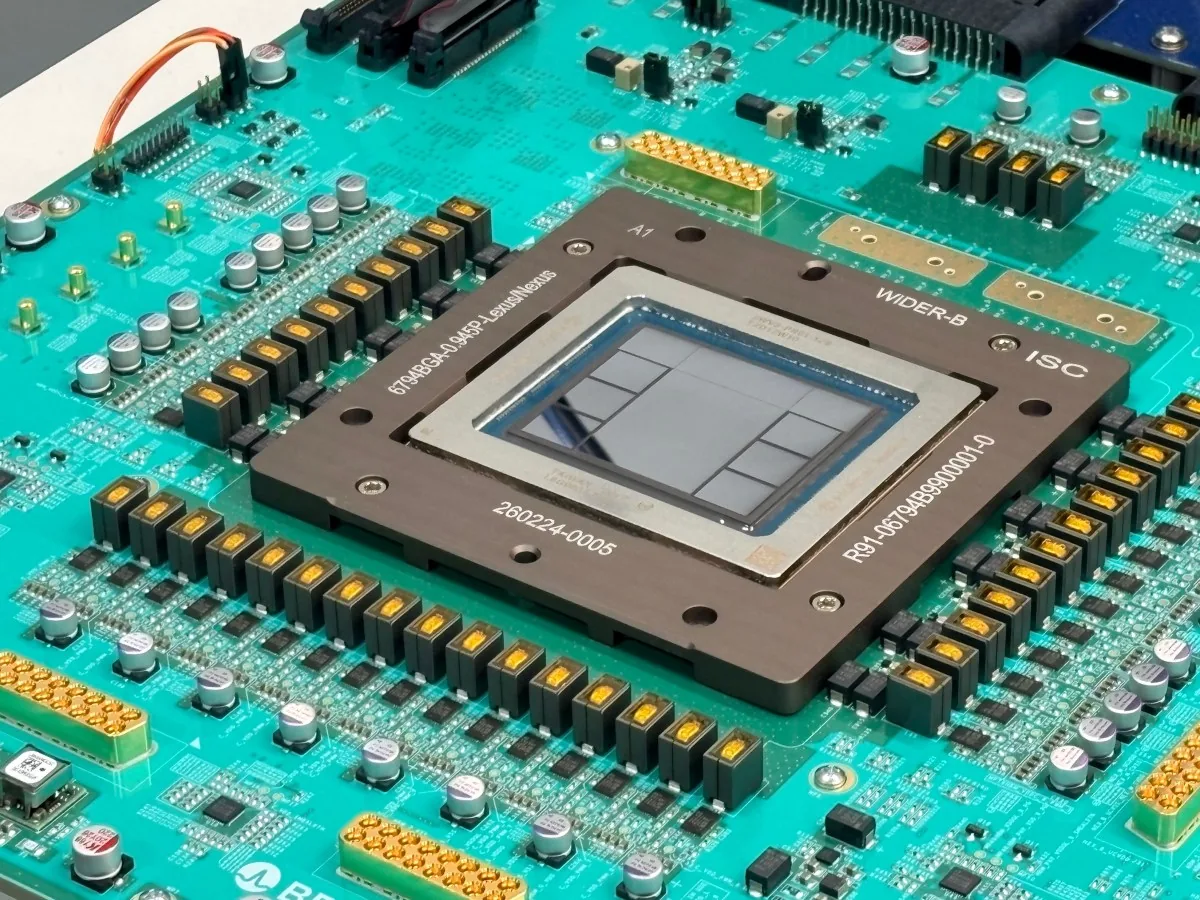
OpenAI officially unveiled benchmarks for its custom inference chip, Jalapeño, at the Hot Chips conference on Tuesday, August 25, 2026. Developed in close collaboration with Broadcom, the chip is scheduled for very limited deployment by end-2026, with broader rollout expected in 2027. Pricing and procurement details remain unrevealed.
Key facts at a glance:
- Announcement date: August 25, 2026 (Hot Chips conference)
- Current status: Benchmark testing complete, not yet in production
- Initial deployment: End of 2026 (very small volumes)
- Mass deployment: 2027
- Partners: Broadcom (hardware), OpenAI internal models (co-design assistance)
- Open source: No, proprietary deployment plan
Technical Details and Benchmark Performance
Jalapeño outperformed the current state-of-the-art inference processors on two key metrics in SemiAnalysis’s InferenceX benchmark:
- Higher tokens per user—supporting more end-user interactions per inference request
- Higher throughput per kilowatt—superior energy efficiency
Richard Ho, OpenAI’s head of hardware, stated: “Jalapeño can serve more AI work per unit of power, while also returning responses more quickly. It’s very efficient to serve a lot of customers, but it can also be very low latency.”
The chip specifically targets two notorious bottlenecks in inference: the prefill phase (where the model processes input prompts to generate initial representations) and the communication phase (data synchronization across chips or servers). Jalapeño minimizes these delays by explicitly placing model state—including the KV cache, which maintains context during response generation—into local memory, while dynamically allocating the optimal mix of compute, memory, and networking resources for each inference stage.
One notable contrast: benchmark comparisons were made against NVIDIA’s Blackwell system, widely recognized as the current leader in inference performance. Jalapeño’s advantage in this head-to-head test underscores the potential of vertically integrated design. That said, OpenAI acknowledged that competitors may have advanced further by the time full-scale deployment arrives in 2027.
Full-Stack Design Strategy
Jalapeño is designed not as a standalone chip, but as the hardware pillar of OpenAI’s multi-generational platform vision. The strategy is to co-evolve AI products, models, chips, and memory together—avoiding the traditional mismatch between off-the shelf hardware and evolving model needs.
Design innovations include:
- OpenAI’s own models assisting in chip development (model-assisted co-design)
- Explicit KV cache management in local on-chip or nearby memory
- Dynamic resource allocation for different inference phases (prefill vs. decode)
This architecture eliminates data copying across nodes during theprefill stage and reduces communication latency in multi-chip scenarios. As OpenAI’s blog post stated: “We designed Jalapeño to minimize data movement and communication delays.”
Competitive Reference
| Metric | Jalapeño | NVIDIA Blackwell (baseline) | Notes |
|---|---|---|---|
| Benchmark test | InferenceX | InferenceX | Publicly comparable third-party benchmark |
| Energy efficiency | Higher throughput per watt | Current industry leader | No specific wattage figures disclosed |
| User scaling | More tokens per user | Current industry leader | No specific token counts disclosed |
| Availability | Late 2026 (limited) | Now shipping | 2026’s mainstream option |
Note: Table reflects only the comparisons explicitly mentioned in source material; no raw performance numbers were provided.
Reader Guidance
- Enterprise infrastructure teams: If planning large-scale inference deployments beyond 2027, monitor Jalapeño ecosystem developments, particularly integration timelines with OpenAI’s API or cloud offerings
- Researchers and developers: Current hardware investments in Blackwell-equipped systems remain sound; for OpenAI model testing, check official channels for Jalapeño compatibility announcements
- Investors and analysts: Watch closely for stability and real-world power data from the late 2026 small-scale rollout, which will validate long-term cost advantages
Final Thoughts
Jalapeño represents a deepening shift in AI infrastructure—from commodity GPU + general-purpose frameworks toward purpose-built chips paired with specialized software stacks. As inference costs become decisive for monetizing large models, marginal gains in efficiency and latency directly impact service pricing tiers and reliability guarantees.